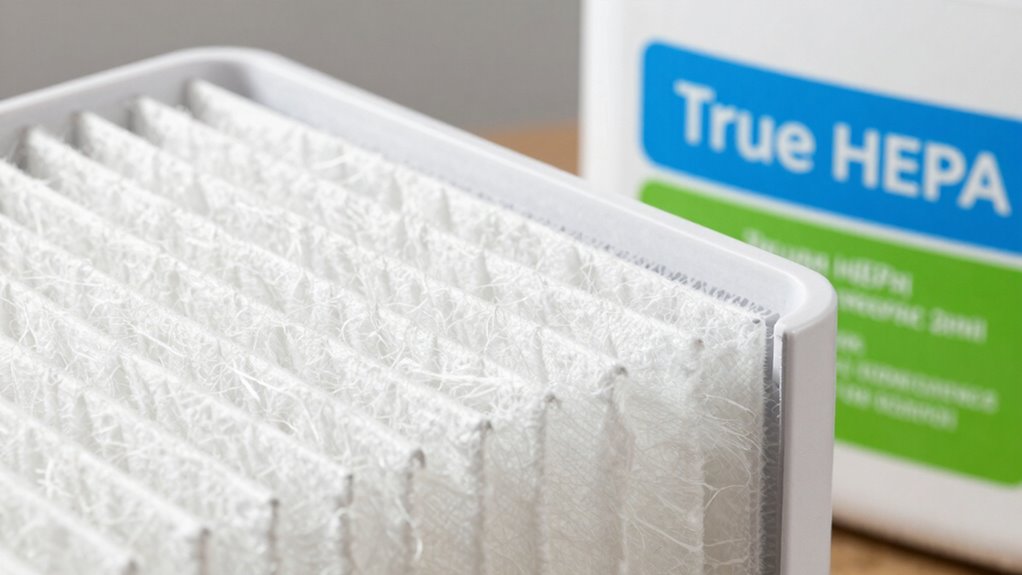

When comparing “True HEPA” filters to marketing labels like “HEPA-like” or “HEPA-type,” it’s important to know that true HEPA filters meet strict standards by capturing at least 99.97% of tiny particles as small as 0.3 microns, improving indoor air quality effectively. Many filters labeled only as “HEPA” may not meet these standards, so checking certifications is key. If you want to fully understand how to choose the best option, keep exploring the details behind these labels.
Key Takeaways
- True HEPA filters meet strict standards, capturing 99.97% of particles as small as 0.3 microns, unlike lower-efficiency “HEPA-like” labels.
- Certifications from reputable organizations ensure a filter genuinely meets HEPA standards, preventing misleading marketing claims.
- Not all products labeled “HEPA” are equal; verify labels and certifications for authentic filtration performance.
- True HEPA filters significantly improve indoor air quality by effectively removing allergens, mold spores, bacteria, and pollutants.
- Proper maintenance and replacement are essential; rely on certified labels over marketing claims for effective air filtration.
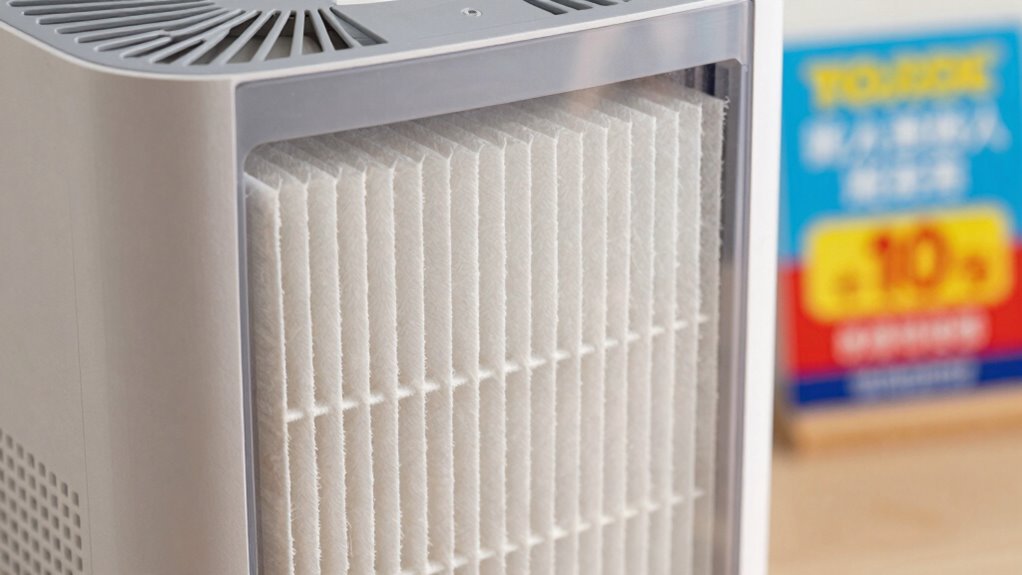
Have you ever wondered how some air purifiers effectively remove tiny particles from the air? It all comes down to their filtration systems, particularly HEPA filters, which are known for their impressive ability to capture airborne particles. When evaluating different purifiers, you’ll notice labels like “True HEPA” or simply “HEPA,” but understanding what these mean is key to guaranteeing you get the filtration efficiency you need. Not all filters claiming to be HEPA are created equal, so knowing the differences can make a real difference in your air quality.
Understanding HEPA filters ensures you choose effective air purifiers for healthier indoor air.
A true HEPA filter is designed to meet strict standards, capturing at least 99.97% of airborne particles as small as 0.3 microns. That includes dust, pollen, pet dander, mold spores, and even some bacteria. This high filtration efficiency means that a true HEPA filter can considerably reduce the number of tiny particles floating in your indoor air, making it safer and more comfortable to breathe. When you’re shopping for an air purifier, look for the “True HEPA” label, because it indicates that the filter has been tested and certified to meet those rigorous standards. Many marketing labels, however, can be misleading, as some products claim to have HEPA-like or HEPA-type filters, which often don’t meet the same strict criteria and may have lower filtration efficiency.
You might wonder why this distinction matters. Well, the difference in filtration efficiency impacts how well the purifier can clean the air in your space. A true HEPA filter will consistently remove nearly all of the tiny airborne particles that trigger allergies, asthma, or other respiratory issues. Cheaper or lesser-quality filters may claim to be HEPA but fall short, allowing more airborne particles to pass through. This means you might think you’re protected, but in reality, some harmful particles could still linger in your indoor environment.
To guarantee you’re getting a filter with high filtration efficiency, it’s best to verify certifications from reputable sources like the U.S. Department of Energy or the U.S. Environmental Protection Agency. These organizations set the standards for what constitutes a true HEPA filter, making it easier for you to make an informed choice. Additionally, understanding filter maintenance and proper replacement schedules can ensure your purifier continues to perform at its best. Remember, the key is not just in the label but in the actual ability of the filter to trap those tiny airborne particles that can impact your health. So, next time you’re considering an air purifier, prioritize the filter’s certification and filtration efficiency to guarantee you’re truly improving your indoor air quality.

Bissell PowerClean FurGuard 280W Self-Standing Cordless Vacuum w/Self-Cleaning Brush Roll, Strong Suction, Removeable Battery, Wall Mount, Upholstery Tool & Bright Headlights
NO PET HAIR LEFT BEHIND. Find & capture pet hair everywhere with a powerful 280W motor and our...
As an affiliate, we earn on qualifying purchases.
Frequently Asked Questions
How Often Should HEPA Filters Be Replaced?
You should replace your HEPA filter every 6 to 12 months, depending on its filter lifespan and usage. Regular replacement guarantees peak air quality and prevents airflow issues. Check your device’s instructions for specific replacement frequency recommendations. If you notice reduced airflow, increased dust, or odors, it’s a sign to change the filter sooner. Keeping track of these signs helps maintain your air purifier’s effectiveness.
Are All HEPA Filters Environmentally Friendly?
Not all HEPA filters are environmentally friendly, and some have a significant environmental impact due to non-biodegradable materials. You should look for filters made with eco-friendly materials that reduce waste and pollution. While some filters are designed with sustainability in mind, others may contain plastics or chemicals harmful to the environment. Selecting greener options helps protect the planet and ensures cleaner indoor air without contributing to landfill overflow.
Can HEPA Filters Remove Viruses?
Yes, HEPA filters can remove viruses by trapping germ particles, helping reduce airborne transmission. They excel at germ elimination, especially when properly maintained. Keep in mind that filter lifespan affects performance; replacing filters as recommended guarantees continued effectiveness. While HEPA filters aren’t a complete solution, they markedly improve air quality by capturing many airborne pathogens, making your environment safer. Regular maintenance maximizes their virus removal capabilities.
What Is the Cost Difference Between True HEPA and Marketing Labels?
You’ll notice a cost difference between true HEPA filters and those with marketing labels, with true HEPA filters generally costing more. The pricing variations depend on brand, size, and filter quality, but true HEPA filters typically offer better filtration performance. While they may seem pricier upfront, their efficiency can save you money in the long run by improving indoor air quality. Always compare specifications to verify you’re getting genuine HEPA filtration.
Do HEPA Filters Work Effectively in Humid Environments?
Did you know that around 60% of indoor air quality issues are impacted by humidity? HEPA filters work effectively in humid environments, but high humidity can reduce filter longevity by promoting mold and bacteria growth. Humidity impact varies, so it’s important to use a dehumidifier alongside your HEPA filter for maximum performance. Regular maintenance ensures your filter stays efficient, regardless of humidity levels.

Cordless Vacuum Cleaner, 600W 50KPA 70Mins Vacuum Cleaners for Home, Stick Vacuum with Charging Dock Station, Anti-tangle Wireless Vacumm, Rechargeable Cordless Vacuum for Pet Hair/Carpet/Hard Floor
【600W/50KPa Powerful Suction】Dsorupa cordless vacuum cleaner is equipped with the latest 550W brushless high-performance motor, which is able...
As an affiliate, we earn on qualifying purchases.
Conclusion
Now that you understand the difference between true HEPA filters and marketing labels, you can make smarter choices for cleaner air. Did you know that HEPA filters can remove up to 99.97% of particles as small as 0.3 microns? That’s tiny! So, when shopping, look beyond the labels to guarantee you’re getting real HEPA filtration. Protect your health and breathe easier—you deserve it.

KARDV Cordless Vacuum Cleaner, 500W/40Kpa Vacuum Cleaners for Home, 60Mins Stick Vacuum with LED Display, Anti-Tangle & Wall Mount Charging, 8 in 1 Lightweight Vacuum for Hard Floors Carpet Pet Hair
【500W/40Kpa Powerful Suction】 The cordless vacuum cleaner is equipped with a powerful 450W motor, which provides a superb...
As an affiliate, we earn on qualifying purchases.

Bissell PowerClean FurFinder 200W Self-Standing Cordless Vacuum w/Tangle Free Brush Roll, Strong Suction, Removeable Battery, Wall Mount, Upholstery Tool & Bright Headlights
NO PET HAIR LEFT BEHIND. Find & capture pet hair everywhere with a powerful 200W motor and our...
As an affiliate, we earn on qualifying purchases.