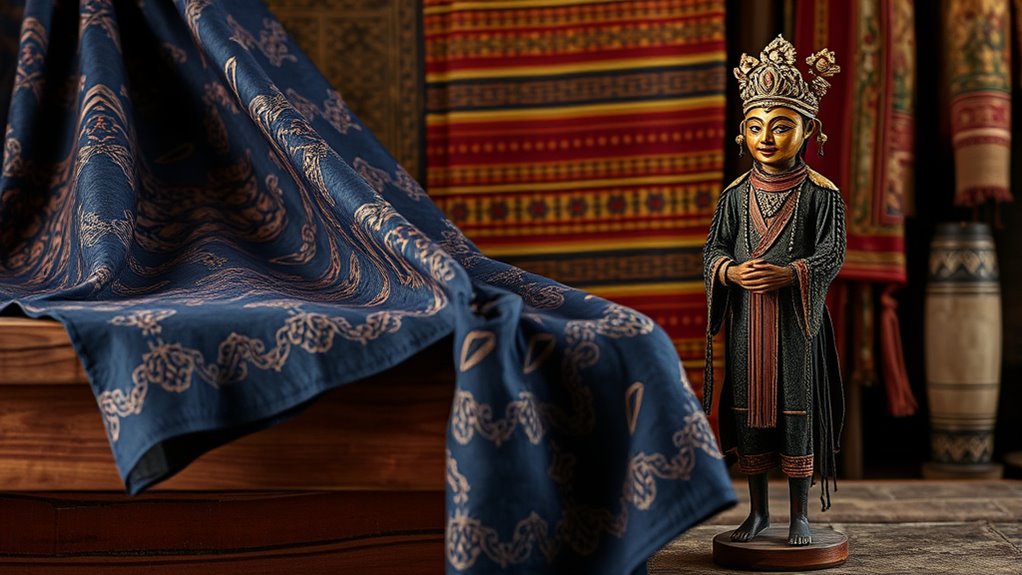

Discover the beauty of Indonesia’s traditional arts, batik and wayang kulit. Batik involves applying wax to fabric before dyeing, creating intricate patterns full of symbolism that reflect Indonesia’s cultural identity. Wayang kulit features shadow puppets made from water buffalo hide, depicting stories from Hindu epics and local legends. Both art forms are essential to Indonesia’s heritage, representing craftsmanship and storytelling. Keep exploring to uncover more about these fascinating arts and their enduring significance.
Key Takeaways
- Batik is a traditional Indonesian fabric dyeing technique using wax to create intricate, symbolic patterns, originating from Java over a thousand years ago.
- Wayang Kulit is a shadow puppet theater featuring intricately carved water buffalo hide puppets, depicting stories from Hindu epics like Ramayana and Mahabharata.
- Both art forms serve cultural, ceremonial, and everyday purposes, symbolizing identity, beliefs, and social status in Indonesian society.
- UNESCO has recognized Batik (2009) and Wayang Kulit (2003) as Masterpieces of the Oral and Intangible Heritage of Humanity.
- These art forms continue to evolve, blending tradition with modern influences, and play vital roles in Indonesian cultural preservation and artistry.
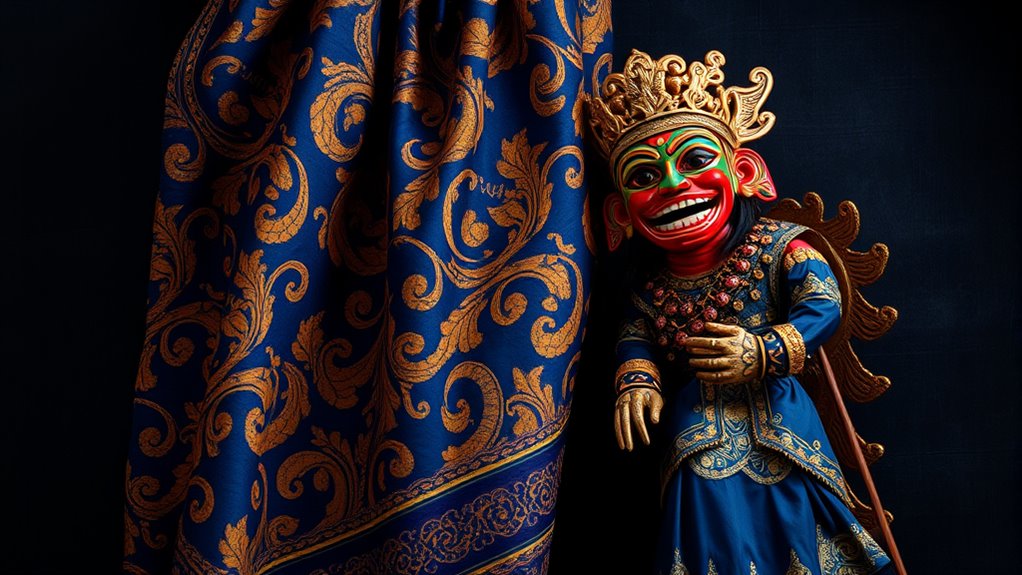
Have you ever wondered how Indonesia’s rich cultural heritage is reflected in its traditional arts? One of the most iconic expressions is batik, a textile art that originated in Java over a thousand years ago. You can see its significance in everyday life and special ceremonies alike. Batik involves applying wax to fabric to create intricate patterns before dyeing, which results in one-of-a-kind designs. You might notice the detailed motifs that often carry symbolic meanings, representing status, regional identity, or spiritual beliefs. As you explore Indonesian culture, you’ll find that batik isn’t just about fashion; it’s a symbol of identity and tradition. Recognized by UNESCO in 2009 as a Masterpiece of the Oral and Intangible Heritage of Humanity, batik holds a special place in Indonesia’s cultural landscape. Traditionally, artisans use canting tools to apply wax by hand, a painstaking process that highlights the craftsmanship involved. Over time, modern techniques have emerged, including machine-printed batik, but the handmade art remains highly valued for its authenticity and cultural significance. Batik fabrics are versatile, finding their way into clothing, accessories, and home decor, making it a crucial part of Indonesia’s economy through cottage industries and local markets.
Alongside batik, Indonesia’s cultural richness is vividly expressed through wayang kulit, a traditional shadow puppet theater that dates back to at least the 10th century. You’ll find the puppets made from water buffalo hide, intricately carved and painted to depict characters from Hindu epics like the Ramayana and Mahabharata. Performances are led by a dhalang, or puppeteer, who skillfully manipulates the puppets behind a fabric screen while accompanied by a gamelan orchestra. The stories conveyed through wayang kulit are more than entertainment—they teach moral lessons, philosophical ideas, and cultural values. Over centuries, the art form evolved, blending influences from Indian folklore and adapting to regional shifts, especially after the spread of Islam in Java. Today, UNESCO recognized wayang kulit as a Masterpiece of the Oral and Intangible Heritage of Humanity in 2003, which has helped preserve this traditional art amidst modern challenges.
Both batik and wayang kulit exemplify Indonesia’s artistic innovation and cultural depth. They serve as symbols of national identity, connecting past and present through intricate craftsmanship and storytelling. Whether you’re admiring the detailed patterns of a batik cloth or watching a puppet show bring legendary stories to life, you’ll see how these arts continue to thrive and adapt, ensuring their legacy endures for generations to come.
Frequently Asked Questions
How Do Batik and Wayang Kulit Influence Modern Indonesian Fashion?
You see how traditional art influences modern fashion in Indonesia. Batik’s vibrant patterns and cultural significance inspire designers to create versatile, contemporary pieces that appeal globally while supporting local artisans. Meanwhile, Wayang Kulit’s storytelling and symbolic puppets subtly inspire fashion themes and silhouettes. Together, these art forms foster cultural pride, promote sustainable practices, and boost Indonesia’s economy by blending tradition with modern style in innovative ways.
What Materials Are Traditionally Used in Creating Batik and Wayang Kulit?
Think of traditional materials as the heartbeat of Indonesian art. You use fine cotton, silk, or mori as your canvas, while beeswax (*malam*) and natural dyes—like indigo and earth tones—bring your designs to life. For Wayang Kulit, you shape translucent leather from water buffalo hides and carve intricate details with wood or horn. Tools like canting, brushes, and sticks help you craft these timeless masterpieces.
Are There Regional Differences in Batik Patterns Across Indonesia?
You’ll notice that Indonesia’s batik patterns vary markedly across regions. In Java, patterns differ between inland and coastal areas, influenced by local culture and history. Coastal batik reflects foreign trade influences, while inland styles are more traditional. From Solo to Pekalongan, each region has unique motifs, colors, and meanings, showcasing Indonesia’s rich cultural diversity and regional identities. These differences make each batik style distinct and meaningful.
How Long Does It Typically Take to Craft a Wayang Kulit Puppet?
You’re curious about how long it takes to craft a wayang kulit puppet. Generally, it can take months to create one, especially for large, detailed characters. The process involves meticulous handwork, from drawing patterns to carving, coloring, and attaching handles. Skilled artisans work carefully over weeks, ensuring every detail is perfect. High-quality puppets demand about a month of dedicated effort before they’re ready for performances.
Can Tourists Participate in Batik-Making or Wayang Kulit Workshops?
Think of yourself as a traveler stepping into a vibrant tapestry, enthusiastic to weave your own story. Yes, you can participate in batik-making and Wayang Kulit workshops. Many workshops welcome beginners, guiding you through traditional techniques. Whether you craft intricate batik patterns or create shadow puppets, you’ll immerse yourself in Indonesia’s rich culture. These experiences let you take home unique souvenirs and forge a deeper connection with local artisans.
Conclusion
As you explore batik and wayang kulit, you’ll discover these art forms are more than just beautiful—they’re the beating heart of Indonesia’s cultural soul. With each intricate pattern and puppet, you’re stepping into a world where tradition and artistry collide in a symphony more vibrant than a thousand sunsets. Embrace these masterpieces, for they hold the power to transform your understanding of Indonesia into an unforgettable journey through time and creativity.