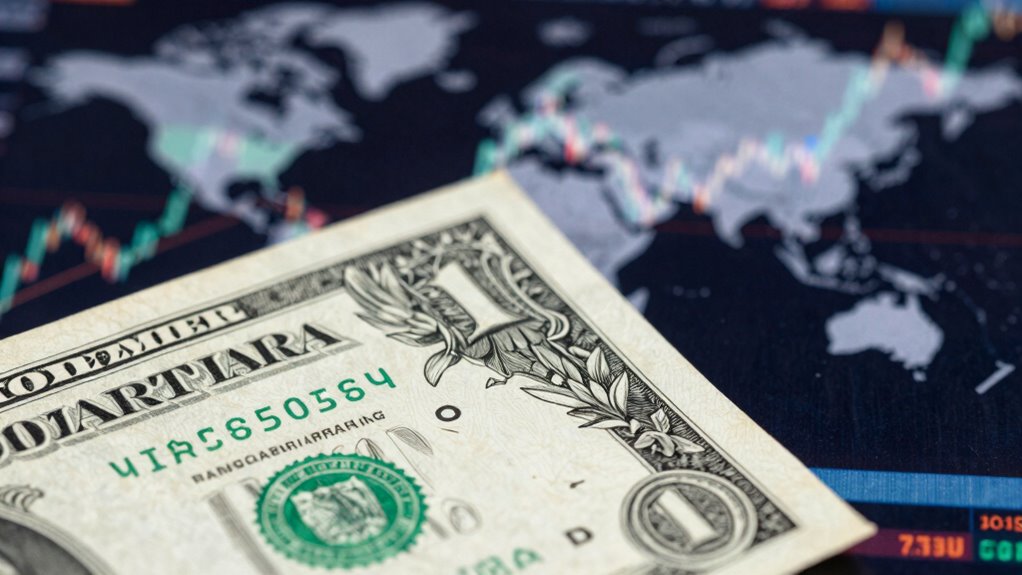

Currency movements are driven by economic data, investor sentiment, and geopolitical events. When the U.S. shows strong growth, low inflation, or the Federal Reserve tightens policy, the dollar strengthens, making exports more expensive. Conversely, weak data or easing policies weaken it. These shifts impact trade, investments, and markets worldwide. Understanding how these factors influence the dollar helps you anticipate market changes—continue exploring to see how you might navigate these fluctuations effectively.
Key Takeaways
- A strong dollar reduces U.S. exports, harming global competitiveness and affecting international trade balances.
- Weak dollar makes U.S. assets cheaper abroad, attracting foreign investment but increasing import costs.
- Currency movements influence commodity prices, with a stronger dollar typically lowering prices and vice versa.
- Fluctuations impact multinational corporations’ profits and can lead to market volatility in stocks and bonds.
- Central bank policies and economic indicators drive currency strength, thereby shaping global market dynamics.
What Causes the Dollar to Strengthen or Weaken?

Have you ever wondered what makes the dollar fluctuate in value? Exchange rate volatility often results from shifts in economic data, investor sentiment, or geopolitical events. When confidence in the U.S. economy rises, the dollar tends to strengthen as investors seek safe assets. Conversely, negative news or economic downturns can weaken it. Central banks also influence the dollar through currency intervention, where they buy or sell dollars to stabilize or steer the exchange rate. These actions can cause sudden fluctuations, adding to volatility. Market speculation, interest rate changes, and trade balances further impact the dollar’s strength or weakness. Ultimately, a combination of economic indicators and policy moves drives the dollar’s unpredictable dance in currency markets. currency intervention and other central bank actions can cause sudden fluctuations, adding to volatility. Additionally, market sentiment plays a crucial role, as investor perceptions can rapidly shift and influence currency movements.
Which Economic Indicators Signal Dollar Movements?

You can often predict dollar movements by watching key economic data releases like employment reports and inflation figures. Central bank policies, such as interest rate changes, also play a vital role in shaping currency strength. Keeping an eye on these indicators helps you understand what drives the dollar’s fluctuations. Additionally, understanding affiliate relationships and how they impact content transparency can provide insight into the sources of financial information. Monitoring economic indicators like GDP growth and trade balances offers further clues about potential currency trends. Recognizing how support breakfast options influence local economies can also indirectly reflect broader economic conditions affecting currency stability. Observing interest rate policies and their adjustments by central banks can give early signals of upcoming dollar movements. Moreover, analyzing currency market dynamics such as supply and demand trends can enhance your ability to predict shifts in dollar value.
Economic Data Releases
Economic data releases play a crucial role in signaling dollar movements, as traders and investors closely monitor key indicators to gauge the U.S. economy’s health. Strong employment reports, retail sales, and manufacturing data can boost the dollar, while weak figures may weaken it. Gold prices often react to these releases, reflecting changes in inflation expectations and risk sentiment. For example, rising inflation expectations can increase dollar strength, as investors anticipate tighter monetary policy. Additionally, European cloud innovation demonstrates how technological advancements can influence global financial markets by fostering more efficient and secure data management.
Central Bank Policies
Which economic indicators do central banks watch most closely to guide their policy decisions and influence dollar movements? Primarily, they focus on inflation rates, especially when pursuing inflation targeting. When inflation rises above target levels, central banks may tighten monetary policy by increasing interest rates, strengthening the dollar as investors seek higher yields. Conversely, if inflation falls below targets, they might loosen monetary policy, which can weaken the dollar. Central banks also monitor employment data, GDP growth, and inflation expectations to adjust policy accordingly. These decisions directly impact currency strength, as tighter policies generally lead to dollar appreciation, while looser policies tend to weaken it. Understanding these indicators helps you anticipate how central bank actions could influence dollar movements in the market.
How Do Federal Policies and Economic Data Impact Currency Fluctuations?

Federal policies and economic data play a vital role in shaping currency fluctuations because they influence investor confidence and expectations about future growth. When the government adopts a hawkish federal policy, like tightening monetary policy, it often strengthens the dollar as investors anticipate higher interest rates. Conversely, weak economic data can signal slowdown risks, weakening the currency. Here’s a snapshot of key indicators:
| Indicator | Impact on Dollar |
|---|---|
| Federal policy | Tightening boosts dollar, easing weakens it |
| GDP growth | Strong growth supports dollar, slowdowns weaken it |
| Employment figures | Low unemployment boosts dollar, high unemployment weakens it |
| Inflation rate | Moderate inflation stabilizes dollar, high inflation weakens it |
| Trade balance | Surplus supports dollar, deficit weakens it |
Additionally, recent AI discoveries have begun to influence financial markets by providing advanced analysis and predictive capabilities that can impact currency trading strategies. As these innovations evolve, they are expected to further refine the understanding of currency movements and the factors influencing exchange rates. These technological advancements are also enabling more timely and precise responses to market shifts, adding a new dimension to currency trading strategies.
How Do Dollar Movements Affect Global Trade and Investment Flows?
When the dollar strengthens, your country’s exports may become more expensive for foreign buyers, reducing demand. Conversely, a weaker dollar can make your imports pricier and affect the competitiveness of your products abroad. These currency shifts also influence foreign investment flows, as investors seek more favorable return opportunities. Additionally, understanding Free Floating exchange rates is crucial, as they allow currency values to fluctuate based on market forces without direct government control. Recognizing the role of market-driven exchange rates helps in assessing the potential impacts on global trade dynamics, especially when considering the effects of vetted wave and wind influences on currency stability. Grasping the concepts of currency volatility can further aid in anticipating market reactions to these shifts. Furthermore, market forces such as supply and demand play a significant role in determining currency movements and their subsequent effects on international markets.
Exchange Rate Impact
Changes in the dollar’s value directly influence global trade and investment flows by making U.S. goods more or less competitive internationally. When the dollar appreciates, it can disrupt currency parity, making American exports more expensive and imports cheaper. Conversely, a weaker dollar boosts U.S. competitiveness by lowering export prices. Exchange rate movements also introduce exchange volatility, which increases uncertainty for traders and investors. This unpredictability can lead to shifts in investment strategies and trade patterns, as businesses seek to hedge against currency risks. Recognizing these distinctions can help investors better understand the implications of currency fluctuations on their portfolios. Overall, dollar fluctuations impact global markets by altering costs, profits, and capital flows. Your understanding of these dynamics helps you anticipate how changes in the dollar’s strength can ripple through international trade and investment decisions. Recognizing the importance of safe, simple, and cost-effective strategies can help businesses and investors navigate these fluctuations more effectively.
Export and Import Dynamics
Dollar movements directly shape global trade and investment flows by affecting the prices of exports and imports. When the dollar strengthens, U.S. goods become more expensive abroad, reducing exports, while imports become cheaper, increasing foreign consumption of U.S. products. Conversely, a weaker dollar makes U.S. exports more competitive but raises import costs. Countries may respond by imposing export tariffs or import quotas to protect domestic industries. Export tariffs increase the cost for foreign buyers, while import quotas limit the volume of goods entering a country, both influencing trade balances. These policies, combined with currency fluctuations, impact global trade dynamics, shifting investment decisions and supply chains. Understanding how dollar movements influence these tools helps you anticipate changes in international trade patterns. A comprehensive understanding of art care and living can also offer insights into how cultural assets are affected by global economic shifts. Additionally, currency volatility can influence investment strategies and the timing of international transactions, emphasizing the importance of monitoring dollar trends for economic planning.
Foreign Investment Trends
Fluctuations in the dollar’s value directly influence global investment flows, guiding where and how investors allocate capital across borders. When the dollar strengthens, foreign investors often increase foreign direct investment (FDI) in US assets to capitalize on currency gains. Conversely, a weaker dollar can deter FDI due to uncertain returns. Investors also use currency hedging to manage exchange rate risks, protecting their investments from adverse moves. Additionally, understanding the 16PF personality traits is essential for investors and businesses operating in markets with Muslim consumers, influencing product offerings and supply chain decisions. Key factors to contemplate include:
- Dollar appreciation attracting foreign direct investment into US markets
- Currency hedging strategies reducing exchange rate risk
- Investors shifting investments to currencies with stable or strengthening outlooks
- Impact on cross-border mergers and acquisitions
- Changes in international portfolio allocations based on dollar trends, which can be affected by sound healing science and other emerging fields that influence economic stability and consumer confidence.
Understanding these trends helps you anticipate how dollar movements shape global capital flows and investment decisions.
What Are Effective Strategies to Manage Dollar-Driven Market Changes?

When market movements are driven by shifts in the dollar’s strength, proactive strategies become essential to protect your investments and maintain stability. One effective approach is using hedging strategies, such as currency forwards or options, to lock in exchange rates and minimize exposure to sudden dollar fluctuations. Additionally, diversification tactics help spread risk across different asset classes, currencies, and regions, reducing reliance on the dollar’s movement alone. Regularly reviewing your portfolio and adjusting your currency exposure can also prevent disproportionate losses during dollar swings. Staying informed about macroeconomic trends and geopolitical factors allows you to anticipate potential shifts and respond swiftly. Incorporating currency risk management into your investment plan is crucial for navigating volatile market conditions. Understanding market volatility and its impact on currency values enables investors to make more informed decisions. Combining hedging strategies with diversification creates a resilient approach, helping you navigate dollar-driven market changes with confidence.
How Do Currency Fluctuations Influence Commodity Prices and Stock Markets?
Currency movements directly impact commodity prices and stock markets by altering the relative cost of goods and investment returns. When the dollar strengthens, commodity pricing generally drops because it becomes more expensive for foreign buyers, reducing demand. Conversely, a weaker dollar can boost commodity prices, benefiting exporters. For stock valuation, currency fluctuations influence multinational companies’ earnings and investor confidence. You should watch for these key effects:
Currency strength influences commodities and stocks by affecting demand, profitability, and investor confidence.
- Changes in commodity pricing affecting profit margins
- Fluctuations in stock valuation due to currency translation
- Shifts in export and import competitiveness
- Variations in investor sentiment toward domestic vs. foreign assets
- Impact on inflation expectations and monetary policy moves
Additionally, currency fluctuations can influence home automation adoption by affecting consumer purchasing power and investment flows. Understanding how currency movements ripple through commodities and stocks helps you anticipate market trends and adjust your investment strategies accordingly.
What Should Businesses Consider During Dollar Fluctuations?
Businesses must actively manage the risks and opportunities that come with dollar movements. Fluctuating currencies can impact profit margins, costs, and competitiveness. To navigate these changes, consider implementing effective risk management strategies, such as currency hedging, to protect against unfavorable exchange rate shifts. Hedging allows you to lock in rates and reduce uncertainty, ensuring more predictable financial outcomes. Stay informed about currency trends and economic indicators that influence dollar strength or weakness. Diversify suppliers and markets to minimize exposure to a single currency’s volatility. Regularly review your foreign exchange policies and adjust them as needed. Being proactive in managing currency risks helps you maintain stability, control costs, and capitalize on favorable movements during dollar fluctuations.
Frequently Asked Questions
How Do Geopolitical Events Influence Dollar Fluctuations?
Geopolitical events directly impact dollar fluctuations by influencing investor confidence and risk appetite. When tensions rise, you might see a surge in dollar demand as a safe haven, affecting trade deficits and currency reserves. Conversely, stability fosters confidence in other currencies, weakening the dollar. These events cause traders to adjust their positions, leading to fluctuations that reflect shifting perceptions of economic stability and geopolitical risk.
What Role Do Central Bank Interventions Play in Currency Movements?
Central bank interventions directly impact currency movements by using foreign exchange reserves to stabilize or influence their currency’s value. When a central bank buys or sells its currency, it aims for currency stabilization, which can lead to a stronger or weaker dollar. Your understanding is that these actions can quickly shift market perceptions, affecting exchange rates and potentially influencing global markets depending on the scale of intervention.
How Does Investor Sentiment Impact Dollar Strength?
Your investor confidence greatly impacts dollar strength, as when confidence is high, demand for the dollar increases, boosting its value. Conversely, if market speculation turns negative or doubts about the economy grow, the dollar weakens. You should watch how investor sentiment shifts, because it can quickly influence currency movements. Strong positive sentiment leads to dollar appreciation, while uncertainty or fear causes the dollar to decline, affecting global markets.
Can Technological Advances Affect Currency Trading Dynamics?
Think of technological advances like a high-speed train revolutionizing currency trading. They dramatically boost algorithmic trading, making it faster and more precise. For example, cryptocurrency fluctuations often respond instantly to news, showcasing how tech accelerates market reactions. You’ll find that innovations, like AI and blockchain, continuously reshape trading dynamics, enabling traders to react swiftly and capitalize on opportunities, ultimately influencing currency movements more than ever before.
What Are the Long-Term Implications of Persistent Dollar Weakness?
If the dollar remains weak long-term, you’ll likely see increased trade deficits, as imports become more expensive and exports more competitive. This can lead to higher inflation rates domestically, impacting your purchasing power. You might notice shifts in investment flows and currency markets, affecting your financial strategies. Staying informed about these trends helps you adapt and protect your assets in a changing economic landscape.
Conclusion
Understanding how the dollar moves is like holding the key to a secret treasury—your decisions can open opportunities or expose risks. By paying attention to economic indicators and policy shifts, you stay ahead of the curve. Remember, currency fluctuations are the heartbeat of global markets—ignoring them is like sailing a ship without a compass. Stay informed, adapt quickly, and you’ll navigate the financial seas with confidence and precision.