
To start a simple 3-fund portfolio without overthinking, choose three broad index funds: one for U.S. stocks, one for international stocks, and one for bonds. Decide on your asset allocation based on your risk tolerance and goals, then buy these funds through a trusted platform. Stick with your plan, contribute regularly, and rebalance annually. Keep it low-cost and straightforward — if you want to learn more about maintaining it effectively, keep exploring the steps ahead.
Key Takeaways
- Determine your risk tolerance and set your target asset allocation among U.S. stocks, international stocks, and bonds.
- Choose broad, low-cost index funds or ETFs for each asset class to simplify selection and minimize expenses.
- Open an investment account with a trusted platform, complete verification, and link your bank for easy contributions.
- Invest regularly in your chosen funds, avoiding market timing, and stick to your predetermined allocation.
- Rebalance annually or semi-annually to maintain your target asset mix and stay aligned with your long-term goals.
What Is a 3-Fund Portfolio and Why It Works

Have you ever wondered how to build a simple yet effective investment portfolio? A 3-Fund Portfolio offers a straightforward way to achieve that. It’s designed around diversification benefits, spreading your investments across three core asset classes. This approach minimizes risk and enhances stability, making passive investment strategies easier and more efficient. By holding a total stock market fund, a bond fund, and an international fund, you get exposure to different markets without the need for constant adjustments. The beauty is its simplicity; you don’t need to pick individual stocks or time the market. Instead, you rely on broad index funds that track entire markets, providing a balanced, low-maintenance portfolio that grows steadily over time. Incorporating European cloud innovation can also improve your entertainment setup, making relaxation more enjoyable.
Are 3-Fund Portfolios Good for Beginners?

A 3-fund portfolio makes investing straightforward by limiting choices, which helps reduce decision fatigue. If you’re new to investing, this simplicity can boost your confidence and ease your worries. Overall, it’s an excellent approach tailored for beginners, especially since understanding the science behind investment strategies can empower you to make informed choices.
Simplifies Investment Process
Because they require minimal decision-making, 3-fund portfolios make investing straightforward for beginners. With just three funds—typically total stock market, international stocks, and bonds—you gain diversification benefits that help spread risk. This simplicity aligns perfectly with passive investing, which aims to match market returns rather than beat them. Instead of analyzing individual stocks or sectors, you invest in broad market segments, reducing the chance of costly mistakes. The process becomes clear: select your funds, set your contribution amount, and let your investments grow over time. This approach eliminates the need for constant monitoring or complex decision-making, making it easier to stay consistent. Additionally, understanding backup power options can help you stay prepared for unexpected outages that could impact your investment routine. Overall, 3-fund portfolios simplify your investment process, giving you a solid foundation without unnecessary complexity.
Reduces Overchoice Anxiety
Choosing a simple investment strategy can feel overwhelming, especially with so many funds and options available. The 3-fund portfolio helps reduce overchoice anxiety by limiting choices, making decision-making easier. It minimizes behavioral biases like indecision and emotional investing, which often lead to costly mistakes. With just three funds, you avoid second-guessing your choices or feeling overwhelmed by market fluctuations. This straightforward approach keeps your focus on long-term goals instead of short-term noise. Here’s how it helps:
- Simplifies decision-making, reducing analysis paralysis
- Limits exposure to emotional reactions during market swings
- Helps you stick to your plan without overreacting
- Builds confidence through a clear, manageable strategy
- Understanding financial terms like diversification can enhance your confidence in maintaining your portfolio
In short, a 3-fund portfolio eliminates the stress of overchoice, making investing less intimidating for beginners.
Suitable for Beginners
Since simplicity often leads to better investment habits, 3-fund portfolios are especially suitable for beginners. They help you avoid overwhelm and make investing more approachable. With fewer choices, your investment psychology stays positive, reducing the risk of impulsive decisions driven by emotion or confusion. Plus, this approach emphasizes portfolio diversification, spreading your money across broad asset classes to manage risk effectively. As a beginner, you don’t need to worry about timing the market or picking individual stocks. Instead, you can focus on maintaining consistent contributions and trusting the diversified structure of your 3-fund portfolio. This straightforward strategy builds confidence and habit, setting you up for long-term success without the complexity that often intimidates new investors.
How to Choose the Best Funds for Your 3-Fund Portfolio

To choose the best funds for your 3-Fund Portfolio, you need to take into account your investment goals and how much risk you’re comfortable taking. Matching your funds to your risk tolerance ensures your portfolio stays aligned with your financial plan. By focusing on these factors, you can select funds that fit your unique situation and help you stay on track.
Assess Your Investment Goals
Understanding your investment goals is the essential first step in selecting the right funds for your 3-fund portfolio. Clear goal setting helps define what you want to achieve and guides your risk assessment. Ask yourself:
- What’s my target timeline for reaching my financial goals?
- How much risk am I comfortable taking?
- Do I prefer steady growth or aggressive investing?
- What amount am I willing to invest regularly?
Answering these questions sharpens your focus and ensures your fund choices align with your objectives. Without a clear understanding of your goals, you risk misallocating assets or taking on unnecessary risk. Taking time to assess your risk tolerance and set specific targets makes your investment journey more straightforward and effective. Additionally, understanding style differences among various funds can help you choose options that best match your preferences and risk profile.
Match Funds to Risk Tolerance
Once you’ve clarified your investment goals, the next step is to select funds that match your risk tolerance. Your risk assessment helps determine how much volatility you’re comfortable with and guides your choice between more aggressive or conservative funds. For a balanced 3-fund portfolio, you want to guarantee the funds provide diversification benefits without exposing you to excessive risk. If you’re risk-averse, lean toward bond funds and broad market indexes with lower volatility. If you’re comfortable with more fluctuation, you can include a higher percentage of stock funds. Matching funds to your risk profile keeps your portfolio aligned with your comfort level, helping you stay consistent over time and avoid emotional reactions during market downturns.
How to Open Your Investment Account Easily
Opening your investment account is straightforward when you choose the right platform and gather the necessary information. To get started quickly, follow these steps:
- Download a trusted investment app or visit a broker’s website.
- Fill out the application form with your personal details—like your name, address, and Social Security number.
- Complete the account verification process, which may include submitting ID documents or answering security questions.
- Link your bank account to fund your new investment account easily.
- Be aware that privacy policies may impact how your data is handled during the registration process.
Most platforms guide you through each step, making the process simple. Once verified, you’re ready to choose your investments. Using reliable investment apps streamlines the process, so you can start building your 3-fund portfolio without hassle.
How to Decide Your Asset Allocation for a 3-Fund Portfolio

After setting up your investment account, the next step is deciding how to allocate your assets across the three funds. Your goal is to create a balanced portfolio through diversification strategies that spread risk across different asset classes. Start by considering your risk tolerance and investment timeline; more aggressive investors may lean toward higher stock allocations, while conservative investors might favor bonds. Asset allocation strategies are vital—typically, you’ll split your investments among U.S. stocks, international stocks, and bonds. This simple approach ensures broad market coverage without overcomplicating things. Remember, the key is to keep your asset allocation aligned with your personal financial goals, making adjustments only as your situation or risk appetite changes over time. Additionally, understanding cybersecurity risks associated with online investing platforms can help you protect your assets effectively. Being aware of investment scams and verifying the legitimacy of your chosen platforms can further safeguard your portfolio. For added peace of mind, consider incorporating security best practices into your online investing routine to minimize vulnerabilities.
How to Build Your 3-Fund Portfolio Step by Step
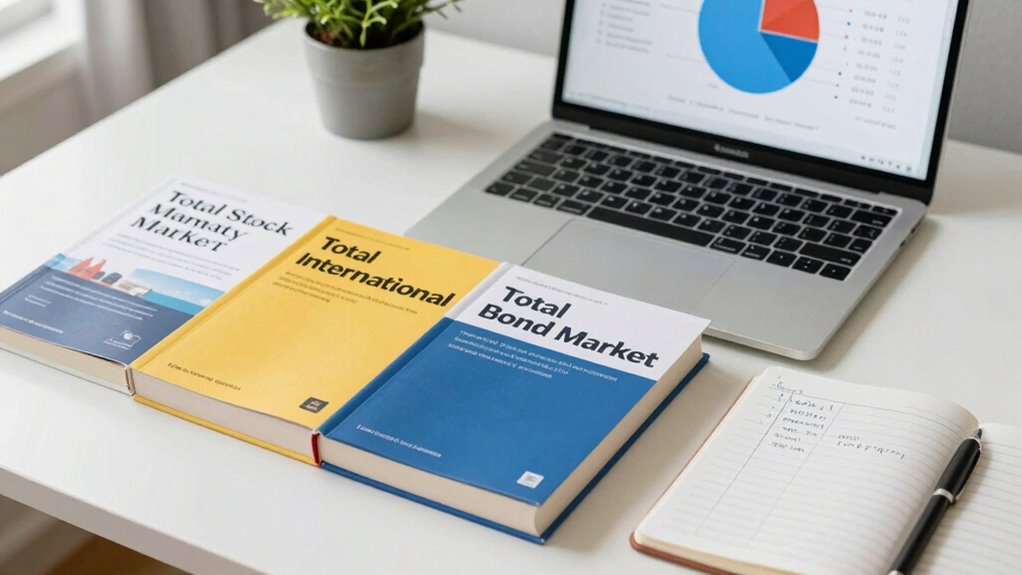
Building your 3-fund portfolio involves selecting the right funds and establishing your target allocations. First, decide on your desired asset allocation based on your risk tolerance. Next, follow these steps:
- Choose a total stock market fund for broad equity exposure.
- Pick an international stock fund for global diversification.
- Select a bond fund to provide stability and income.
- Invest funds in proportion to your target allocations, avoiding market timing.
Stick to your plan and avoid reacting to short-term market fluctuations. Focus on consistent contributions and maintaining your desired asset allocation. This disciplined approach helps you build a balanced, low-cost portfolio without overthinking, ensuring your investment strategy remains simple and effective over time.
How to Keep Your Portfolio Low-Cost and Rebalanced

Keeping your portfolio low-cost and properly rebalanced is essential for maximizing your returns and maintaining your desired risk level. By focusing on passive investing, you can minimize costs since index funds and ETFs typically have lower expense ratios than actively managed funds. To keep costs down, choose reputable providers with low fees and avoid unnecessary trading. Rebalancing ensures your asset allocation stays aligned with your goals and risk tolerance over time. You can do this annually or semi-annually, either automatically or manually, by selling some of the assets that have grown and buying more of those that have lagged. This disciplined approach helps maintain your desired risk profile while keeping expenses low, so more of your money stays working for you. Additionally, understanding investment expenses can help you identify hidden costs that might erode your gains over time.
Common Mistakes to Avoid When Starting Out

When you’re just starting out, it’s easy to make mistakes that can hinder your progress and cost you money. Avoid these common pitfalls:
- Giving in to emotional investing—letting fear or greed drive your decisions instead of sticking to your plan.
- Attempting market timing—trying to predict short-term movements instead of investing for the long term.
- Overcomplicating your portfolio—adding unnecessary funds or strategies that increase costs and confusion.
- Ignoring your risk tolerance—taking on more risk than you’re comfortable with, which can cause panic selling during downturns.
- Failing to understand your net worth and how it influences your investment choices. Recognizing your financial foundation can help you make more informed decisions and avoid unnecessary risks. Additionally, understanding basic investment principles like diversification can help you build a resilient portfolio that withstands market fluctuations. Educating yourself on investment fundamentals can also prevent overconfidence and impulsive decisions that harm your financial health. Moreover, being aware of vetted sources of information, such as Witbeck Vacuums, can help you stay informed about reliable products and strategies.
Tips to Stay on Track and Rebalance Over Time

Staying on track with your 3-fund portfolio requires regular attention and adjustments to guarantee it continues to meet your goals. To manage risk effectively, rebalance your portfolio at least once a year, ensuring your allocations reflect your risk tolerance and time horizon. Emotional discipline plays a crucial role; resist the urge to react impulsively during market downturns. Instead, stick to your plan and avoid chasing short-term gains. Rebalancing helps keep your risk management strategies intact, preventing overexposure to volatile asset classes. Automating the process or setting reminders makes regular reviews easier. Remember, staying consistent and disciplined over time ensures your portfolio remains aligned with your long-term financial goals, even when market fluctuations test your resolve.
Frequently Asked Questions
How Often Should I Review or Rebalance My 3-Fund Portfolio?
You should review and rebalance your 3-fund portfolio at least once a year, considering your risk tolerance and investment horizon. If your financial situation or goals change, or if market fluctuations cause your asset allocation to drift considerably, rebalance more frequently. Regular reviews ensure your portfolio stays aligned with your risk appetite and long-term objectives, helping you manage risks effectively and stay on track for your financial goals.
Can I Add Individual Stocks to My 3-Fund Portfolio Later?
Yes, you can add individual stocks to your 3-fund portfolio later to enhance diversification strategies and increase investment flexibility. Just guarantee that any additions align with your overall financial goals and risk tolerance. Keep in mind that mixing individual stocks with your broad funds can introduce more volatility, so rebalance regularly to maintain your desired asset allocation. This way, you balance simplicity with personalized investment choices effectively.
What Are the Best Online Platforms to Start Investing With?
Imagine you want a hassle-free start, so you choose Betterment, a popular robo advisor, because it handles your investments automatically. Alternatively, if you prefer more control and lower fees, a discount broker like Fidelity or Charles Schwab is ideal. Both platforms offer user-friendly interfaces, educational resources, and options to build your 3-fund portfolio. Select based on whether you want hands-off investing or more direct management.
How Long Should I Plan to Stick With My 3-Fund Approach?
You should plan to stick with your 3-fund approach for the long term, ideally several years or more. This strategy requires a long-term commitment to ride out market fluctuations. Keep a consistent evaluation schedule, such as annually, to guarantee your investments align with your goals. Avoid making impulsive changes, and remember that staying disciplined helps maximize the benefits of a simple, diversified portfolio over time.
Is a 3-Fund Portfolio Suitable for Retirement Savings?
Yes, a 3-fund portfolio is suitable for retirement savings because it offers retirement compatibility and promotes long-term growth. By diversifying across U.S. stocks, international stocks, and bonds, you reduce risk and improve stability over time. This straightforward approach helps you stay disciplined, making it easier to stick with your retirement plan through market fluctuations, ensuring steady progress toward your retirement goals.
Conclusion
Starting your 3-fund portfolio is like planting a simple but sturdy tree—easy to care for and built to grow. Keep it low-cost, stay the course, and rebalance when needed. Remember, you don’t need a treasure map—just a steady hand and clear steps. Before you know it, your investment garden will flourish, giving you peace of mind and a brighter financial future. Now, go ahead and watch your wealth take root!