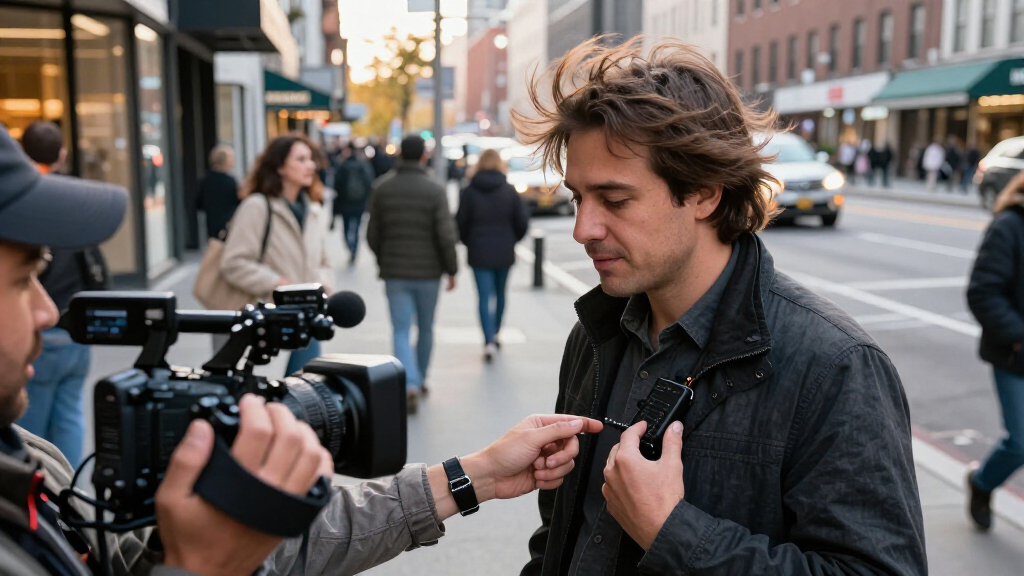

The best wireless lavalier microphones make spoken audio easier to capture without keeping a microphone in your hand. My best overall pick is the Hollyland Lark M2 Wireless Microphone System with Charging Case, which stands out for its multi-receiver kit and flexibility across recording setups. The DJI Mic 3 is a stronger fit for buyers seeking a more capable creator system, while the DJI Mic Mini favors a simpler, compact mobile workflow. The main tradeoffs are phone compatibility, the number and type of included receivers, and how much control you need beyond basic wireless recording. Read on for the full breakdown and guidance on matching a kit to your devices and recording style.

Get everyday essentials delivered free with Prime
- Fast, free delivery on millions of items
- Prime Video, Amazon Music and more included
- Member-only deals all year
Complete the kit


Key Takeaways
- Receiver compatibility separates many of the leading kits: the Lark M2 bundle with camera and USB-C receivers covers more recording setups than the USB-C-only version.
- The DJI Mic 3 and DJI Mic Mini serve different ambitions: the Mic 3 is the more feature-oriented creator option, while the Mic Mini is a compact route for straightforward mobile recording.
- Small phone-focused kits prioritize simplicity over expansion: Occiam, MAYBESTA, NEEWER KM19, and Mini Mic Pro are aimed at direct mobile use rather than broad camera workflows.
- Two-microphone bundles suit interviews better than single-person recording: dual-transmitter options such as the Hollyland and DJI kits can capture two speakers without a second wireless system.
- TONOR’s systems solve a different problem: their handheld, headset, and lavalier combinations favor flexible event or presentation use, not the smallest creator setup.
| Occiam Mini Wireless Lavalier Microphone for iPhone and Android |  | Best for Long Recording Days | Microphone type: Lavalier, omnidirectional | Connectors: Lightning and USB Type-C | Audio resolution: 48 kHz / 24-bit | VIEW LATEST PRICE | See Our Full Breakdown |
| MAYBESTA Wireless Mini Lavalier Microphone for iPhone and Android |  | Best for Two-Person Phone Recording | Model: WM356-1 | Microphone type: Mini lavalier, omnidirectional | Connectors: Lightning and USB Type-C | VIEW LATEST PRICE | See Our Full Breakdown |
| Hollyland Lark M2 Wireless Microphone System with Charging Case (2 Transmitters, 3 Receivers) | 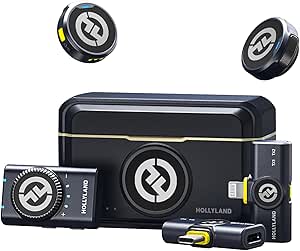 | Best for Multi-Device Versatility | Wireless connectivity: 2.4 GHz | Included configuration: 2 transmitters, 3 receivers, charging case | Connectors: 3.5 mm jack, Lightning, USB Type-C | VIEW LATEST PRICE | See Our Full Breakdown |
| Wireless Lavalier Microphone for iPhone and Android with 3 Noise Reduction Modes |  | Best for Adjustable Noise Reduction | Wireless connectivity: 2.4 GHz | Included microphones: 2 | Connectors: USB Type-C receiver with Lightning adapter | VIEW LATEST PRICE | See Our Full Breakdown |
| DJI Mic 3 Wireless Microphone System (2 Transmitters, 1 Receiver, Charging Case) |  | Best Premium Recording Control | Included components: 2 transmitters, 1 receiver, charging case, USB-C mobile phone adapter, and more | System capacity: Up to 4 transmitters and 8 receivers | Audio output: Four-channel output | VIEW LATEST PRICE | See Our Full Breakdown |
| DJI Mic Mini Wireless Microphone Kit (2 Transmitters, 1 Receiver, Charging Case) | 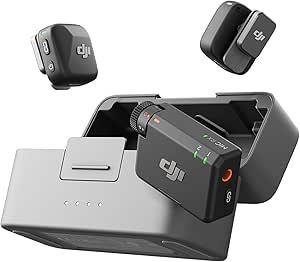 | Best for Long Recording Days | Transmitter weight: 10 g | Sampling rate: 48 kHz | Audio bit depth: 24-bit via supported OsmoAudio devices | VIEW LATEST PRICE | See Our Full Breakdown |
| NEEWER KM19 Mini Wireless Lavalier Microphone Kit, USB-C, Black |  | Best for USB-C Phone Controls | Connectivity: 2.4 GHz wireless | Connector: USB Type-C | Microphone type and pattern: Lavalier, omnidirectional | VIEW LATEST PRICE | See Our Full Breakdown |
| TONOR UHF Wireless Microphone System with 2 Headset and 2 Lavalier Mics |  | Best for Presentations and Fixed Sound Systems | Wireless system: UHF | Channels: 2 | Adjustable frequencies: 15 per bodypack; 30 total | VIEW LATEST PRICE | See Our Full Breakdown |
| TONOR Wireless Microphone System with Handheld, Headset, and Lavalier Mics |  | Best for Mixed Handheld and Lavalier Setups | Microphone types: 2 handheld, 2 headset, 2 lavalier | Wireless range: Up to 200 ft (60 m) | Channel information: 10 per microphone and bodypack; 20 channels listed in product information | VIEW LATEST PRICE | See Our Full Breakdown |
| Hollyland LARK A2 Wireless Microphone System with 2 Transmitters, 1 Receiver, and Charging Case |  | Best for Audio Safety Controls | Audio resolution: 48 kHz/24-bit | Wireless connectivity: 2.4 GHz | Wireless range: Up to 200 m (650 ft) | VIEW LATEST PRICE | See Our Full Breakdown |
| Hollyland Lark M2 Wireless Lavalier Microphone System with Camera and USB-C Receivers |  | Best for Camera and Phone Flexibility | Connectivity: 2.4 GHz | Connectors: 3.5 mm jack, USB Type-C | Audio format: 48 kHz/24-bit | VIEW LATEST PRICE | See Our Full Breakdown |
| DJI Mic Mini Wireless Microphone System (2 Transmitters + Mobile Receiver) |  | Best for Two-Person Mobile Recording | Transmitters: 2 | Receiver: 1 mobile receiver | Transmitter weight: 10 g each | VIEW LATEST PRICE | See Our Full Breakdown |
| Hollyland Lark M2 Wireless Lavalier Microphone for USB-C Devices | 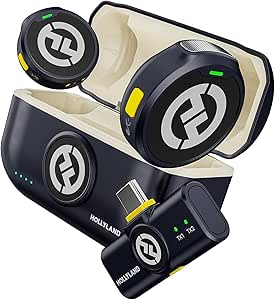 | Best Compact USB-C Pick | Connectivity: USB-C, wireless | Microphone type: Lavalier | Polar pattern: Omnidirectional | VIEW LATEST PRICE | See Our Full Breakdown |
| Labstandard Dual Wireless Lavalier Microphone for iPhone and USB-C Devices |  | Best for Mixed Lightning and USB-C Setups | Connectivity: Bluetooth, 2.4G wireless | Connectors: Lightning, USB Type-C | Microphone type: Lavalier, mini | VIEW LATEST PRICE | See Our Full Breakdown |
| Mini Mic Pro Wireless Lavalier Microphone for iPhone and Android | 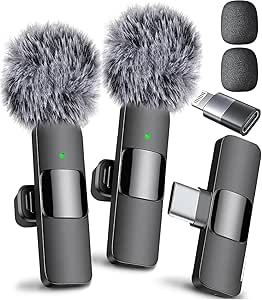 | Best for Simple Plug-and-Play Recording | Connectivity: Wireless; no app or Bluetooth required | Connectors: Lightning, USB Type-C | Compatible devices: Android, laptop, smartphone, tablet, iPad, iPhone | VIEW LATEST PRICE | See Our Full Breakdown |
| wireless lavalier microphone | Battery life |
|---|---|
| Occiam Mini Wireless Lavalier | Up to 10 hours per charge; up to 54 hours with charging case |
| MAYBESTA Wireless Mini Lavalie | — |
| Hollyland Lark M2 Wireless Mic | Up to 10 hours per charge; up to 40 hours with camera-version charging case |
| Wireless Lavalier Microphone f | Up to 6 hours per microphone charge; up to 30 hours with charging case |
| DJI Mic 3 Wireless Microphone | Up to 28 hours |
| DJI Mic Mini Wireless Micropho | — |
| NEEWER KM19 Mini Wireless Lava | Up to 6 hours per transmitter; up to 30 hours with charging case |
| TONOR UHF Wireless Microphone | — |
| TONOR Wireless Microphone Syst | — |
| Hollyland LARK A2 Wireless Mic | — |
| Hollyland Lark M2 Wireless Lav | Up to 10 hours per charge; up to 40 hours with camera-version charging case |
| DJI Mic Mini Wireless Micropho | — |
| Hollyland Lark M2 Wireless Lav | Up to 10 hours per charge; up to 30 hours with charging case |
| Labstandard Dual Wireless Lava | About 6 hours |
| Mini Mic Pro Wireless Lavalier | Up to 6 hours per charge |
More Details on Our Top Picks
Occiam Mini Wireless Lavalier Microphone for iPhone and Android
The Occiam stands out for creators who want to record away from an outlet: its case stretches claimed use to up to 54 hours, longer than the 40-hour case figure listed for the Hollyland Lark M2. The set includes both USB-C and Lightning receivers, so it can move between many newer Android and Apple devices without a separate receiver purchase. At just 7 g per microphone, it is also a light choice for clothing-mounted recording, and the furry windscreens help when filming outdoors. AI noise cancellation and phone charging while recording add useful flexibility, though the receiver draws power from the phone. Its 328 ft range is an obstacle-free maximum, not a promise for crowded or obstructed spaces. Skip it if you need action-camera support or use an incompatible OnePlus device.
Pros:- USB-C and Lightning receivers support a broad range of compatible phones and tablets.
- Charging case provides up to 54 hours of stated total recording time.
- Light 7 g microphone includes both magnetic-pad and clip attachment options.
- Furry windscreens and AI noise cancellation offer tools for reducing outdoor and background noise.
Cons:- Receiver draws power from the connected device.
- Not compatible with certain action cameras or OnePlus devices.
- The stated 328 ft range applies to obstacle-free conditions.
Best for: Mobile creators who record long sessions on compatible iPhone and Android devices and want one kit with both connector types.
Not ideal for: Action-camera users, owners of unsupported OnePlus devices, and anyone who needs the receiver to avoid drawing power from a connected phone.
- Microphone type:Lavalier, omnidirectional
- Connectors:Lightning and USB Type-C
- Audio resolution:48 kHz / 24-bit
- Wireless range:Up to 328 ft (100 m), obstacle-free
- Battery life:Up to 10 hours per charge; up to 54 hours with charging case
- Microphone weight:7 g
- Features:AI noise cancellation, phone charging while recording, battery displays, two furry windscreens
- Compatibility:Compatible Android and iOS devices, laptops, computers, smartphones, and tablets
Our verdict“Choose the Occiam for extended phone-based recording with flexible Apple and Android connections, but not for action-camera setups.”
MAYBESTA Wireless Mini Lavalier Microphone for iPhone and Android
MAYBESTA makes a straightforward case for two-person phone recording: the package includes two clip-on microphones, plus Lightning and USB-C connectors for compatible devices. Automatic pairing and plug-and-play operation keep setup simpler than the more feature-rich Hollyland Lark M2, which offers multiple receiver types and mono/stereo modes. Here, the appeal is a compact, direct kit for interviews, calls, and livestreams rather than an elaborate recording workflow. Noise reduction, windscreens, and a mute function cover useful basics, but the product data does not state battery runtime or wireless range. That makes it harder to plan longer shoots or judge how well it will work across a large space. It is also a phone-centered option; other connection types are not specified.
Pros:- Two microphones support interviews and other two-person recordings.
- Lightning and USB-C connectors serve compatible Apple and Android phones.
- Automatic pairing and plug-and-play operation reduce setup steps.
- Noise reduction, windscreens, and mute function cover practical recording needs.
Cons:- Battery runtime is not specified, making long-session planning difficult.
- Wireless range is not provided in the product data.
- Compatibility information focuses on phones and does not list camera connections.
Best for: Two-person interviewers and livestreamers recording on compatible Lightning- or USB-C-equipped phones who value simple setup over advanced controls.
Not ideal for: Creators who need published battery-runtime or range figures, camera connections, or a system with selectable mono and stereo recording modes.
- Model:WM356-1
- Microphone type:Mini lavalier, omnidirectional
- Connectors:Lightning and USB Type-C
- Microphones included:2
- Signal-to-noise ratio:80 dB
- Audio sensitivity:15 dB
- Features:Mute function, noise reduction, plug-and-play pairing, stable transmission
- Package contents:1 receiver, USB charging cable, 2 sponge tips, 2 lavalier microphones, 3 clips
Our verdict“Pick MAYBESTA for simple two-person recording on compatible phones, but choose a better-documented system for longer or camera-based shoots.”
Hollyland Lark M2 Wireless Microphone System with Charging Case (2 Transmitters, 3 Receivers)
The Lark M2 earns its place for creators who move between cameras, phones, and computers. Its three included receiver types—3.5 mm, Lightning, and USB-C—make it more adaptable across a mixed-device kit than the phone-focused MAYBESTA. Two transmitters support interviews, while 48 kHz/24-bit audio, mono and stereo modes, and noise cancellation give users more recording flexibility than a basic plug-and-play set. The stated 300 m transmission range is substantial, but it depends on a clear line of sight, so walls and interference can cut into practical reach. Battery life reaches up to 40 hours with the camera-version case. One workflow detail matters: switching mono and stereo on the camera receiver requires a 3.5 mm connection.
Pros:- Three receiver connections cover 3.5 mm, Lightning, and USB-C devices.
- Two transmitters and mono/stereo modes suit interviews and varied recording workflows.
- 48 kHz/24-bit audio and noise cancellation provide useful recording controls.
- Camera-version charging case provides up to 40 hours of stated battery life.
Cons:- The 300 m range requires a clear line of sight.
- Mono/stereo switching on the camera receiver requires a 3.5 mm connection.
- The feature set and receiver choices may be more than a phone-only beginner needs.
Best for: Content creators who record two-person conversations across cameras, phones, and computers and want multiple receiver options in one kit.
Not ideal for: Buyers seeking the simplest phone-only setup or those who need dependable maximum range through walls and other obstructions.
- Wireless connectivity:2.4 GHz
- Included configuration:2 transmitters, 3 receivers, charging case
- Connectors:3.5 mm jack, Lightning, USB Type-C
- Audio format:48 kHz / 24-bit
- Transmission range:Up to 300 m line of sight
- Battery life:Up to 10 hours per charge; up to 40 hours with camera-version charging case
- Recording modes:Mono and stereo
- Frequency response:20 Hz–20 kHz
- Maximum sound pressure level:115 dB
Our verdict“Choose the Lark M2 if your recording setup spans cameras and mobile devices; phone-only users may prefer a simpler kit like MAYBESTA.”
Wireless Lavalier Microphone for iPhone and Android with 3 Noise Reduction Modes
This two-microphone kit is aimed at phone creators who want a choice of noise-control settings rather than a single fixed treatment. Its three noise reduction modes, including AI noise cancellation, let users adjust for different recording environments; the Hollyland Lark M2 offers noise cancellation too, but this set emphasizes mode selection alongside a compact, phone-first design. The included USB-C receiver and Lightning adapter cover compatible devices, and the receiver can charge a connected phone while recording. Low latency under 35 ms is helpful for monitoring speech in sync. The tradeoffs are clear: the microphones run for up to six hours per charge, the 130 ft range needs a clear line of sight for a stable link, and DSLR and action-camera support is excluded. Some phones may also need OTG enabled.
Pros:- Three noise reduction modes give more control over background sound.
- Two microphones support interviews and other two-person recordings.
- USB-C receiver and included Lightning adapter serve compatible phones and tablets.
- Receiver supports phone charging while recording, and latency is under 35 ms.
Cons:- Microphone runtime is up to 6 hours per charge.
- Not compatible with DSLR or action cameras.
- Stable connection depends on clear line of sight, and some phones may require OTG settings.
Best for: Phone-based interviewers and livestreamers who want two microphones, adjustable noise reduction, and the option to charge their phone during recording.
Not ideal for: Creators recording to DSLR or action cameras, or those who need longer microphone runtime or a wireless link designed for obstructed spaces.
- Wireless connectivity:2.4 GHz
- Included microphones:2
- Connectors:USB Type-C receiver with Lightning adapter
- Audio quality:48 kHz / 24-bit
- Noise reduction:3 modes
- Wireless range:Up to 130 ft
- Battery life:Up to 6 hours per microphone charge; up to 30 hours with charging case
- Latency:Less than 35 ms
- Compatibility:Compatible iPhone and Android devices, iPad, MacBook, PC, and laptops; not DSLR or action cameras
Our verdict“Pick this kit for adjustable noise control and two-person phone recording, but look elsewhere for camera compatibility or longer per-charge runtime.”
DJI Mic 3 Wireless Microphone System (2 Transmitters, 1 Receiver, Charging Case)
The DJI Mic 3 is the most control-oriented pick in this group, built for creators who want a backup recording path as well as a receiver-based wireless link. Its dual-file 32-bit float internal recording can preserve more usable audio when input levels vary, while adaptive gain control and two noise-cancellation levels help shape the recording around changing conditions. Compared with the Hollyland Lark M2, which lists 48 kHz/24-bit audio and several receiver connections, DJI leans harder on onboard recording and integration with compatible DJI devices through OsmoAudio. The kit includes two transmitters and one receiver, though the system can support more components. That capability does not mean they are included. Battery life is up to 28 hours, and some features depend on compatible DJI gear.
Pros:- Dual-file 32-bit float internal recording provides an onboard recording option for variable input levels.
- Adaptive gain control and two noise-cancellation levels offer recording adjustments.
- Three voice tones support different vocal sound preferences.
- System supports up to four transmitters and eight receivers, with up to 28 hours of use.
Cons:- Some functions require compatible DJI devices.
- The included kit has two transmitters and one receiver, not the system’s full supported capacity.
- The supplied product data does not specify wireless range or connector details beyond the USB-C mobile adapter.
Best for: Mobile journalists, interviewers, and DJI-device owners who want onboard recording safeguards, adjustable sound controls, and room to expand their system.
Not ideal for: Buyers seeking a low-complexity phone-only lavalier kit, or anyone who expects the included package to contain more than two transmitters and one receiver.
- Included components:2 transmitters, 1 receiver, charging case, USB-C mobile phone adapter, and more
- System capacity:Up to 4 transmitters and 8 receivers
- Audio output:Four-channel output
- Internal recording:Dual-file 32-bit float
- Noise cancellation:2 levels
- Voice tones:3
- Battery life:Up to 28 hours
- Device connection:OsmoAudio direct connection with compatible DJI devices
Our verdict“Choose the DJI Mic 3 for internal recording safeguards and a DJI-centered workflow, but not if you only need a basic phone lavalier.”
DJI Mic Mini Wireless Microphone Kit (2 Transmitters, 1 Receiver, Charging Case)
The DJI Mic Mini is the strongest fit here for creators who need a two-person wireless lavalier setup that can run for long sessions. Its charging case supports up to 48 hours of battery life, more than the Hollyland LARK A2’s stated 42 hours, while each 10 g transmitter stays unobtrusive on clothing. Two noise-cancellation levels let you choose between lighter processing and stronger noise reduction, and automatic limiting helps reduce sudden clipping. The stated 400 m transmission range is generous, though real-world range can shrink around obstacles and interference. The kit works with cameras and smartphones, but DJI OsmoAudio features and Bluetooth connectivity may make it a more natural fit for DJI users. It is not waterproof, and compatibility with Osmo Mobile products has a specific accessory requirement.
Pros:- Two compact 10 g transmitters suit long wear and on-camera interviews.
- Charging case supports up to 48 hours of total battery life.
- Two noise-cancellation levels offer a choice between lighter and stronger processing.
- Automatic limiting can help prevent loud audio peaks from clipping.
Cons:- The transmitters are not waterproof.
- Osmo Mobile series connection requires the first-generation DJI OM Multifunctional Module.
- Its feature set may be more than needed for simple phone-only recording.
Best for: Video creators and interviewers who need two lightweight transmitters and long case-supported recording time across camera or smartphone shoots.
Not ideal for: Outdoor creators working in rain or buyers who want uncomplicated connection to Osmo Mobile products without checking accessory compatibility.
- Transmitter weight:10 g
- Sampling rate:48 kHz
- Audio bit depth:24-bit via supported OsmoAudio devices
- Maximum sound pressure level:120 dB SPL
- Maximum transmission range:Up to 400 m
- Battery life with charging case:Up to 48 hours
- Noise cancellation:2 levels: Basic and Strong
- Connectivity:Bluetooth, DJI OsmoAudio, USB Type-C
- Included components:2 transmitters, 1 receiver, charging case, accessories
Our verdict“Choose the DJI Mic Mini if long case-supported runtime and a lightweight two-person setup matter more than weather protection.”
NEEWER KM19 Mini Wireless Lavalier Microphone Kit, USB-C, Black
The NEEWER KM19 is aimed at USB-C phone creators who want two microphones and direct recording controls without stepping up to a camera-focused kit like the DJI Mic Mini. Its receiver connects through USB Type-C, and the supplied OTG adapters, windscreens, and pouch make it ready for a range of mobile setups. Three noise-cancellation levels give more adjustment than the DJI’s two, while mute control and stereo or mono output help adapt recordings to different formats. The tradeoff is a shorter stated 100 m range and up to 30 hours of total battery life, below the DJI and Hollyland LARK A2 case totals. Compatibility also takes some checking: select Android phones may need OTG activation, and its app interaction is limited to Android.
Pros:- Two transmitters, a charging case, OTG adapters, windscreens, and pouch are included.
- Three noise-cancellation levels offer flexible voice processing.
- Mute control and stereo or mono output support different recording needs.
- Up to 30 hours of total battery life suits multiple short shoots between charges.
Cons:- Its stated 100 m range is shorter than the DJI Mic Mini and Hollyland LARK A2.
- Some Android devices require OTG activation before use.
- GoPro is not supported, and app interaction is limited to Android.
Best for: USB-C smartphone creators who record interviews or social video with two speakers and want several noise-reduction settings and included setup accessories.
Not ideal for: GoPro users, creators who need broad iOS app controls, or Android users unwilling to check OTG compatibility on their phone.
- Connectivity:2.4 GHz wireless
- Connector:USB Type-C
- Microphone type and pattern:Lavalier, omnidirectional
- Sampling and bit depth:48 kHz, 24-bit
- Frequency response:20 Hz–20 kHz
- Maximum SPL:120 dB
- Battery life:Up to 6 hours per transmitter; up to 30 hours with charging case
- Wireless range:Up to 100 m (328 ft)
- Included components:1 receiver, 2 transmitters, 1 charging case, 2 OTG adapters, charging cable, 2 windscreens, pouch
Our verdict“Pick the KM19 for a USB-C phone workflow with two speakers and adjustable controls, provided your device supports its connection requirements.”
TONOR UHF Wireless Microphone System with 2 Headset and 2 Lavalier Mics
Unlike the compact, phone-oriented DJI Mic Mini and NEEWER KM19, the TONOR TW632 is built around a rechargeable receiver that feeds compatible sound equipment through a 1/4-inch output. That makes it the more practical choice for classes, presentations, or events where a speaker system is already part of the setup. Two bodypacks can each be used with either a headset or lapel microphone, giving presenters a choice between a visible headset and a discreet lavalier. Its UHF system offers 15 adjustable frequencies per bodypack and a stated 60 m line-of-sight range. The compromises are substantial for mobile creators: it needs an external sound system, each bodypack uses two AA batteries that are not included, and its receiver runtime is shorter than the charging-case kits in this roundup.
Pros:- Includes two bodypacks, two lavalier mics, and two headset mics.
- 15 adjustable frequencies per bodypack provide channel options for setup.
- Rechargeable receiver runs for a stated 6–8 hours.
- Bodypacks include LCD displays, individual volume controls, and mute switches.
Cons:- Each bodypack needs two AA batteries, which are not included.
- The receiver requires compatible equipment with a 1/4-inch microphone input.
- Its receiver battery life is shorter than the case-supported runtimes of the DJI Mic Mini and Hollyland LARK A2.
Best for: Teachers, presenters, and event hosts who need two wearable microphones that connect to a mixer, amplifier, or other 1/4-inch input sound system.
Not ideal for: Phone-first vloggers or camera creators seeking a self-contained pocket receiver, rechargeable transmitters, or direct USB-C recording.
- Wireless system:UHF
- Channels:2
- Adjustable frequencies:15 per bodypack; 30 total
- Range:Up to 200 ft (60 m), line of sight
- Receiver output:6.35 mm (1/4-inch) jack
- Receiver battery life:6–8 hours
- Receiver charging time:Approximately 2–3 hours
- Bodypack power:2 AA batteries each, not included
- Included microphones:2 headset mics and 2 lapel mics
Our verdict“Choose the TW632 for two-person presentations through a compatible sound system, not for direct-to-phone content recording.”
TONOR Wireless Microphone System with Handheld, Headset, and Lavalier Mics
The TONOR TW362 makes sense when a lavalier is only one part of a larger event setup. It includes two handheld microphones as well as two bodypacks that can be used with headset or lavalier mics, giving presenters, hosts, and performers more ways to take a turn speaking than the lavalier-focused TONOR TW632. Automatic pairing and a receiver connection for mixers, amplifiers, karaoke machines, and powered speakers keep it suited to venue audio rather than phone recording. The stated range reaches 200 ft (60 m), but the kit relies on AA batteries for its microphones and bodypacks. Channel information is also inconsistent in the product data, so I would not choose it for a setup where precise channel planning is a priority.
Pros:- Combines two handheld microphones with headset and lavalier options.
- Automatic pairing simplifies startup for a compatible sound-system setup.
- Connects to common venue equipment through the included 1/4-inch audio cable.
- Stated wireless range reaches up to 200 ft (60 m).
Cons:- Microphones and bodypacks require AA batteries that are not included.
- Channel details conflict between 10 per microphone and bodypack and 20 listed overall.
- The receiver is designed for audio equipment rather than direct smartphone recording.
Best for: Event hosts and community venues that need handheld microphones for audience-facing use plus wearable lavalier or headset options for presenters.
Not ideal for: Mobile creators who need a compact receiver that plugs into a phone or buyers who require clear, consistent channel specifications before planning a multi-mic setup.
- Microphone types:2 handheld, 2 headset, 2 lavalier
- Wireless range:Up to 200 ft (60 m)
- Channel information:10 per microphone and bodypack; 20 channels listed in product information
- Polar pattern:Unidirectional
- Connections:XLR; 1/4-inch (6.35 mm) audio cable included
- Power:2 AA batteries per microphone or bodypack, not included
- Signal-to-noise ratio:60 dB
- Enclosure material:Metal and plastic
- Included accessories:Receiver, 2 mic covers, 2 anti-slip rings, audio cable, power adapter, manual
Our verdict“Choose the TW362 when handheld and wearable microphone options matter more than a compact, phone-ready lavalier system.”
Hollyland LARK A2 Wireless Microphone System with 2 Transmitters, 1 Receiver, and Charging Case
The Hollyland LARK A2 is the most appealing option here for creators who want extra safeguards against uneven or overly loud speech. Its AI Auto-Limit and -6 dB safety track are intended to reduce the risk of a clipped take, while adjustable noise cancellation and AI voice tuning give more sound-shaping options than the basic controls on the TONOR TW632. The two 8.5 g transmitters are light for extended wear, and the case supports up to 42 hours total runtime—slightly less than the DJI Mic Mini’s stated 48 hours. Its 200 m range is ample for many shoots, though walls and radio interference can reduce it. Some features, including AI voice tuning, use the HollyAudio app, so this is a less compelling choice for anyone who wants every control without companion software.
Pros:- AI Auto-Limit and a -6 dB safety track provide added protection against clipping.
- Adjustable noise cancellation and AI voice tuning offer sound-shaping options.
- Lightweight 8.5 g transmitters suit longer recording sessions.
- Charging case supports up to 42 hours of total battery life.
Cons:- The DJI Mic Mini lists a longer case-supported runtime of up to 48 hours.
- Wireless range can vary with surroundings and interference.
- Some features, including AI voice tuning, require the HollyAudio app.
Best for: Solo creators and interviewers who want lightweight dual transmitters, noise adjustment, and extra protection against clipping during unpredictable dialogue.
Not ideal for: Buyers who want the longest stated case runtime in this group or prefer not to use an app for sound-processing features.
- Audio resolution:48 kHz/24-bit
- Wireless connectivity:2.4 GHz
- Wireless range:Up to 200 m (650 ft)
- Transmitter weight:8.5 g each
- Battery life per transmitter:Up to 7 hours; up to 9 hours with AI Power Saving
- Total battery life with charging case:Up to 42 hours
- Maximum SPL:120 dB
- Microphone type and pattern:Lavalier, omnidirectional
- Included components:2 transmitters, 1 receiver, charging case
Our verdict“Pick the LARK A2 if clipping safeguards and adjustable audio processing matter more than maximum case runtime or app-free control.”
Hollyland Lark M2 Wireless Lavalier Microphone System with Camera and USB-C Receivers
The Lark M2 is my pick for creators who switch between a camera and a USB-C device: its camera and USB-C receivers make it more adaptable than the USB-C-only Hollyland Lark M2. The transmitters record 48 kHz/24-bit audio, and noise cancellation offers a way to reduce distracting background sound. Its stated 300 m range is useful for recording at a distance, though that figure assumes a clear line of sight, not a crowded room or blocked signal. Battery life reaches 10 hours per charge, with up to 40 hours using the camera-version charging case. The tradeoff is that mono/stereo switching works only through the camera receiver’s 3.5 mm connection, so phone users do not get that control. I’d choose it over the DJI Mic Mini when camera connectivity matters more than its dual-transmitter mobile setup.
Pros:- Includes camera and USB-C receivers for flexible device connections.
- Lightweight 9 g microphone design is unobtrusive when clipped to clothing.
- Records 48 kHz/24-bit audio and includes noise cancellation.
- Camera-version charging case supports up to 40 hours of use.
Cons:- The 300 m maximum range depends on unobstructed line of sight.
- Mono/stereo switching is limited to the camera receiver’s 3.5 mm connection.
Best for: Creators who record with both a camera and USB-C phone or computer and want one microphone system for both setups.
Not ideal for: USB-C phone-only users who want the simplest receiver setup, or anyone who needs mono/stereo switching while recording through a phone.
- Connectivity:2.4 GHz
- Connectors:3.5 mm jack, USB Type-C
- Audio format:48 kHz/24-bit
- Transmission range:Up to 300 m (1,000 ft), line of sight
- Battery life:Up to 10 hours per charge; up to 40 hours with camera-version charging case
- Channels:2
- Signal-to-noise ratio:70 dB
- Maximum sound pressure level:115 dB
- Compatible devices:Camera, smartphone, computer
Our verdict“Choose this Lark M2 if you alternate between camera and USB-C recording; skip it if you need receiver-specific audio controls on a phone.”
DJI Mic Mini Wireless Microphone System (2 Transmitters + Mobile Receiver)
With two transmitters and a mobile receiver, this DJI Mic Mini suits interviews and shared-camera videos better than the single-person USB-C Hollyland Lark M2. Its two noise-cancellation levels let creators choose between lighter processing and stronger background reduction, while automatic audio limiting helps guard against sudden loud peaks. Each transmitter weighs 10 g, and the stated operating time reaches 11.5 hours, giving it a practical advantage for longer sessions over the six-hour Mini Mic Pro. The 300 m maximum range is still a line-of-sight figure, and the system is not waterproof, so outdoor use calls for care around rain. Direct connection to DJI Osmo Mobile series devices also depends on a first-generation DJI OM Multifunctional Module. I’d favor this over the Lark M2 when recording two voices on a mobile setup is the priority.
Pros:- Two transmitters support two-person interviews and shared videos.
- Two noise-cancellation levels offer a choice of processing strength.
- Automatic audio limiting helps control sudden loud peaks.
- Up to 11.5 hours of operating time exceeds the stated runtime of the Mini Mic Pro.
Cons:- The system is not waterproof.
- Direct Osmo Mobile series connection requires the first-generation DJI OM Multifunctional Module.
- The 300 m maximum range assumes a clear line of sight.
Best for: Mobile interviewers, livestreamers, and creators who need two wireless transmitters for recording two people at once.
Not ideal for: Creators who record in wet conditions or rely on direct connection to newer DJI Osmo Mobile devices without the specified module.
- Transmitters:2
- Receiver:1 mobile receiver
- Transmitter weight:10 g each
- Maximum transmission range:300 m
- Maximum operating time:11.5 hours
- Noise cancellation:2 levels: Basic and Strong
- Audio format:48 kHz/24-bit when directly connected to supported OsmoAudio devices
- Connector:USB Type-C
- Water resistance:Not waterproof
Our verdict“Pick the DJI Mic Mini for two-person mobile recording and longer stated runtime, but not for wet environments or module-free Osmo Mobile pairing.”
Hollyland Lark M2 Wireless Lavalier Microphone for USB-C Devices
This USB-C version of the Lark M2 keeps the appeal of the camera-and-phone model—9 g weight, 48 kHz/24-bit audio, and long stated range—in a simpler phone-first package. Plug-and-play connectivity and automatic pairing make it a cleaner fit for USB-C Android phones, newer iPhones, tablets, and computers than the Labstandard dual set, whose connector and compatibility details are less consistent. The up to 30 hours with its charging case is handy for frequent recording, though the standalone runtime is up to 10 hours and drops when noise cancellation is on. Its 1,000 ft range also assumes line of sight, so walls and other obstructions can limit practical reach. Compared with the camera-and-USB-C Lark M2, this model gives up receiver flexibility for a more direct USB-C setup.
Pros:- At 9 g, the microphone is lightweight and discreet when worn.
- USB-C plug-and-play connection supports compatible phones, computers, and tablets.
- Records 48 kHz/24-bit audio with adjustable noise cancellation.
- Charging case supports up to 30 hours of total use.
Cons:- The 1,000 ft range is a line-of-sight maximum and can fall with obstructions.
- Up to 10 hours per charge is specified with noise cancellation off.
- USB-C-only receiver setup is less adaptable for camera users than the camera-and-USB-C Lark M2.
Best for: USB-C phone and tablet creators who want a lightweight, plug-and-play lavalier with a charging case.
Not ideal for: Camera-first users who need a 3.5 mm receiver connection, or creators who require the stated full battery runtime with noise cancellation enabled.
- Connectivity:USB-C, wireless
- Microphone type:Lavalier
- Polar pattern:Omnidirectional
- Audio format:48 kHz/24-bit
- Wireless range:Up to 1,000 ft, line of sight
- Battery life:Up to 10 hours per charge; up to 30 hours with charging case
- Weight:9 g
- Compatible devices:USB-C Android phones, iPhone 15 and newer, computers, cameras, and tablets
Our verdict“Choose this version for a compact USB-C recording kit, but select the camera-and-USB-C Lark M2 if you need a 3.5 mm camera connection.”
Labstandard Dual Wireless Lavalier Microphone for iPhone and USB-C Devices
The Labstandard set offers two microphones and receiver options listed for Lightning and USB-C, which could suit interviewers who work across older iPhones and newer devices. That broad connector promise is its main distinction from the USB-C-only Hollyland Lark M2. Noise reduction and claimed 0.008-second audio sync target common talking-head, podcast, and livestream use, but the product data gives less confidence than the DJI Mic Mini’s clearly described two-level cancellation and automatic limiting. There is also a meaningful documentation concern: the listing describes rechargeable operation while also naming included C batteries, and its compatibility details are inconsistent. With about six hours of battery life, it is less suited to all-day recording than either Lark M2. I’d treat it as a budget-conscious, mixed-device option only if its connectors are confirmed for the specific devices you use.
Pros:- Includes two omnidirectional wireless microphones for two-person recording.
- Lists both Lightning and USB Type-C receiver connections.
- Noise reduction is included for speech-focused recording.
- Claims 0.008-second real-time audio sync.
Cons:- Battery information is unclear: rechargeable operation is claimed, but C batteries are also listed.
- Compatibility and connector descriptions are inconsistent.
- About six hours of battery life is shorter than the stated runtimes of the Lark M2 models and DJI Mic Mini.
Best for: Casual interviewers using a mix of Lightning and USB-C devices who need two microphones and can verify receiver compatibility before buying.
Not ideal for: Creators who need dependable, clearly documented compatibility, longer sessions, or predictable battery and charging details.
- Connectivity:Bluetooth, 2.4G wireless
- Connectors:Lightning, USB Type-C
- Microphone type:Lavalier, mini
- Polar pattern:Omnidirectional
- Channels:2
- Battery life:About 6 hours
- Weight:0.05 kg
- Dimensions:4.5 x 3.3 x 0.7 inches
- Included accessories:Receiver kit, user manual, USB-C charging cable
Our verdict“Consider this set only if you need two microphones across Lightning and USB-C devices and can confirm the connector and charging details first.”
Mini Mic Pro Wireless Lavalier Microphone for iPhone and Android
The Mini Mic Pro is aimed at creators who want a direct, app-free connection across Lightning and USB-C devices, without setting up Bluetooth. Its included adapters and wind covers make it more immediately useful outdoors than the camera-focused Hollyland Lark M2, particularly for short phone videos where wind is a concern. The package lists two microphones and one receiver, so it can support two-person recording, but the stated battery life is only up to six hours—well below the Lark M2 models’ per-charge figure. The supplied foam and dead cat covers address wind, not every kind of background noise, and the specifications contain a notable inconsistency: the listed weight is 80 g even though the description calls the unit under an ounce. I’d choose it for straightforward phone recording, not for long shoots or spec-sensitive workflows.
Pros:- Includes Lightning and USB-C adapters for compatible devices.
- Plug-and-play operation does not require an app or Bluetooth pairing.
- Package includes two microphones, one receiver, and clips.
- Foam and dead cat covers help reduce wind noise in outdoor recordings.
Cons:- Up to six hours of battery life is shorter than the Lark M2 models’ stated per-charge runtime.
- Listed weight of 80 g conflicts with the description calling it under an ounce.
- Wind covers address wind noise but do not establish broader noise-cancellation performance.
Best for: Phone-first creators who want a simple Lightning or USB-C connection, included wind covers, and a kit listing two microphones.
Not ideal for: Creators recording long sessions or buyers who need consistent, clearly verified weight and battery specifications.
- Connectivity:Wireless; no app or Bluetooth required
- Connectors:Lightning, USB Type-C
- Compatible devices:Android, laptop, smartphone, tablet, iPad, iPhone
- Polar pattern:Omnidirectional
- Battery life:Up to 6 hours per charge
- Listed weight:80 g
- Dimensions:3 x 0.5 x 0.25 inches
- Included components:2 lavalier microphones, 1 receiver, USB charging cable, 2 clips, 2 foam covers, 2 dead cat covers
Our verdict“Pick the Mini Mic Pro for quick phone videos with included wind covers, but look to a Lark M2 for longer per-charge recording.”

How We Picked
I compared these 15 wireless lavalier microphone kits by the decisions that most affect real recording setups: included transmitters and receivers, phone and camera compatibility, ease of getting started, and flexibility for solo or two-person recording. A kit with multiple receiver types has a broader role than one designed only for a phone, while a simple mobile receiver may be the better match for creators who record on a single device.
The ranking gives priority to versatility and practical fit, then weighs setup complexity and the intended use of each system. That places adaptable creator kits ahead of basic phone-focused options for buyers who want one purchase to cover several situations; compact and simpler kits remain good matches for narrow needs. I also distinguished presentation systems from wearable lavalier systems, since handheld and headset microphones suit different recording work. Product names and bundle contents are the basis for these comparisons; I do not infer unprovided performance figures.
Factors to Consider When Choosing Wireless Lavalier Microphones
Before choosing a kit, match it to the way you record rather than treating every wireless mic as interchangeable. Your device, number of speakers, and recording environment shape which features will matter after setup.
Match the receiver to your recording device
Start by checking how the receiver connects to the exact phone, tablet, or camera you plan to use. A USB-C receiver can be convenient for compatible phones, but it does not automatically cover cameras or devices with another connector. Bundles that include more than one receiver type offer flexibility, though unused adapters add little value if your workflow never changes. Check whether your device can record from an external microphone through its camera or recording app, since the connector alone does not guarantee a smooth setup. Avoid buying based only on the phone brand or the phrase “for iPhone and Android”; verify the connector and the device generation. If you record on both a phone and a camera, prioritize a kit with the matching receivers rather than planning to solve compatibility later.
Choose one or two transmitters based on who speaks
A single transmitter can be enough for tutorials, solo commentary, or personal video updates. Interviews and two-person recordings are easier when a kit supports two transmitters, since each speaker can wear a mic and move naturally. The extra transmitter does not automatically improve a solo recording, and it can add charging and setup tasks. Think about whether the speakers will talk at once, take turns, or move at different distances; those needs affect how you manage the recording, not just how many mics are in the box. A dual-mic kit is a practical fit for regular interviews, while occasional co-host appearances may not justify added complexity. Do not assume a kit includes two transmitters just because its product name says “dual wireless”; check the listed bundle contents.
Decide how much control your recordings need
Basic plug-in kits can suit short social videos when quick setup matters more than detailed adjustments. More involved creator systems may offer a workflow better matched to people who record regularly or switch between production settings. Extra controls are useful only if you know when you would use them and can manage them during a shoot. For a beginner, a straightforward connection path can prevent missed recordings; for a creator managing interviews, repeat shoots, or camera work, greater system flexibility may be worth the learning curve. Read the product details for the controls and functions actually included rather than assuming every feature associated with a brand applies to every model. A simpler mic that you can connect reliably may serve you better than a more elaborate kit you rarely configure correctly.
Plan for the recording environment, not just the microphone
A wireless lavalier can keep a speaker mic’d while they move, but it cannot make every noisy room sound quiet. Wind, traffic, reverberant rooms, clothing movement, and nearby conversations can all affect speech capture. Noise-reduction modes may help in some situations, yet heavy processing can change how a voice sounds, so treat them as a tool rather than a replacement for a quieter location. Clip placement matters too: fabric rubbing near the microphone can distract from speech even when the wireless link works. For outdoor recordings, plan for wind protection and a quick test recording before the full take. For presentations in larger spaces, a headset or handheld system may fit the job better than a tiny clip-on mic.
Weigh compact size against handling and flexibility
Mini transmitters are appealing when a visible, bulky mic would interfere with the shot or when a creator wants to travel light. Small size can also make controls and connection status harder to check at a glance, so an unobtrusive design is not always the easiest one to manage. Consider where the transmitter will clip, whether clothing allows a stable position, and how you will confirm that audio is being recorded. A charging case can make a portable kit easier to carry and keep its components together, but it does not replace checking the included receiver and charging arrangements. If you work across several devices, a slightly larger kit with broader receiver options may be more useful than the smallest option. Choose compactness when it serves the shot, not as a substitute for compatibility.
Spend for a specific workflow, not a feature list
Paying for a more capable system makes sense when its added flexibility solves a recurring problem, such as recording two speakers or switching between phone and camera. It is harder to justify extra complexity for occasional solo clips made on one compatible phone. Presentation systems with handheld, headset, and lavalier options address changing speaker preferences and event formats, while compact creator kits are easier to carry for personal video work. Make a short list of your current recording devices, usual number of speakers, and most common recording locations before comparing bundles. This helps distinguish useful versatility from accessories that will stay unused. If your workflow is likely to change, favor a kit whose included connection options cover those likely changes rather than buying around hypothetical needs.
Frequently Asked Questions
Can one wireless lavalier kit work with both my phone and a camera?
Sometimes, but the answer depends on the receiver included with that specific bundle. A USB-C-only receiver is aimed at compatible devices and may not connect directly to a camera. A kit that lists both camera and USB-C receivers is a better match if you regularly switch between those recording sources. Check the connector type and any stated device requirements before ordering, and confirm that your recording app accepts external microphone input. If you only use one phone, paying for camera compatibility may add little practical value.
Should I choose a kit with two transmitters if I usually record alone?
Not automatically. A second transmitter is useful for interviews, co-hosted videos, and conversations where both speakers need to move freely. For solo videos, it may add a component you need to charge, store, and keep track of without changing your usual setup. Consider whether two-person recordings are a regular part of your plans rather than an occasional possibility. If they are, a dual-transmitter bundle can be simpler than trying to add a separate system later.
Are phone-only wireless microphones suitable for recording video?
They can be a good fit when you record on a compatible phone and want a direct, lightweight setup. Their main limitation is flexibility: a receiver designed for a phone may not serve a camera or another device you add later. Check your phone’s connector and recording-app support, and make a short test before an important shoot. For creators who expect to change devices, a kit with multiple receiver options may be a better long-term fit. The right choice depends on your recording workflow, not whether a product is labeled “for video.”
When does a handheld or headset microphone make more sense than a lavalier?
A lavalier is convenient when a speaker needs free hands and a discreet microphone. A headset can be a better match for presentations or instruction where the speaker moves and needs a wearable mic positioned near the mouth. A handheld option suits situations where the mic will be passed between speakers or held by a presenter. TONOR’s mixed microphone bundles address those presentation-style needs more directly than compact phone-oriented kits. Choose by how the speaker will move and handle the microphone, not by assuming a lavalier is the best format for every wireless recording.
What should I check before recording outdoors with a wireless lavalier?
Test the microphone in the actual location and listen for wind, traffic, and other background sounds before recording the full take. Check that the mic is clipped securely and that clothing does not rub against it when the speaker moves. Noise-reduction modes can be useful in some settings, but they do not remove every distracting sound or replace careful placement. Confirm that the receiver is connected and that your phone or camera is recording from the external mic. A brief test saves time by revealing setup problems before you capture a long video.
Conclusion
For the broadest creator setup in this lineup, my best overall pick is the Hollyland Lark M2 system with charging case and multiple receivers; it suits buyers who need more than a phone-only connection. The best premium choice is the DJI Mic 3 for creators who want a more feature-oriented system, while the DJI Mic Mini is a better match for compact, straightforward mobile recording. For best value in simplicity, compare the phone-focused options such as Occiam, MAYBESTA, NEEWER KM19, and Mini Mic Pro against your exact device and bundle needs rather than paying for unused flexibility. Beginners who record on one compatible phone can start with a simple plug-in kit, while people filming interviews should favor a two-transmitter bundle. For events and presentations that call for different mic styles, choose a TONOR system with handheld, headset, and lavalier options instead of a compact creator kit.