TL;DR

Get everyday essentials delivered free with Prime
- Fast, free delivery on millions of items
- Prime Video, Amazon Music and more included
- Member-only deals all year
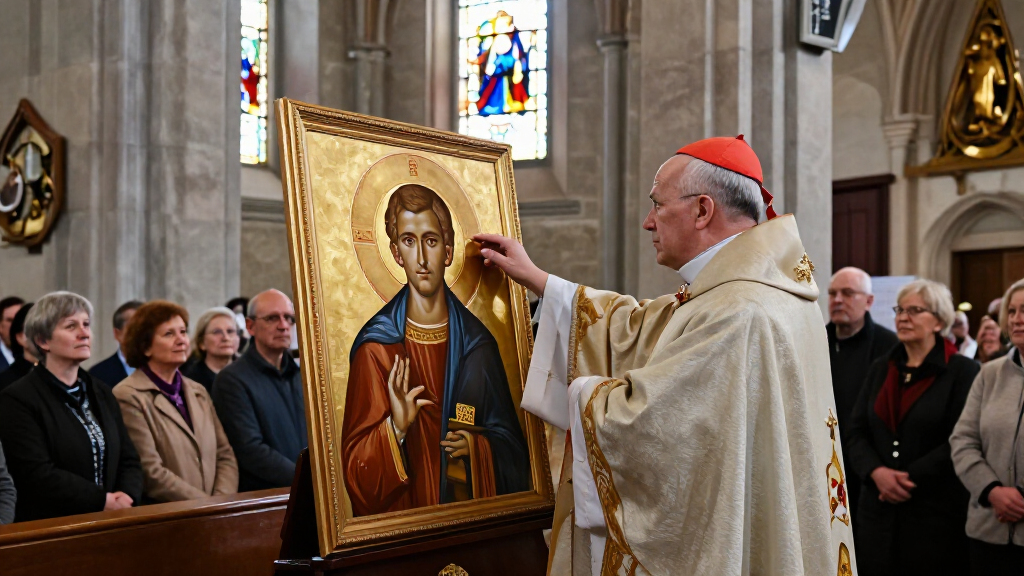
Archbishop Tadeusz Kondrusiewicz blessed an AI-generated image of Carlo Acutis at a church in Novolukoml on October 11, according to Belarusian outlet Katolik.life. The outlet reported criticism on social media over whether an AI-created image can be considered an icon; the claim that this was Belarus’s first such blessing has not been independently verified.
Archbishop Tadeusz Kondrusiewicz, the former head of the Catholic Church in Belarus, blessed an AI-generated image of Carlo Acutis on October 11 at the Church of St. Mary Magdalene in Novolukoml, Belarusian outlet Katolik.life reported. The reported blessing has prompted a dispute among believers over whether an image made with artificial intelligence can properly be called an icon.
The image depicts Acutis, an Italian teenager canonized by the Vatican in 2025. Katolik.life reported that the blessing took place at the church in Novolukoml. The available report does not describe how the image was generated, who created it, or whether it was commissioned for the church.
According to Katolik.life, some believers criticized the blessing on social media, arguing that an AI-generated image cannot be considered an icon. The outlet also described the event as the first blessing of an AI-generated icon in Belarus. That “first” claim is attributed to Katolik.life; Meduza said it could not find information about similar images being blessed in other countries, including Russia.
The reporting confirms the blessing as described by the Belarusian outlet, but does not establish an official Church position on AI-generated religious images. No statement from Kondrusiewicz or a church authority explaining the decision or responding to the criticism is included in the source material.
AI Enters Religious Image Debate
The episode brings a practical question about artificial intelligence and religious practice into a church setting: whether an image produced using AI can serve as an icon, and what role an artist, a blessing, or the image’s intended use plays in that judgment. The social-media criticism reported by Katolik.life shows that the question is contested among at least some believers, rather than settled by this event.
The development may draw attention because Acutis is closely associated with digital culture. He built websites for Catholic organizations and created a website documenting miracles, and he is often described as the “patron saint of the internet.” An AI-generated image of him therefore connects two technologies—digital media and generative AI—with a traditional form of religious art. The report does not show that the blessing changes church teaching or establishes a broader practice.
Catholic religious icons digital art
As an affiliate, we earn on qualifying purchases.
As an affiliate, we earn on qualifying purchases.
Acutis and His Digital Legacy
Carlo Acutis was an Italian teenager who came to faith as a child, learned to code, and built websites for Catholic organizations. He also created a website documenting reported miracles around the world. He died of leukemia in 2006 at age 15. The Vatican canonized him in 2025, and he has been described as the first millennial saint.
Kondrusiewicz is the former head of the Catholic Church in Belarus. The reported blessing took place in Novolukoml, at the Church of St. Mary Magdalene. Meduza’s October 13 report, citing Katolik.life, said it had not found information about similar blessings elsewhere, including Russia. That search result is not proof that no such event has occurred in another country.
“An AI-generated image cannot be considered an icon.”
— Believers cited by Katolik.life
Church Position Still Unstated
The available reporting does not explain how the image was made, who generated or supplied it, or what process Kondrusiewicz followed in blessing it. It also does not include a direct comment from the archbishop, the parish, or a church authority on the criticism or on whether the image should be understood as an icon.
Katolik.life’s description of the event as Belarus’s first is not independently verified in the source material. The scope of the social-media response is also unclear: the report does not provide the number of critics or indicate whether their objections reflect a wider view among Belarusian Catholics.
Further Church Comment Awaited
The next useful development would be a statement from Kondrusiewicz or the parish clarifying the image’s creation and the reason for the blessing. A response from relevant Catholic authorities could also show whether the event reflects an individual decision or a wider approach to AI-generated religious images.
For now, the reported blessing and the criticism described by Katolik.life are the confirmed elements in the available account. No further church guidance, disciplinary action, or planned review is identified in the source material.
Key Questions
Who blessed the AI-generated image?
Archbishop Tadeusz Kondrusiewicz, the former head of the Catholic Church in Belarus, blessed it on October 11, according to Katolik.life.
Where is the image?
The image is in the Church of St. Mary Magdalene in Novolukoml, Belarus, according to the report.
Who does the image depict?
It depicts Carlo Acutis, the Italian teenager canonized by the Vatican in 2025. Acutis built websites for Catholic organizations and documented reported miracles online.
Has the Catholic Church ruled that AI-generated images cannot be icons?
The source material reports criticism from believers on social media, but gives no official church ruling on the image or on AI-generated icons generally.
Was this the first blessing of an AI-generated icon?
Katolik.life called it the first such blessing in Belarus. Meduza said it could not find information about similar blessings in other countries, but that does not establish that none have occurred.
Source: rss
Columbus Day / Indigenous Peoples' Day Picks
long weekend sales
As an affiliate, we earn on qualifying purchases.