
The key to cutting food waste quickly is proper storage combined with organized meal prep. Use airtight containers and label them with dates to keep track of freshness. Store leafy greens with paper towels, and keep fruits and vegetables in the right conditions for longer shelf life. Rotating older items to the front helps you use them first. Consistently maintaining these practices keeps food fresh longer and reduces waste — learn more about these smart food storage rules below.

Get everyday essentials delivered free with Prime
- Fast, free delivery on millions of items
- Prime Video, Amazon Music and more included
- Member-only deals all year
Key Takeaways
- Label containers with dates to prioritize older food and prevent spoilage.
- Store produce properly, like crisper drawer lining or room temperature, to maximize freshness.
- Rotate older products to the front of the fridge or pantry for quick use.
- Keep similar items together for easy inventory and meal planning.
- Use airtight containers to preserve meals and reduce odors, extending shelf life.
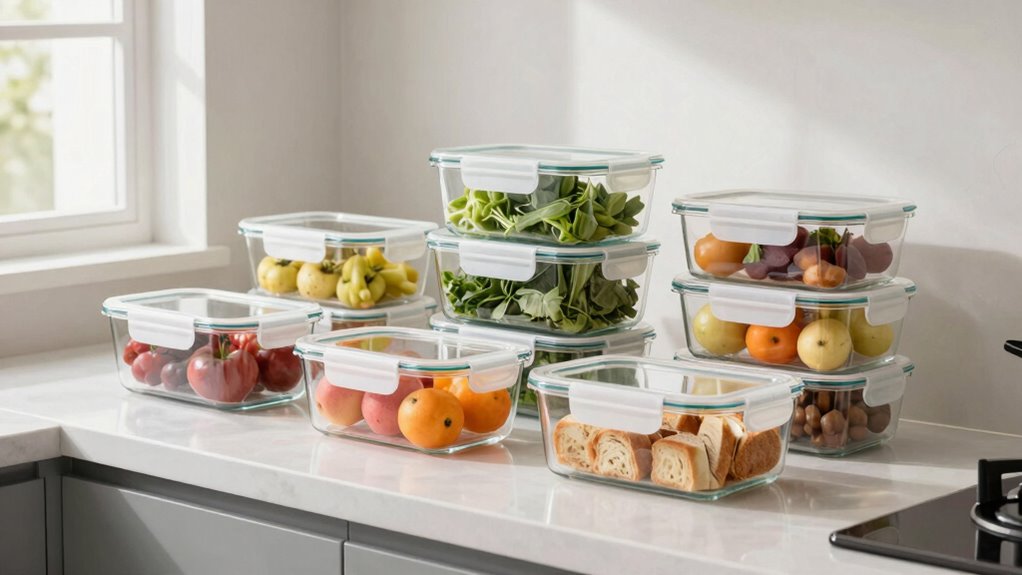
Have you ever wondered how to keep your food fresh longer and prevent waste? If so, mastering a simple food storage rule can make a big difference, especially when it comes to meal prep and fresh produce. The key is understanding how to store different types of food properly and recognizing the importance of organization. When you prep your meals ahead of time, you create a system that minimizes the chances of spoilage. Use airtight containers to keep your prepared meals fresh and to prevent odors from spreading. Labeling these containers with dates helps you keep track of freshness, so you consume older items first, reducing waste.
Prep meals in airtight containers, label with dates, and prioritize older items first to reduce waste and keep food fresh longer.
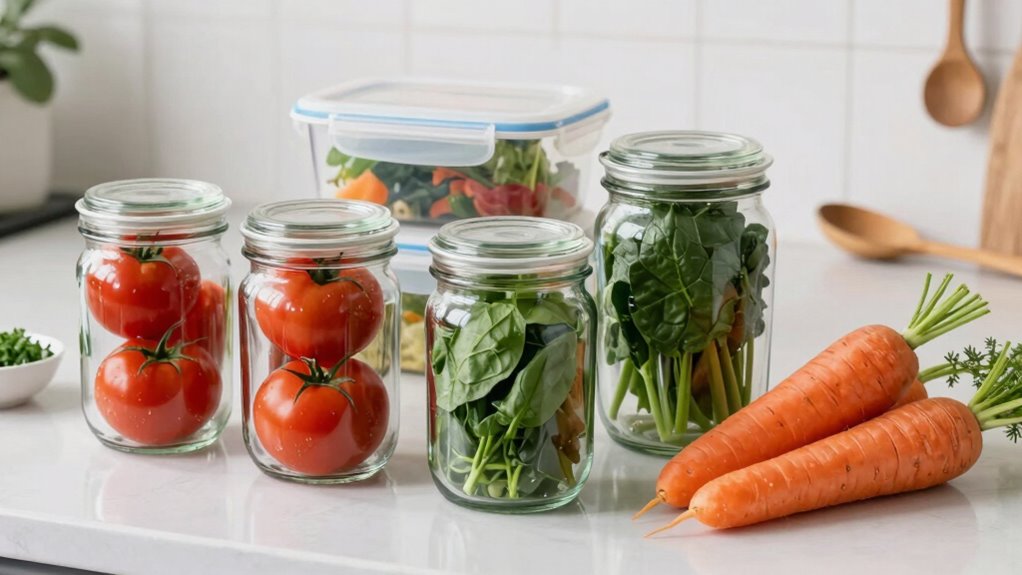
Fresh produce is especially delicate and tends to spoil quickly if not stored correctly. You might be tempted to toss everything into the fridge haphazardly, but a better approach is to understand the specific needs of each type of fruit or vegetable. For example, leafy greens stay fresh longer if you store them in a crisper drawer lined with a paper towel, which absorbs excess moisture. Tomatoes, on the other hand, prefer room temperature until ripe, then go into the fridge for longer storage. Implementing this knowledge means you get to enjoy your fresh produce at its peak, rather than throwing away spoiled items.
A simple but effective food storage rule is to prioritize organization. When your fridge and pantry are tidy, it’s easier to see what you have and plan your meals accordingly. Keep similar items together, and rotate older products to the front so you use them first. This habit reduces the chance of forgetting about food in the back of the fridge, which often leads to waste. Also, avoid over-packing your fridge, as good airflow helps maintain consistent temperatures, keeping food fresh longer.
In addition to organization, pay attention to storage conditions. Some foods last longer in the fridge, while others do better in a cool, dark pantry. For example, root vegetables and onions are best stored in a well-ventilated area outside the fridge. Keeping produce in the right environment cuts down on spoilage and makes your grocery shopping more efficient. Proper food storage techniques can also help prevent spoilage caused by improper temperature control. When you combine proper storage with meal prep routines, you’re less likely to buy more than you need or let leftovers go bad.
Adopting this simple food storage rule—being organized, understanding storage needs, and prepping smart—helps you cut down on waste quickly. It’s a straightforward approach that saves money, reduces environmental impact, and ensures your food stays fresh and delicious longer.
airtight food storage containers with date labels
As an affiliate, we earn on qualifying purchases.
As an affiliate, we earn on qualifying purchases.
Frequently Asked Questions
How Long Can Different Foods Be Stored Safely?
You can generally store foods safely for varying periods, but always check expiration dates and spoilage indicators. For example, dairy lasts about a week past expiration if unopened, while cooked meats should be eaten within 3-4 days. Fresh produce varies, with leafy greens lasting about a week, and fruits around 1-2 weeks. Always trust your senses—if it smells or looks off, it’s best to discard it.
What Are the Best Containers for Food Storage?
Think of your fridge as a treasure chest—you want to protect its contents. Reusable containers are your best bet, especially BPA free options that keep your food fresh and safe. Glass or high-quality plastic containers with tight-fitting lids prevent leaks and odors. Choose BPA free to avoid harmful chemicals. These containers not only reduce waste but also keep your food’s flavor intact, making your storage both smart and sustainable.
Does Temperature Affect Food Shelf Life?
Yes, temperature affects your food’s shelf life by influencing food spoilage and bacterial growth. When you store food at proper temperatures, you slow down bacterial growth, keeping your food fresher longer. Cold environments like refrigerators inhibit spoilage, while warm temperatures accelerate bacterial activity, leading to quicker food waste. Always check storage guidelines to maintain ideal temperatures and prevent spoilage, ensuring your food stays safe and fresh for as long as possible.
How Can I Prevent Freezer Burn?
To prevent freezer burn, you should focus on good freezer organization and proper packaging techniques. Wrap foods tightly in airtight packaging, like plastic wrap or vacuum-sealed bags, to prevent air exposure. Store similar items together to maintain consistent temperatures, and avoid leaving the door open too long. Label everything clearly, so you use older items first, reducing the chance of freezer burn and waste. Proper storage keeps your food fresh longer.
Are There Specific Storage Tips for Leftovers?
To store leftovers properly, use creative labeling with dates and contents to keep track of freshness. Store leftovers in airtight containers to prevent spoilage and freezer burn. Consider leftover repurposing by transforming them into new meals, reducing waste. When freezing, remove excess air to preserve quality. These tips help you extend shelf life, minimize waste, and make meal prep easier and more sustainable.
Conclusion
Remember, mastering mindful food storage minimizes waste and maximizes freshness. By following simple strategies, you’ll safeguard supplies, save significant sums, and sustain sustainability. Stick to smart storage methods, stay organized, and regularly check your perishables. This disciplined approach not only diminishes waste but also delights your wallet and the planet. So, start small, stay systematic, and see how swiftly your waste whittles away, leaving you with more meals and fewer scraps—making every bite count!
Columbus Day / Indigenous Peoples' Day Picks
long weekend sales
As an affiliate, we earn on qualifying purchases.