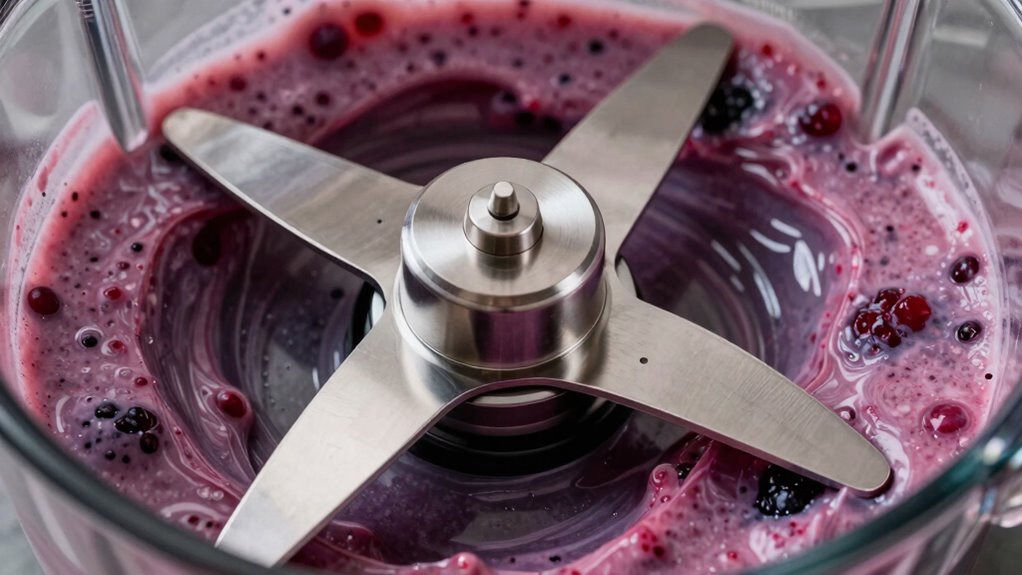

The key blade design detail that changes texture in high-end blenders is the shape and angle of the blades. Well-crafted blades with sharp edges and optimized angles cut, crush, and emulsify ingredients more thoroughly, resulting in smoother or chunkier textures depending on your needs. They also promote better ingredient circulation inside the jar. If you keep exploring, you’ll discover how these design features work together to deliver perfect blending results every time.
Key Takeaways
- Blade shape and angles optimize ingredient circulation, resulting in smoother or chunkier textures as desired.
- Sharp, high-quality stainless steel blades ensure uniform cutting and crushing for consistent results.
- Designed blade geometries improve emulsification and blending efficiency, affecting final consistency.
- Blade material durability maintains sharpness over time, ensuring ongoing texture quality.
- Synergy with motor power enhances performance, producing superior textures across various blending tasks.
High-end blenders have revolutionized the way you prepare smoothies, soups, and sauces by offering powerful performance and advanced features. One of the most critical factors influencing their effectiveness is the design of the blades, which directly impacts texture and consistency. When considering a high-end blender, you’ll notice that motor efficiency and blade material are often highlighted as key elements that set these appliances apart from standard models. Understanding how these components work together helps you appreciate why some blenders produce perfectly smooth blends while others fall short.
Motor efficiency is at the heart of a high-performance blender. It determines how well the blender can handle tough ingredients, blend at high speeds, and maintain consistent power without overheating or straining. A more efficient motor uses less energy to deliver maximum power, meaning you get faster blending times and less noise during operation. This efficiency often translates into a longer lifespan for the appliance, as less unnecessary heat and wear are generated during use. When you’re choosing a blender, look for models with motors that offer high torque at high speeds. This ensures that even the toughest ingredients—frozen fruits, nuts, or fibrous vegetables—are pulverized into a smooth, uniform texture without leaving chunks or graininess.
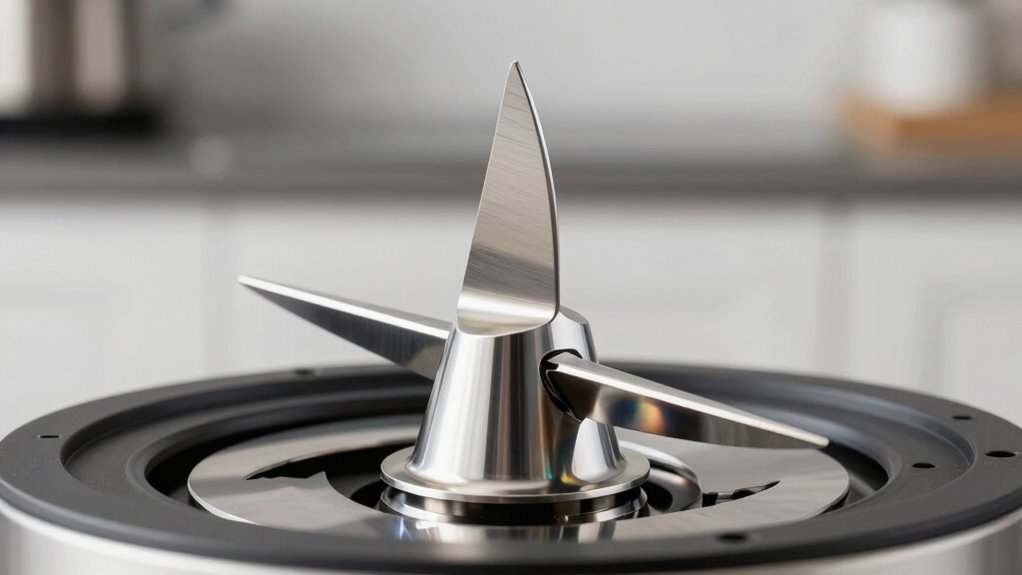
Blade material plays a pivotal role in how effectively your blender processes ingredients. High-end blenders typically feature blades made from durable materials like stainless steel, which resist corrosion and maintain sharpness longer than plastic or lesser metals. The quality of the blade material directly affects its ability to cut, crush, and blend ingredients efficiently. Sharp, well-made blades allow for cleaner cuts and better circulation of ingredients within the jar, resulting in a smoother blend. Furthermore, the design and material of the blades influence how thoroughly ingredients are processed—whether you want a silky smoothie or a chunky salsa, the right blade material can make all the difference. Many high-end models also incorporate blade designs that are optimized for specific purposes, such as crushing ice or emulsifying liquids, which further enhances the overall texture of your finished product. Additionally, the blade design can impact not only texture but also how well the blender handles different ingredient consistencies, making it a key consideration.
In essence, the combination of a highly efficient motor and top-quality blade material ensures your blender operates at peak performance. This synergy allows for faster, more consistent blending with less effort, giving you perfectly smooth textures every time. When you select a high-end blender, pay attention to these design details—they’re what elevate your blending experience from ordinary to exceptional. These features not only improve the quality of your creations but also extend the lifespan of your appliance, making it a worthwhile investment for anyone serious about culinary precision.
Frequently Asked Questions
How Do Blade Materials Affect Blending Performance?
Blade materials directly impact blending performance by influencing blade durability and resistance to material corrosion. When you choose blades made from high-quality stainless steel, they stay sharper longer, ensuring smooth blending and reducing the need for frequent replacements. Durable blades also resist corrosion from acidic ingredients, maintaining peak performance over time. This means your blender consistently delivers excellent texture, making your blending experience more efficient and satisfying.
Can Blade Design Influence Noise Levels During Operation?
Yes, blade design can influence noise levels during operation. You might notice that sound reduction and vibration control are directly affected by blade shape and angle. A well-designed blade minimizes vibrations, leading to quieter blending. Suspense builds as you realize that the right blade design doesn’t just improve performance—it also creates a more pleasant, less disruptive experience, making your blending quieter and more enjoyable every time.
Are There Safety Features Related to Blade Design?
Yes, there are safety features related to blade design. You’ll find safety mechanisms like automatic shut-off and blade guards that prevent accidental contact. The blade guard covers the blades when not in use, reducing injury risk, while safety interlocks ensure the blender only operates when assembled correctly. These features make handling your high-end blender more secure, giving you peace of mind while blending.
How Often Should Blender Blades Be Replaced?
You should replace your blender blades every 1 to 2 years, depending on usage. Regular blade sharpening can extend their life, but if you notice dullness or decreased blending performance, it’s time for substitution. Keep an eye on replacement intervals, especially if you blend tough ingredients often. Proper maintenance ensures your blades stay sharp longer, helping you achieve smooth textures and consistent results every time.
Do Blade Designs Impact Cleaning Ease?
Yes, blade designs considerably impact cleaning ease. You’ll find that blades with wider, smoother edges are easier to maintain because they don’t trap food as easily. To keep your blades in top shape, use proper cleaning techniques like soaking and gentle scrubbing. Regular blade maintenance prevents buildup and ensures your blender performs smoothly, saving you time and effort during cleaning and extending its lifespan.
Conclusion
Ultimately, understanding the intricate design of blender blades transforms your texture experiences. By recognizing the delicate dance of design details, you empower yourself to pick the perfect powerhouse. Precision blades produce perfectly purees, providing polished, pristine results every time. So, seize the skill and savor the sensational smoothies, soups, and salsas. Remember, it’s the subtle, sophisticated subtlety of blade design that dramatically determines your deliciously dynamic textures.