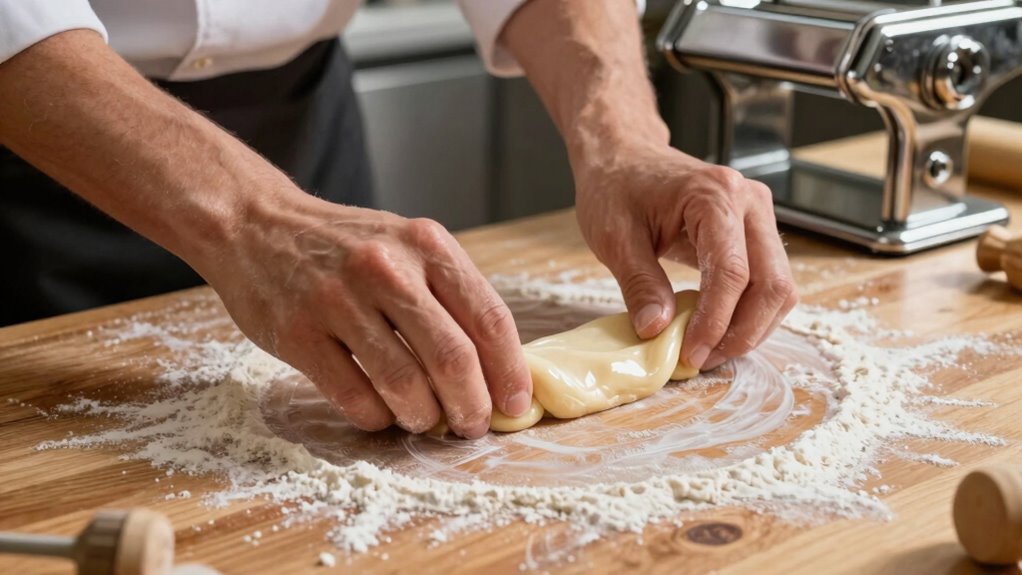

To prevent jams in your pasta maker, make sure your dough has the right hydration level—moist but not sticky, similar to playdough. Measure ingredients carefully and add water gradually, kneading well for even consistency. Overly dry dough will be tough to feed and cause jams, while wet dough sticks and clogs rollers. Mastering these hydration rules helps your machine run smoothly—stick around to learn exactly how to achieve the perfect dough consistency every time.

Get everyday essentials delivered free with Prime
- Fast, free delivery on millions of items
- Prime Video, Amazon Music and more included
- Member-only deals all year
Key Takeaways
- Proper dough hydration ensures it is moist but not sticky, reducing the risk of jams in both manual and automatic pasta makers.
- Measure flour and water accurately, adding liquids gradually to achieve optimal dough consistency.
- Overly dry dough is tough to feed and increases jam chances, while overly wet dough sticks and clogs rollers.
- Knead dough thoroughly to evenly distribute moisture, improving smoothness and machine compatibility.
- Regularly check and adjust dough hydration before feeding it into the machine for consistent, jam-free operation.
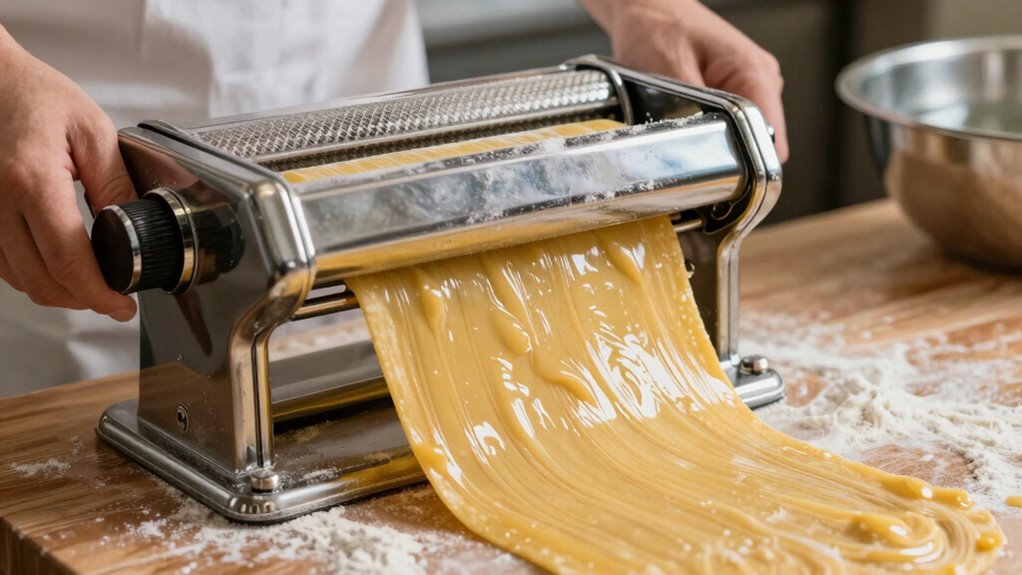
Have you ever wondered how easy it is to make fresh pasta at home? With the right pasta maker, you can transform simple ingredients into delicious, homemade noodles in no time. When choosing a pasta maker, you’ll find options like hand crank models and those with automatic features, each offering different benefits. Hand crank models are great if you want a hands-on experience; they give you control over the dough’s thickness and texture. Plus, they’re usually more affordable and don’t require electricity, making them perfect for traditionalists or those with limited space. Using a hand crank model might seem a little labor-intensive at first, but once you get the hang of turning the handle steadily, it becomes almost meditative. These models typically come with adjustable rollers so you can gradually thin out your dough to your desired thickness. However, if convenience is your priority, automatic features in some pasta makers can save you time and effort. These machines often have motorized rollers that do the work for you, allowing you to focus on preparing the dough and shaping your pasta. Some models even come with multiple attachments for different pasta shapes, adding versatility to your kitchen arsenal. No matter which type you choose, understanding the importance of dough hydration is key to avoiding jams and ensuring smooth operation. Overly dry dough will be tough to feed through the rollers and can cause the machine to jam, while overly wet dough can stick and clog the rollers. The ideal dough consistency is moist but not sticky—think of it as similar to playdough that holds together but isn’t wet. To achieve this, you should carefully measure your flour and water, adding liquids gradually until the dough feels just right. When working with a hand crank model, it’s especially important to keep the dough at this optimal hydration level, as dry or overly sticky dough can make turning the handle difficult and lead to jams. For automatic models, the same rule applies—if the dough isn’t properly hydrated, the machine’s rollers can become clogged or jammed, reducing efficiency and risking damage. Regularly check your dough’s texture before feeding it into the machine, and don’t rush the process. Knead it thoroughly, ensuring even hydration throughout. This simple step can prevent frustrating jams and give you consistent, high-quality pasta every time. Properly hydrated dough not only prevents jams but also results in smooth, tender pasta that’s a joy to eat. Additionally, using a dedicated esthetician magnifying lamp can help you better inspect your dough and ensure it’s perfectly hydrated before feeding it into the machine.
manual pasta maker with adjustable rollers
As an affiliate, we earn on qualifying purchases.
As an affiliate, we earn on qualifying purchases.
Frequently Asked Questions
How Do I Clean My Pasta Maker Properly?
To clean your pasta maker properly, start by removing any leftover pasta dough and crumbs. Use a dry brush or a damp cloth to clean the rollers and cutters, avoiding water on the mechanical parts. Make certain the pasta dough consistency was appropriate to prevent jams. Regular cleaning keeps your pasta maker in top shape, making future pasta making easier. Always dry thoroughly before storing to prevent rust or damage.
Can I Use Gluten-Free Flour in My Pasta Maker?
Yes, you can use gluten-free alternatives in your pasta maker. Just adjust your dough’s consistency—making it slightly moister helps prevent sticking and jams. Gluten-free flours vary, so experiment with hydration levels to find the perfect mix. Keep in mind, gluten-free dough might be more delicate, so handle it gently and clean your machine thoroughly afterward. This way, you’ll produce perfectly pliable pasta without any pesky problems.
What’s the Best Storage Method for Homemade Pasta?
For pasta storage, you want to keep your fresh pasta fresh and prevent spoilage. Lay it flat on a baking sheet lined with parchment paper or dust it lightly with flour, then cover with a clean towel or plastic wrap. For longer storage, refrigerate in an airtight container for up to two days or freeze it to extend preservation. Proper pasta storage guarantees your homemade pasta stays delicious and ready whenever you want it.
How Long Does Homemade Pasta Typically Last?
Think of your homemade pasta as a fleeting star—bright but delicate. Typically, it lasts 1-2 days in the fridge when properly stored, maintaining freshness if you follow good pasta preservation and freshness tips. To extend its life, keep it in an airtight container or wrap it tightly. For longer storage, freeze it—up to 2 months—ensuring you enjoy your pasta at its best, just like catching a rare, beautiful moment.
Are There Safety Precautions for Using Electric Pasta Makers?
When using an electric pasta maker, you should prioritize electric safety by keeping the cord away from water and making sure your hands are dry. Always read the user manual for specific safety tips, and unplug the machine when not in use. Regular machine maintenance, like cleaning and inspecting for wear, prevents accidents and ensures smooth operation. Follow these precautions to enjoy safe, efficient pasta making every time.
Conclusion
Just as a master chef knows the secret to perfect pasta lies in understanding dough hydration, you now hold the key to preventing jams. By following these simple rules, you’re paving your way to smooth, effortless pasta making—like a symphony of water and flour in harmony. Remember, balance is everything; too much or too little can throw off the rhythm. With this knowledge, you’re ready to create pasta as flawless as a well-composed melody.
Halloween Picks
halloween
As an affiliate, we earn on qualifying purchases.