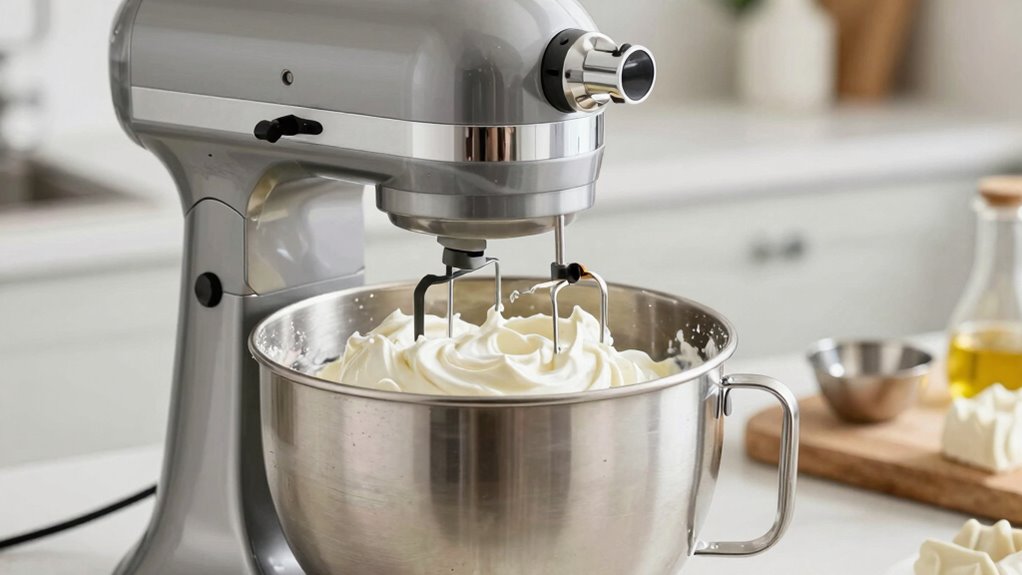

Wattage alone doesn’t tell you how well a stand mixer performs. Higher watts don’t always mean better mixing or capacity—they just indicate power consumption. The real factor is motor efficiency, which determines how effectively that power converts into smooth, reliable operation. An efficient motor handles larger loads without straining or overheating, even at lower wattage. To truly understand performance, it’s important to look beyond wattage—stick around if you want to uncover what really makes a mixer work better.
Key Takeaways
- Wattage alone doesn’t indicate a mixer’s ability to handle large or dense batches efficiently.
- Motor efficiency is crucial; a high-wattage motor isn’t always more effective than a lower-wattage, efficient one.
- Higher wattage can mean more heat and energy waste if the motor isn’t designed for optimal performance.
- Mixing capacity depends on motor design and efficiency, not just wattage rating.
- Choosing a mixer based solely on wattage ignores important factors like build quality and motor engineering.
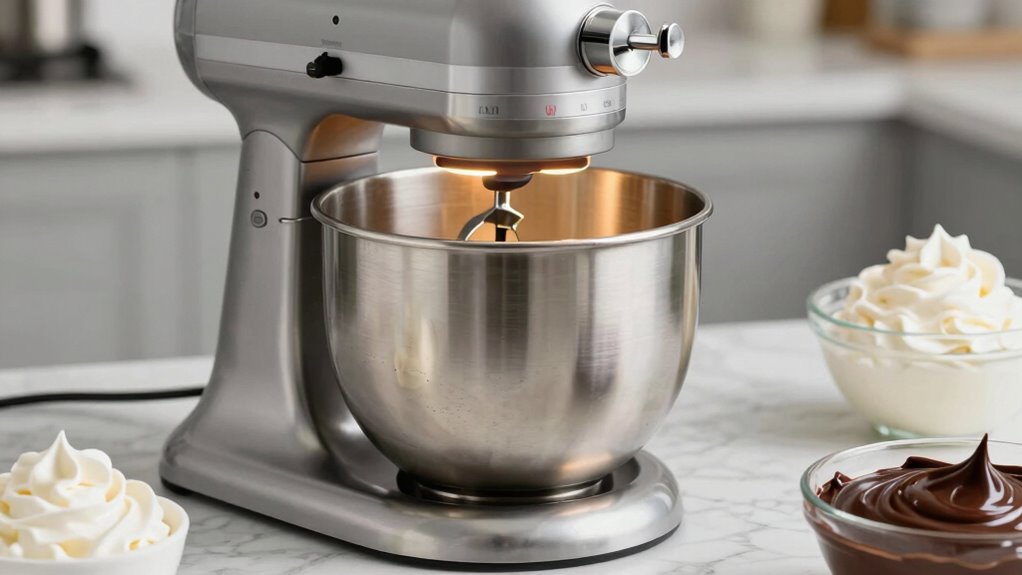
Many people assume that a higher wattage stand mixer is always better, but this isn’t necessarily true. Wattage alone doesn’t tell you how well a mixer will perform, especially when it comes to motor efficiency and mixing capacity. A powerful motor with high wattage might seem like the obvious choice, but if it’s not efficient, it won’t deliver better results or last as long. Motor efficiency refers to how effectively the motor converts electrical energy into mechanical power. If a mixer has a high wattage but poor efficiency, it may waste energy, generate more heat, and wear out faster. Conversely, a motor that’s designed to be efficient can produce the necessary power without excessive wattage, leading to smoother operation and longer durability.
When considering a stand mixer, you should also pay attention to its mixing capacity, which is the maximum amount of ingredients it can handle comfortably. A mixer with a high wattage might suggest it can manage larger batches, but that’s not always the case. The mixing capacity depends on the motor’s ability to sustain power while working through dense or large quantities of dough or batter. A motor that’s optimized for efficiency can often handle bigger loads without stalling or overheating, even if its wattage isn’t the highest. On the other hand, a less efficient motor might struggle with larger batches, causing uneven mixing or motor strain, regardless of its wattage.
Additionally, motor efficiency impacts energy consumption and operational costs, making it an important factor beyond simple wattage ratings. What really matters is how well the motor balances power and efficiency. A mixer with a moderate wattage but a highly efficient motor can outperform a more powerful but less efficient model. It’s also worth considering the design of the gearbox and the overall construction, as these elements influence how the motor’s power translates into mixing performance. A well-designed mixer leverages motor efficiency to maximize mixing capacity without unnecessarily increasing wattage.
Frequently Asked Questions
Does Higher Wattage Always Mean Better Mixing Performance?
Higher wattage doesn’t always mean better mixing performance. The key is electric motor efficiency, which determines how effectively the power is used. A more efficient motor can provide strong mixing speed without needing excessive watts. Look for a mixer with good motor design rather than just high wattage, so you get consistent results and less strain on the motor, ensuring your ingredients mix thoroughly without overloading the appliance.
How Does Motor Design Affect Stand Mixer Efficiency?
Motor design greatly impacts your stand mixer’s efficiency. Well-designed motors incorporate effective cooling systems to prevent overheating during extended use, maintaining consistent power. Additionally, high-quality gear mechanisms ensure smooth, reliable operation and better torque transfer. When both motor cooling and gear design are optimized, your mixer performs efficiently, handles tougher ingredients, and lasts longer—all without relying solely on wattage.
Can a Lower-Wattage Mixer Handle Heavy Doughs?
A lower-wattage mixer can handle heavy doughs if it has a robust motor design and sufficient dough capacity. Look for models with high torque and good gear mechanisms, as these improve performance and motor longevity. While wattage isn’t everything, selecting a mixer built for tough tasks guarantees it can knead dense doughs without overheating or wearing out quickly, giving you reliable results and a longer-lasting appliance.
Is Wattage a Reliable Indicator of Mixer Durability?
Ever wonder if wattage truly shows a mixer’s durability? It doesn’t. Power ratings mainly reflect peak motor power, not how long a mixer lasts or handles heavy tasks. Durability factors like build quality, motor design, and brand reputation matter more. So, don’t rely solely on wattage—look for reviews, warranty, and construction to gauge if your mixer will stand the test of time.
Do Brand Names Influence Perceived Power and Performance?
Brand names do influence your perception of power and performance, often shaped by brand reputation and marketing influence. You might believe that a well-known brand guarantees top durability and efficiency, but that’s not always true. Instead, focus on specific features and user reviews. Don’t let marketing hype sway your decision—evaluate the mixer’s actual performance to find the best one for your needs.
Conclusion
Don’t let watts fool you into thinking bigger is always better. A stand mixer’s true strength lies in its design and motor efficiency, not just the number on the box. Imagine a sleek, quiet powerhouse, ready to tackle your toughest recipes, versus a loud, bulky machine that struggles. Remember, it’s not about the wattage, but the performance behind those watts—so choose wisely and let your baking speak for itself.