
To perfect an apple pie, you need to understand how caramelizing the filling enhances flavor by browning sugars at the right temperature, while proper gluten development in the crust creates layers that turn flaky and tender. Using cold butter and minimal water helps achieve those delicate layers, and controlling oven heat ensures both filling and crust cook evenly without burning. Keep experimenting with these techniques, and you’ll discover the secrets to a delicious balance of juicy filling and crisp crust.
Key Takeaways
- Proper gluten development through minimal, cold mixing creates a flaky, tender crust that balances with juicy filling.
- Achieving caramelization of apples enhances sweetness and flavor, requiring precise temperature control during baking.
- Using cold butter in dough forms layers, releasing steam during baking to produce a light, flaky crust.
- Starting baking at high temperature sets the crust structure, then lowering heat ensures even filling cooking without burning.
- Resting dough relaxes gluten, reduces shrinkage, and improves rollability, contributing to a perfect crust and filling harmony.

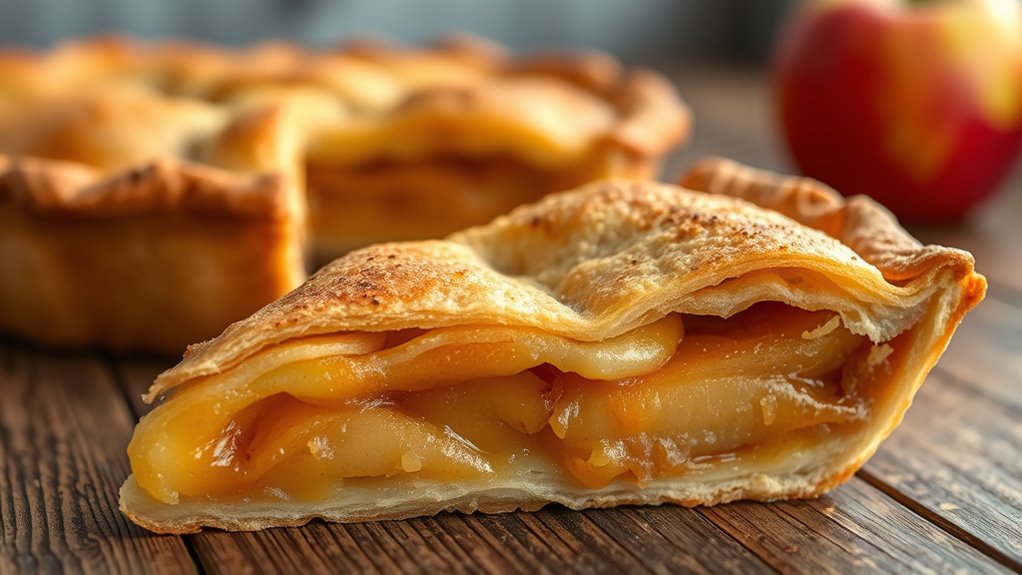
Have you ever wondered what makes a perfect apple pie? It’s a combination of science and skill that transforms simple ingredients into a delicious masterpiece. One key process happens during baking: fruit caramelization. As the apple slices heat up, their natural sugars begin to break down and turn golden brown, creating that rich, sweet flavor everyone loves. The caramelization adds depth to the filling, giving it a complex sweetness and a slightly toasty aroma. Achieving this balance is essential—too little heat, and the sugars don’t caramelize properly; too much, and they might burn. Proper temperature control ensures your apples reach that ideal caramelized state without turning bitter. Alongside this, the crust plays an important role, and its quality hinges on gluten development. When you mix your dough, you’re activating gluten, which forms the structure and elasticity necessary for a flaky, tender crust. Overmixing can lead to a tough crust because too much gluten develops, so it’s important to mix just until the ingredients are combined. Resting the dough allows the gluten strands to relax, making it easier to roll out and helping prevent shrinkage during baking. The right balance of ingredients, like cold butter and minimal water, also influences gluten development, resulting in a crust that’s crisp on the outside but tender and flaky inside. As the pie bakes, the heat causes the butter in the dough to release steam, creating layers that contribute to that desirable flaky texture. At the same time, the heat causes the crust’s proteins and starches to undergo Maillard reactions, adding color and flavor complexity. The timing and temperature of baking are essential—start at a higher temperature to set the crust’s structure quickly, then lower it to allow the filling to cook evenly. Watching your pie during the last few minutes ensures the crust doesn’t burn. When you combine proper fruit caramelization with a well-developed gluten crust, you’re creating a harmony of textures and flavors. The caramelized apples provide a sweet, tender filling, while the flaky crust offers a satisfying crunch. This careful balance of science and technique is what elevates a simple apple pie from good to extraordinary. Understanding these processes allows you to tweak your recipe and baking method, so each time you bake, you craft a pie that’s perfectly caramelized, beautifully flaky, and irresistibly delicious. Additionally, paying attention to natural materials in your ingredients and tools can improve the overall quality of your pie, ensuring a more authentic and satisfying result.
Frequently Asked Questions
How Does Altitude Affect Apple Pie Baking?
At higher altitudes, you need to make altitude adjustments when baking apple pie because the lower air pressure causes faster evaporation and quicker boiling. This means your crust might dry out or overbake, and filling may become too runny. To compensate, reduce baking time variations and increase liquid slightly in the crust. Keep an eye on your pie, and consider covering it if it browns too quickly to make sure perfect results.
What Are the Best Apple Varieties for Tartness?
Did you know that Granny Smith apples contain about 12 grams of tartaric acid per 100 grams, making them one of the tartest cooking apple varieties? For your pie, choose varieties like Granny Smith, Bramley, or Rome Beauty to achieve the ideal tartness level. These apples hold their shape during baking and add a delightful tang, perfect for balancing sweetness and enhancing flavor. Adjust your tartness level by mixing different varieties if needed.
Can Gluten-Free Flours Produce Flaky Crusts?
Yes, gluten-free flours can produce flaky crusts if you use the right techniques. In gluten-free baking, flaky crust techniques like cold butter, minimal handling, and layered dough help create tenderness and crispness. You might experiment with rice flour, almond flour, or a blend to find the best texture. Keep your ingredients cold, avoid overworking the dough, and layer it properly for the flakiest, most delicious results.
How Does Sugar Influence Filling Juiciness?
Sugar boosts filling juiciness by aiding moisture retention, keeping the apples tender and juicy. It also promotes caramelization during baking, adding flavor and a slight thickening effect that enhances the filling’s texture. As sugar dissolves, it draws out moisture from the fruit, which then combines with the sugar to create a luscious, syrupy consistency. So, the right amount of sugar guarantees your apple pie filling stays juicy and flavorful.
What Storage Methods Keep Apple Pie Fresh Longest?
To keep your apple pie fresh the longest, store it properly by using pie storage techniques like wrapping it tightly in plastic wrap or aluminum foil. Refrigeration tips include placing the pie in an airtight container or covering it well to prevent it from drying out and absorbing odors. If you plan to eat it within a couple of days, refrigeration helps preserve flavor and texture, ensuring your pie stays delicious.
Conclusion
Now that you understand the secrets behind flaky crusts and juicy fillings, you’re ready to craft your own masterpiece. Think of your apple pie as a symphony, where each ingredient plays its part to create harmony. With a little patience and a sprinkle of science, your pie will turn out golden and bursting with flavor. So, roll up your sleeves and let your kitchen become a canvas—your perfect apple pie awaits to tell its delicious story.