Without a proper reheat strategy, your batch-cooked meals can turn out uneven, losing flavor, texture, and safety. If you don’t plan how to reheat, large portions might stay cold inside or become mushy or dry outside. Using the wrong containers or techniques can also introduce harmful chemicals or bacteria. To keep your leftovers tasty and safe, it’s essential to understand the best reheating methods—you’ll find helpful tips if you keep exploring.

Get everyday essentials delivered free with Prime
- Fast, free delivery on millions of items
- Prime Video, Amazon Music and more included
- Member-only deals all year
Key Takeaways
- Without a reheat strategy, meals may lose flavor, texture, and nutritional value, making leftovers unappealing.
- Improper reheating can cause uneven heating, leading to cold spots or food safety concerns.
- Inadequate portioning and container choices can result in spoilage or contamination.
- Lack of planning can cause dishes to become mushy or dry, reducing meal quality.
- Failure to follow food safety practices increases risk of foodborne illnesses from leftovers.
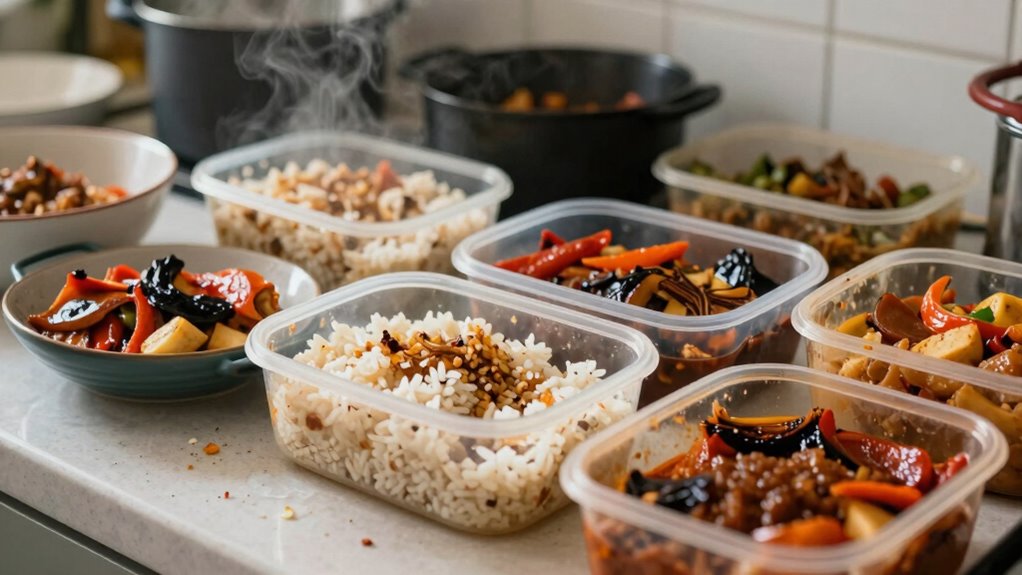
Batch cooking can save you time and effort, but without a solid reheat strategy, your meals might fall flat. You’ve likely invested time in meal prep planning, carefully choosing recipes and preparing ingredients in advance. However, if you don’t consider how you’ll reheat those dishes later, even the most delicious meals can turn into disappointing leftovers. Knowing how to reheat your cooked foods properly is essential to maintaining flavor, texture, and nutritional value. It’s a step many overlook, yet it can make or break your batch cooking success.
Effective reheating is key to preserving flavor and texture in your batch-cooked meals.
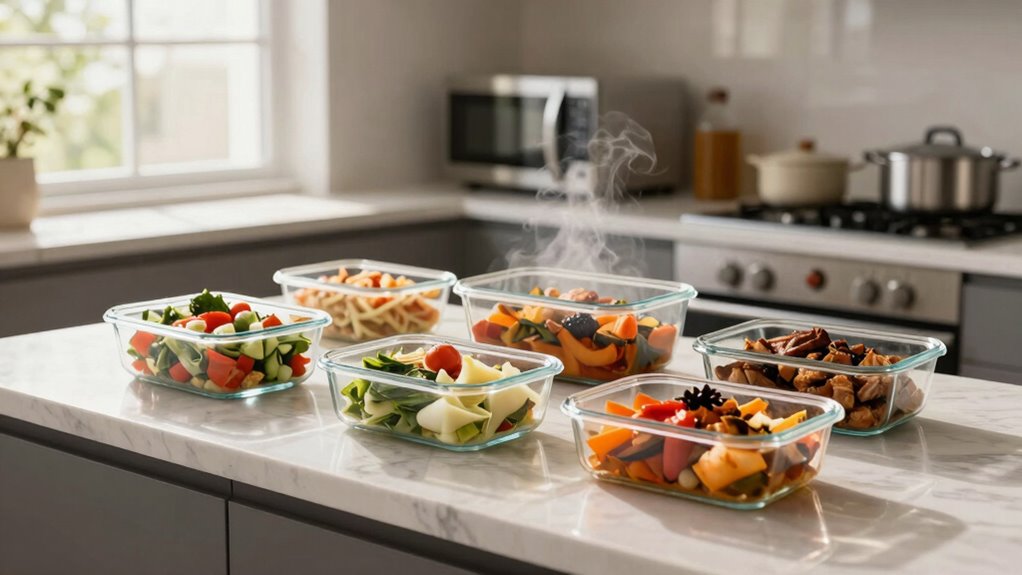
A key factor in guaranteeing your reheated meals turn out well is selecting the right storage container choices from the start. Not all containers are created equal, and some materials can adversely affect your food during reheating. For instance, plastic containers that aren’t microwave-safe can melt or release harmful chemicals when heated. Glass or BPA-free microwave-safe plastic containers are better options because they distribute heat evenly and won’t interfere with the taste or safety of your food. Also, choosing containers with tight-fitting lids prevents spills and helps retain moisture, which is critical to preventing your meals from drying out during reheating. Proper storage container selection can also help prevent contamination and preserve food quality over time. Additionally, understanding the safe handling of leftovers is crucial to avoid foodborne illnesses and maintain freshness.
Beyond container choices, your meal prep planning should include thoughtful portioning. Divide your meals into appropriate sizes to ensure even reheating. Large portions might stay cold in the center, leading to uneven heating and potential food safety issues. Smaller, evenly sized portions heat more uniformly, preserving the intended texture and flavor. When reheating, always consider the type of dish—soups, stews, casseroles, or grains—since each requires different techniques, such as stovetop warming, microwave, or oven reheating. Tailoring your approach based on the dish guarantees better results. Incorporating proper reheating techniques can further improve the quality of your leftovers.
Understanding the best reheating methods for different foods is equally important, as some dishes respond better to specific techniques. For example, rice and pasta can become mushy if overdone, while meats can dry out if reheated at too high a temperature or for too long. Using a microwave with a lid or cover helps retain moisture, but stirring halfway through heats ensures even temperature distribution. For dishes like casseroles, reheating in an oven at a moderate temperature preserves texture better than microwave heating. Planning these steps in advance, and being mindful of how different foods respond to heat, helps prevent the common pitfalls of reheating. Additionally, incorporating food safety guidelines when reheating helps prevent foodborne illnesses and ensures leftovers are safe to consume. Properly labeling and storing leftovers also supports food safety by keeping track of how long food has been stored.
In the end, without integrating a well-thought-out reheat strategy into your batch cooking routine, your efforts can go to waste. Combining good meal prep planning with wise storage container choices and proper reheating techniques ensures your leftovers stay delicious and nutritious. It transforms your batch cooking from a time-saving chore into a reliable way to enjoy home-cooked meals every day.
microwave-safe food storage containers
As an affiliate, we earn on qualifying purchases.
As an affiliate, we earn on qualifying purchases.
Frequently Asked Questions
How Can I Prevent Food From Drying Out When Reheating?
To prevent food from drying out when reheating, focus on moisture retention and proper reheating techniques. Cover your food with a lid or microwave-safe wrap to trap steam, which helps keep moisture in. Reheat at lower temperatures, stirring occasionally, to avoid over-drying. Using a splash of broth or water can add moisture, and opting for gentle reheating methods guarantees your meals stay tender and flavorful.
What’s the Best Container Type for Storing Batch-Cooked Meals?
You should choose meal prep containers made from BPA-free plastic or glass with airtight storage lids. These containers keep your food fresh, prevent leaks, and are microwave-safe for reheating. Opt for stackable, durable options to maximize space and guarantee a good seal during storage. Using the right containers helps maintain the quality of your batch-cooked meals, making reheating easier and more efficient without compromising taste or texture.
How Do I Reheat Different Types of Dishes Safely?
Think of reheating as a delicate dance—you want to preserve flavor and texture without stepping on your dish’s toes. For soups and stews, use the stovetop on low heat, stirring gently. For leftovers like rice or pasta, microwave with a damp paper towel to keep moisture in. Avoid overheating, which can ruin texture and flavor. Always reheat evenly, and use a food thermometer to make certain of safety.
Can Batch-Cooked Food Be Frozen Without Affecting Quality?
Yes, batch-cooked food can be frozen without affecting quality if you use proper freezing techniques. Make sure you cool dishes quickly to preserve texture, then store them in airtight containers or freezer bags to prevent freezer burn. Proper packaging and rapid freezing help maintain texture preservation, so your meals taste fresh when reheated. Avoid overfilling containers to allow proper air circulation, which also helps retain the dish’s original quality.
How Long Can I Store Batch-Cooked Meals in the Fridge?
Storing batch-cooked meals in the fridge is like keeping a delicate bouquet—timing is everything. You should consume your meal prep storage within 3 to 4 days to keep flavors fresh and prevent spoilage. Follow refrigeration tips by storing food in airtight containers and setting your fridge to below 40°F. This way, your prepared meals stay safe and tasty, ready to enjoy without worry.
Conclusion
Without a solid reheat strategy, your batch-cooked meals risk turning into leftovers that lose their flavor and texture. You might save time initially, but without proper reheating, you’ll spend more effort trying to salvage bland, soggy dishes. It’s like planning a beautiful dinner only to see it spoiled in the fridge. To truly enjoy the convenience of batch cooking, embrace a thoughtful reheat plan—because a well-stored meal is only as good as its reheating.
Halloween Picks
halloween
As an affiliate, we earn on qualifying purchases.