If you prefer convenience, a bean-to-cup machine automatically grinds fresh beans for quick, one-touch espresso, ensuring maximum freshness and easy operation. Traditional setups, on the other hand, require more skill—measuring, tamping, and manual control for a craftsman-like experience. While bean-to-cup machines suit busy lifestyles, traditional methods emphasize craftsmanship and tradition. To discover how these differences influence your coffee quality and brewing style, keep exploring what makes each setup unique.

Get everyday essentials delivered free with Prime
- Fast, free delivery on millions of items
- Prime Video, Amazon Music and more included
- Member-only deals all year
Key Takeaways
- Bean-to-cup machines grind fresh beans automatically, ensuring optimal flavor, while traditional setups require manual grinding and dosing.
- Traditional machines involve manual steps like tamping and extraction, whereas bean-to-cup machines offer quick, one-touch brewing.
- Bean-to-cup machines are more complex with integrated grinders and milk systems, needing regular cleaning and maintenance.
- Traditional setups emphasize craftsmanship and skill, reflecting regional coffee traditions and personal brewing preferences.
- Bean-to-cup machines suit busy lifestyles with convenience, while traditional methods appeal to enthusiasts valuing manual control.
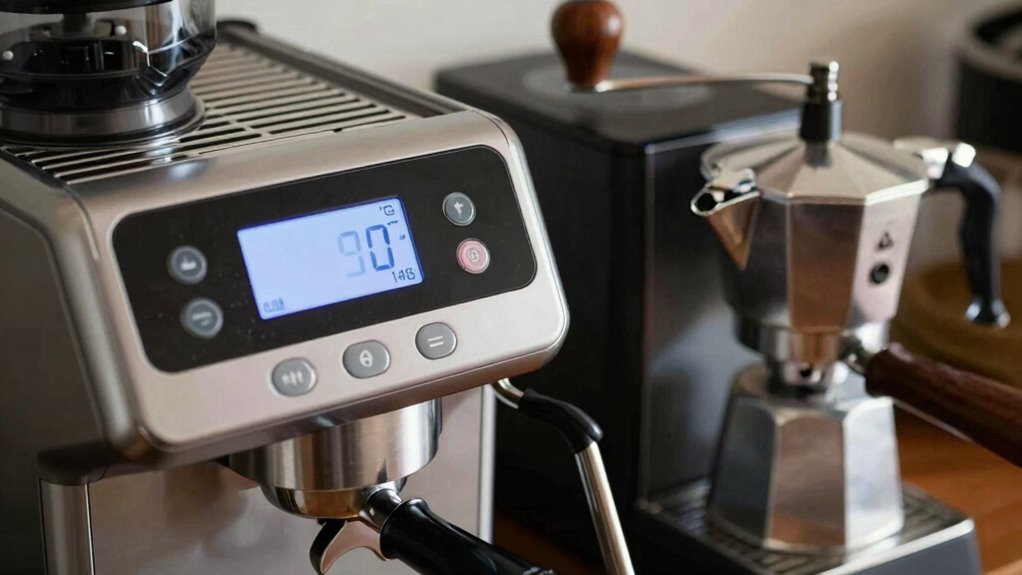
When it comes to brewing espresso at home or in a café, understanding the key differences between bean-to-cup machines and traditional espresso setups can help you make the right choice. One of the biggest factors to consider is how each setup affects coffee freshness. With a bean-to-cup machine, you typically have a built-in grinder, which means you’re grinding fresh beans just before brewing. This preserves the coffee’s aromatic oils and flavors, resulting in a more vibrant, nuanced shot. In contrast, traditional espresso setups often rely on pre-ground coffee or beans stored for some time, which can compromise freshness. If you prioritize a lively, fresh-tasting espresso, the bean-to-cup approach generally offers an advantage because you’re always brewing with the freshest grounds possible. Additionally, the regional culture of coffee preparation can influence your preferred setup, as different regions have unique brewing traditions.
Bean-to-cup machines grind fresh beans for vibrant, aromatic espresso, unlike traditional setups relying on pre-ground coffee.
Another important aspect to consider is machine maintenance. Bean-to-cup machines tend to be more complex, with integrated grinders, brew groups, and sometimes milk frothing systems. This means they require regular cleaning and descaling to prevent buildup and ensure optimal performance. If you’re someone who enjoys maintaining your equipment and keeping it in top shape, a bean-to-cup machine can be a satisfying, all-in-one solution. However, if you prefer a more straightforward setup, traditional espresso machines might be easier to maintain since they usually involve fewer components—just the boiler, portafilter, and steam wand. But keep in mind, traditional machines often demand more hands-on skill, especially when it comes to tamping, dosing, and cleaning the brew group, which can influence your learning curve when acquiring barista skills. Proper machine maintenance is essential for longevity and consistent quality in either setup.
Furthermore, understanding the coffee freshness process and how quickly beans can degrade over time can guide your choice, as freshness directly impacts flavor quality and overall satisfaction.
Furthermore, the convenience factor plays a significant role. Bean-to-cup machines are designed for quick, one-touch operation, making them ideal if you want consistent, quality espresso with minimal effort. You simply add beans, press a button, and enjoy. Traditional setups, on the other hand, require a more deliberate process—measuring coffee, tamping, and manual control over extraction. While this might be appealing if you enjoy the craft of making espresso, it’s less convenient for fast-paced environments or busy mornings.
Ultimately, your choice depends on your priorities. If you value coffee freshness and are willing to invest time in machine maintenance, a bean-to-cup machine could be the best fit. If you prefer a more hands-on approach and don’t mind a bit more effort, a traditional espresso setup might suit you better. Whatever your preference, understanding these differences helps you make an informed decision that aligns with your taste and lifestyle.
best bean-to-cup espresso machine
As an affiliate, we earn on qualifying purchases.
As an affiliate, we earn on qualifying purchases.
Frequently Asked Questions
Which Setup Is More Environmentally Friendly?
A bean-to-cup setup is generally more environmentally friendly because it promotes sustainable practices, like using eco-friendly materials for parts and packaging. You have more control over coffee freshness and waste, reducing excess packaging and waste. Traditional setups might generate more waste from disposable filters or pods. By choosing a bean-to-cup machine, you support eco-conscious choices, minimizing your environmental footprint through sustainable practices and eco-friendly materials.
Can I Use Pre-Ground Coffee With a Bean-To-Cup Machine?
Ever wonder if you can use pre-ground coffee with a bean-to-cup machine? Yes, you can, but it’s not ideal. Most bean-to-cup machines are designed for whole beans, so using pre-ground coffee might compromise freshness preservation and lead to less flavorful espresso. Check if your machine offers pre-ground coffee compatibility. If freshness is key, grinding your beans just before brewing always delivers the best taste and aroma.
How Long Does It Take to Brew Coffee With Each System?
With a bean-to-cup machine, brewing coffee typically takes around 30 seconds to a minute, thanks to its precise grind consistency and fast brewing speed. Traditional espresso setups might take slightly longer, often around 1-2 minutes, because you manually grind, tamp, and brew. The faster brewing speed of bean-to-cup machines makes them more convenient, while traditional setups offer more control over each step.
Are There Specific Maintenance Needs for Each Setup?
You’ll find that maintaining your machine subtly enhances your coffee experience and preserves its flavor. For bean-to-cup setups, regular descaling and cleaning of the grinder keep the flavor bright and guarantee the machine’s durability. Traditional espresso machines may need more frequent internal cleaning and occasional boiler checks. Both setups thrive with consistent upkeep, allowing you to enjoy rich, fresh coffee while extending your machine’s lifespan.
Which Setup Offers More Customization Options?
You’ll find that traditional espresso setups offer more customization options, allowing you to fine-tune grind size, tamping pressure, and extraction time for ideal flavor. Bean-to-cup machines prioritize grind consistency and are built for durability, often limiting manual adjustments. With traditional setups, you can experiment more, but it requires more skill. Bean-to-cup machines excel in convenience and consistent results, though with fewer customization choices.
Conclusion
In the end, choosing between bean-to-cup and traditional espresso setups is like picking your perfect adventure. Bean-to-cup machines bring the convenience of fresh, flavorful coffee at your fingertips, while traditional setups offer a hands-on, barista-like experience. Whichever you choose, it’s your daily coffee ritual—your secret weapon in conquering the chaos of the day. So go ahead, make that choice—your mornings deserve nothing less than a coffee revolution!
Fall Picks
fall essentials
As an affiliate, we earn on qualifying purchases.