To cook better rice, start by choosing the right rice variety and adjusting water ratios accordingly—long-grain needs less water, while sticky short-grain requires more. Use a quality pot with a tight lid or a rice cooker for even cooking. Avoid lifting the lid during cooking, and let the rice rest after cooking to let moisture settle. Paying attention to water, timing, and resting makes a big difference. Keep exploring to discover even more tips for perfect rice.

Get everyday essentials delivered free with Prime
- Fast, free delivery on millions of items
- Prime Video, Amazon Music and more included
- Member-only deals all year
Key Takeaways
- Use the correct water-to-rice ratio based on rice variety for optimal texture.
- Select appropriate cooking equipment to ensure even heat and moisture retention.
- Avoid lifting the lid during cooking to maintain steam and proper doneness.
- Allow cooked rice to rest before serving to improve moisture distribution and flavor.
- Adjust cooking and resting times according to rice type for consistently perfect results.
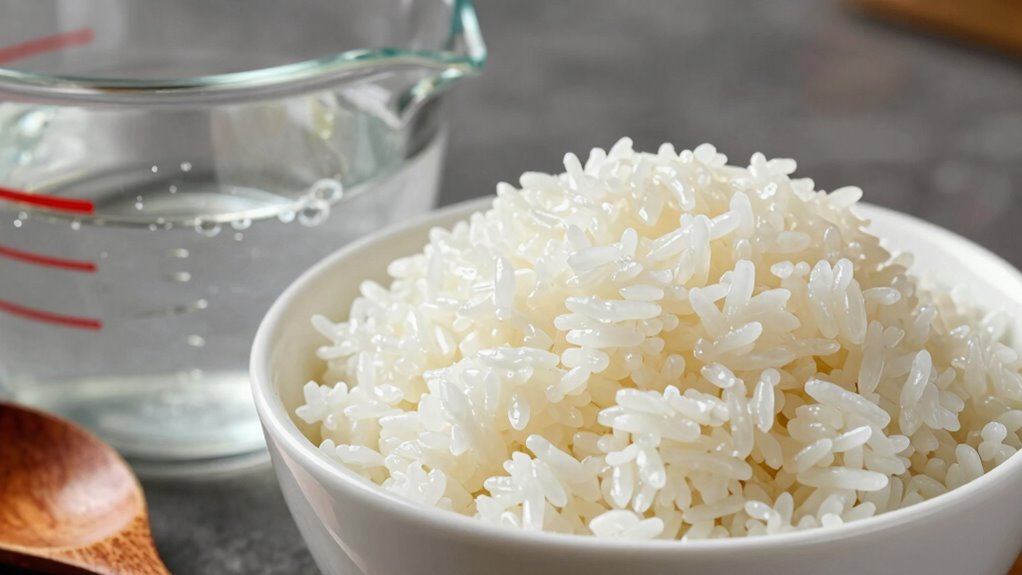
Cooking rice perfectly can elevate any meal, but achieving that ideal texture and flavor often takes some know-how. One of the most important factors is understanding the different rice varieties and how they respond to water and resting times. Each type of rice—whether long-grain, short-grain, jasmine, basmati, or sticky rice—has unique characteristics. Long-grain rice tends to stay fluffy and separate when cooked, while short-grain rice becomes stickier. Jasmine and basmati rice have distinct aromatic qualities and require different water ratios and cooking times. Knowing these differences helps you select the right water-to-rice ratio and cooking method, ensuring the rice reaches its full potential.
Understanding rice varieties and their cooking needs ensures perfect, flavorful results every time.
Equally important is choosing the right cooking equipment. A good-quality pot with a tight-fitting lid is essential for even heat distribution and moisture retention. Using a heavy-bottomed pot prevents scorching and allows you to control the cooking temperature better. Alternatively, a rice cooker simplifies the process by automatically adjusting heat and time based on the rice variety. When you understand your equipment, you can fine-tune the water amount and cooking duration to prevent undercooked or mushy rice. For stovetop cooking, a watchful eye and proper technique are key—avoid lifting the lid too often, as this releases steam and disrupts the cooking process. Additionally, understanding how water absorption varies among rice types helps you achieve the perfect texture. Recognizing cooking time differences among rice varieties can further help you tailor your approach for ideal results. Gaining knowledge about varietal differences can significantly improve your rice-cooking skills and outcomes, especially when you consider how cooking methods impact the final dish. Paying attention to cooking techniques can also make a notable difference in the quality of your cooked rice.
rice cooker with automatic water adjustment
As an affiliate, we earn on qualifying purchases.
As an affiliate, we earn on qualifying purchases.
Frequently Asked Questions
Does the Type of Rice Affect Water and Resting Times?
Yes, the type of rice affects water and resting times. Different varieties, like jasmine or basmati, absorb water differently and benefit from specific cooking techniques. For example, brown rice needs more water and longer resting periods for ideal texture. Adjusting water ratios and resting times enhances flavor, ensuring your rice turns out fluffy and flavorful. Knowing these differences helps you master cooking techniques and achieve perfect rice every time.
How Does Altitude Influence Rice Cooking?
Imagine you’re a pioneer crossing mountain ranges—altitude effects on rice cooking are similar. Higher elevations cause water to boil at lower temperatures, so you need to make cooking adjustments. You’ll likely need more water and longer cooking times to guarantee the rice is tender. Keep an eye on moisture levels and adjust the heat to prevent undercooking. With these tweaks, your rice will turn out perfectly, no matter the altitude.
Can I Reuse Leftover Cooking Water for Rice?
Yes, you can reuse leftover cooking water for rice. Recycling water helps retain some of the rice’s flavor, enriching the taste of your next batch. Just make certain the water is free of contaminants or excess starch to avoid affecting the texture. Using this water can save resources and add a subtle depth of flavor, making your rice more flavorful with each reuse.
What Are Signs of Overcooked or Undercooked Rice?
You’ll notice overcooked rice has a mushy texture, with grains breaking apart and losing their shape, while undercooked rice remains hard or crunchy, with a raw flavor. To enhance flavor and improve texture, aim for perfectly tender grains. If your rice is too sticky or too dry, it’s a sign you’ve overcooked or undercooked. Adjust water and cooking time accordingly to enjoy fluffy, flavorful rice every time.
How Does Rice Variety Impact Water Absorption?
Different rice varieties impact water absorption, affecting rice texture and cooking consistency. For example, long-grain rice absorbs less water and stays fluffy, while short-grain rice absorbs more, resulting in a stickier texture. Basmati needs less water for a light, airy result, whereas sushi rice requires more water for its chewy, cohesive feel. Understanding these differences helps you achieve perfect rice every time.
Conclusion
Now that you know the secrets behind water ratios and resting times, your rice will never be the same. But here’s the twist—you might discover that slight adjustments can reveal even better results. Will you stick to the tried-and-true method or experiment a little? The choice is yours. Just remember, the perfect rice isn’t a myth—it’s waiting for you to uncover it. Are you ready to take your cooking to the next level?
Fall Picks
fall essentials
As an affiliate, we earn on qualifying purchases.