
To succeed in gluten-free baking, choosing the right combination of flours and binders is key. Use a mix like rice, almond, sorghum, and potato starch to mimic wheat’s texture and flavor. Add binders such as xanthan gum or psyllium husk to help baked goods hold together and rise. Adjusting proportions based on your recipe and experimenting will improve your results. Keep exploring these options, and you’ll discover how to create delicious, well-structured GF treats.
Key Takeaways
- Selecting the right gluten-free flours like rice, almond, and sorghum is vital for texture and flavor.
- Combining various gluten-free flours creates a balanced, mimicking wheat-based baked goods.
- Binders such as xanthan gum, guar gum, and psyllium husk replace gluten’s elasticity and improve structure.
- Proper flour and binder ratios influence the rise, crumb, and moisture of baked goods.
- Experimentation and note-taking help customize blends for optimal gluten-free baking results.
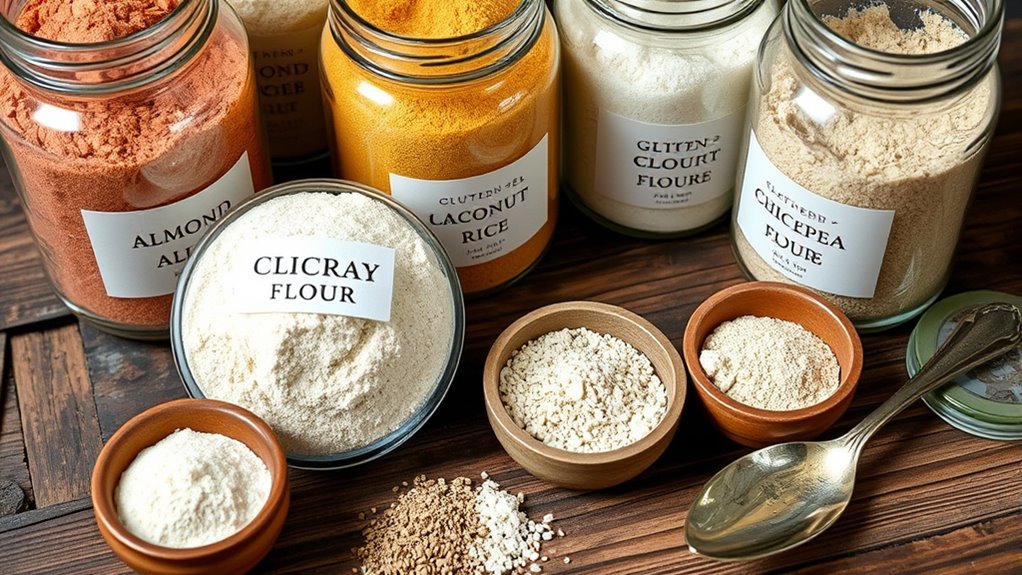
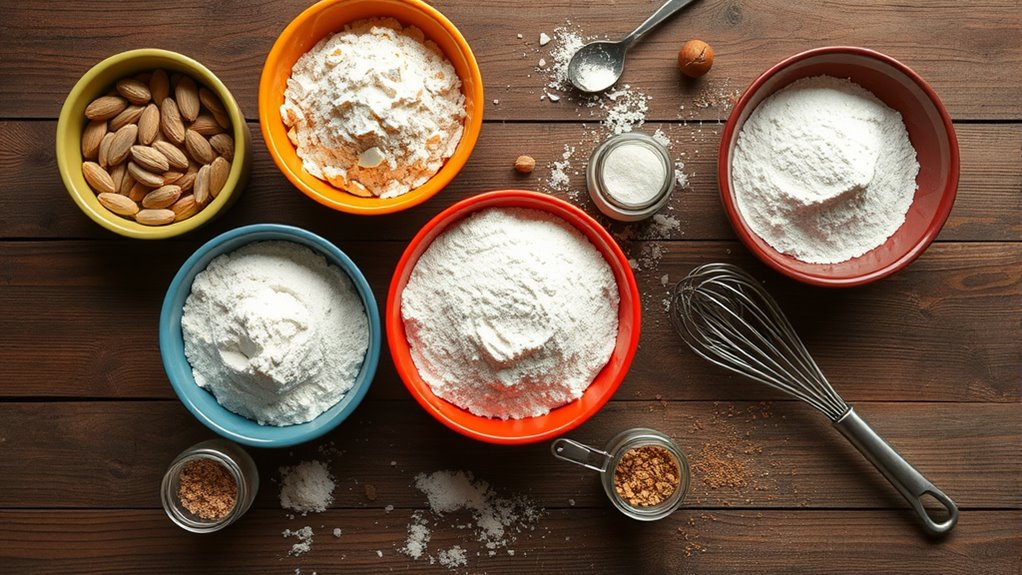
If you’re new to gluten-free baking, understanding the basics is vital for success. One of the most important aspects is choosing the right flours and binders. Unlike traditional baking that relies on wheat flour, gluten-free recipes require a mix of alternative flours to achieve the right texture and flavor. Common gluten-free flours include rice flour, almond flour, tapioca starch, sorghum flour, and potato starch. Each offers unique qualities—rice flour is light and neutral, while almond flour adds moisture and richness. Combining these flours helps mimic the structure and taste of wheat-based baked goods, making your gluten free bread or muffins more satisfying.
Choosing the right gluten-free flours and binders is essential for successful baking.
When you’re baking gluten free bread, the choice of flour blend directly impacts the loaf’s texture and rise. A typical mix might include rice flour for structure, potato starch for softness, and a small amount of almond or sorghum flour for flavor. Adjusting these ratios can help you perfect your bread’s density and crumb. For gluten free muffins, a slightly different balance might be used to achieve a lighter, tender crumb. Experimenting with different flour combinations allows you to customize recipes to your preferences and dietary needs.
Beyond flours, binders are vital because they replace gluten’s elasticity and strength. Without gluten, baked goods tend to crumble or fall apart. Popular binders include xanthan gum, guar gum, and psyllium husk. These ingredients help hold the mixture together, provide structure, and improve texture. For instance, adding a teaspoon of xanthan gum to your muffin batter can give it the cohesion needed for a tender yet firm crumb. In gluten free bread recipes, a little extra binder ensures the loaf rises properly and maintains its shape. Using the right amount of binder is fundamental—too little results in crumbly baked goods, while too much can make them gummy.
Incorporating these flours and binders into your baking process might seem tricky at first, but once you get the hang of it, you’ll find it becomes second nature. Start with tried-and-true recipes and tweak them as you learn what works best for your taste and texture preferences. Keep notes on the flour ratios and binder amounts you use, so you can replicate successful results later. Over time, you’ll develop an intuitive sense of how to combine these ingredients for perfect gluten free bread or muffins every time. Remember, patience and practice are key, and experimenting with different blends can lead to delightful discoveries in your gluten-free baking journey.
Frequently Asked Questions
Can I Substitute Gluten-Free Flours One-To-One in Recipes?
You can often substitute gluten-free flours one-to-one, but keep in mind that gluten-free flavor variations and textures differ. You might need to adjust the recipe slightly, especially with baking equipment considerations like oven temperature or pan type. Some flours absorb more moisture, so adding extra liquid or binders can help. Experimenting with blends can give you the best results, ensuring your baked goods stay delicious and well-structured.
Are There Any Gluten-Free Binders That Work Well in Bread?
Think of gluten-free binders like the glue holding your bread together. You can use gluten-free egg replacers like flaxseed or chia seeds, which act as natural binders, or try xanthan gum alternatives such as guar gum or psyllium husk. These options help improve structure and texture, making your bread chewy and resilient. Experiment to find which binder works best for your recipe and tastes.
How Do I Prevent Gluten-Free Baked Goods From Crumbling?
To prevent your gluten-free baked goods from crumbling, focus on improving crumbly textures by adding moisture-retaining ingredients like applesauce, yogurt, or eggs. Use effective binders such as xanthan gum or guar gum to give structure, and don’t over-bake, as dryness worsens crumbling. Keep your dough or batter slightly moist, and store baked goods properly to maintain moisture, ensuring they stay cohesive and less fragile.
Which Gluten-Free Flours Are Best for Beginners?
For beginners, start with gluten-free flours like rice, almond, or oat flour. These are easy to work with and perfect for making gluten-free pancakes or muffins. Rice flour gives a neutral flavor, while almond adds richness, and oat provides a hearty texture. Use a blend for better results, and don’t forget binders like xanthan gum. These flours make baking simpler and more forgiving as you learn.
Do Gluten-Free Flours Require Different Storage Methods?
If you’re storing almond flour, you’ll want to follow specific storage tips to extend its shelf life. Keep it in an airtight container in a cool, dark pantry or refrigerator to prevent spoilage. Unlike wheat flour, gluten-free flours often have a shorter shelf life and are more prone to rancidity, so proper storage is crucial. By doing so, you guarantee fresh baking every time and avoid waste.
Conclusion
Now that you’ve revealed the secrets of gluten-free flours and binders, your baking journey becomes an exciting adventure. Picture warm, golden loaves fresh from the oven, their comforting aroma filling your kitchen. With each bake, you craft delicious treats that nurture your body and soul, turning simple ingredients into comforting masterpieces. Embrace these basics, and watch your confidence grow as you create beautiful, wholesome baked goods that bring joy to every bite.