To keep your holiday meals safe, thaw foods in the refrigerator or using the cold water method, avoiding the counter to prevent bacteria growth. When handling leftovers, store them promptly in shallow containers within two hours and consume within three to four days. Reheat leftovers to an internal temperature of 165°F. Paying attention to signs of spoilage and reheating properly helps prevent illness. For more tips, you’ll discover how to enjoy your holiday feast safely from start to finish.
Key Takeaways
- Thaw foods safely in the refrigerator or cold water, avoiding thawing on the counter to prevent bacterial growth.
- Plan ahead for proper thawing to ensure even cooking and reduce foodborne illness risk.
- Store leftovers promptly in shallow containers within two hours of serving, and consume within three to four days.
- Reheat leftovers thoroughly to an internal temperature of 165°F using a food thermometer.
- Check leftovers for signs of spoilage and discard questionable items to maintain food safety during the holidays.
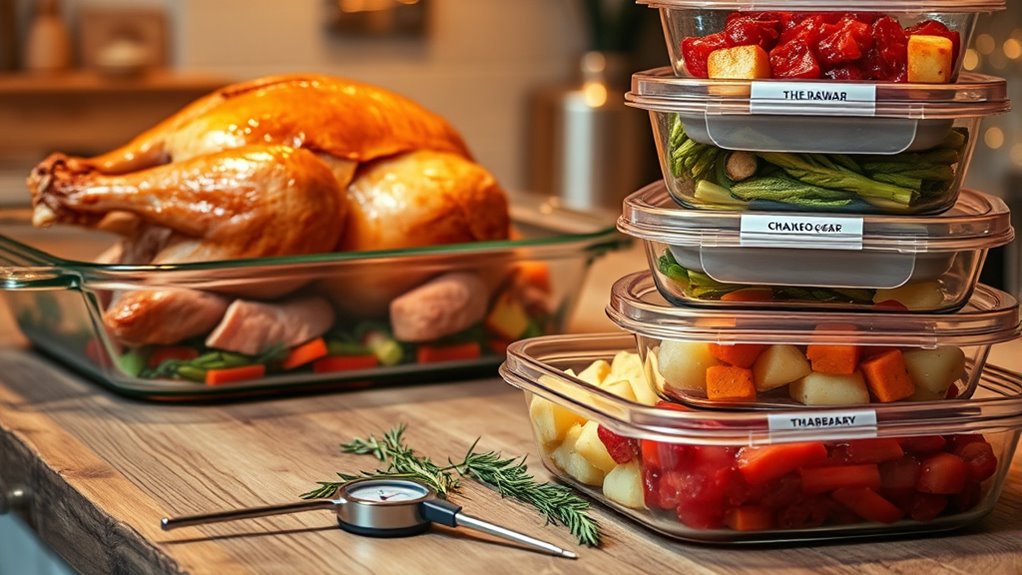
Are you prepared to keep your holiday meals safe and delicious? The key to successful holiday dining starts with good holiday meal planning and following safe hosting tips. Ensuring that your food stays safe from start to finish involves careful handling of thawing and leftovers. These steps are essential in preventing foodborne illness and making sure everyone enjoys the celebration.
When it comes to thawing, don’t rush the process or leave frozen foods out at room temperature. Instead, plan ahead and thaw items in the refrigerator, which keeps them at a safe, consistent temperature. This method may take longer but reduces the risk of bacterial growth. If you’re pressed for time, you can use the cold water method—placing the food in a leak-proof bag and submerging it in cold water, changing the water every 30 minutes. Just avoid thawing on the counter, as this creates an environment where bacteria thrive. Proper thawing is an essential part of holiday meal planning because it ensures that your main dishes cook evenly and safely. Additionally, choosing toys made from natural materials can provide a safer environment for children during holiday celebrations.
Thaw foods in the fridge or cold water—never leave them at room temperature—for safe, even cooking.
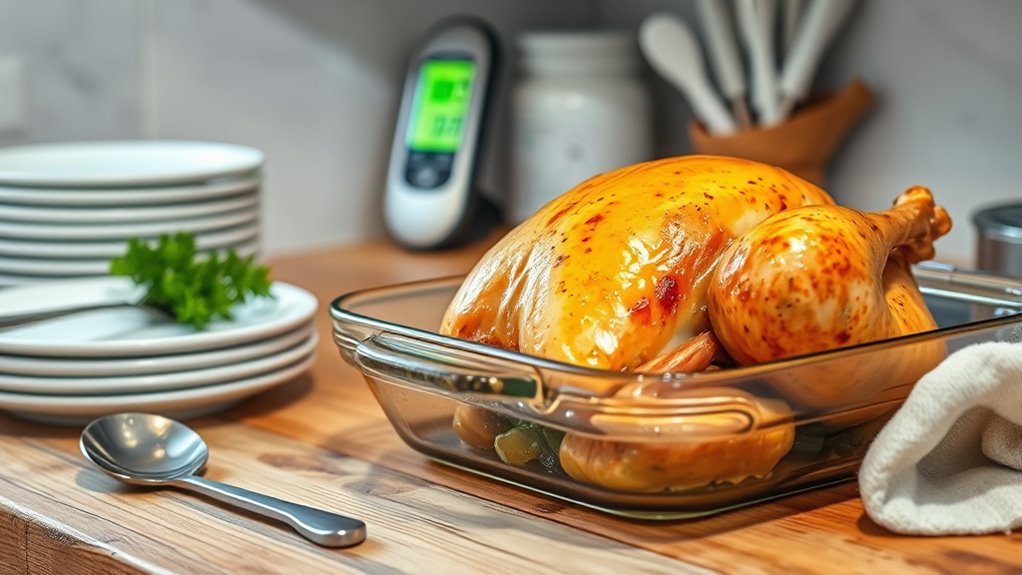
Once the feast is over, handling leftovers correctly becomes just as important. Store leftovers promptly in shallow containers to help them cool quickly, and aim to refrigerate within two hours of serving. Consuming leftovers within three to four days is best, as it minimizes the risk of bacteria multiplying. When reheating, make sure your food reaches an internal temperature of 165°F to kill any lingering bacteria. Use a food thermometer to be precise, rather than relying on visual cues. These safe hosting tips help you avoid the common mistake of leaving food out too long or re-serving leftovers that could be unsafe.
Monitoring leftovers is essential, especially if your family or guests have dietary restrictions or immune concerns. Always check for signs of spoilage—off smells, slimy textures, or discoloration—and discard anything questionable. Reheat leftovers thoroughly, and avoid reheating multiple times, which increases the risk of bacterial growth. By following these simple guidelines, you’re taking proactive steps in your holiday meal planning to keep everyone safe and satisfied.
Frequently Asked Questions
How Can I Tell if Leftover Food Is Still Safe to Eat?
You can tell if leftover food is still safe by checking for spoilage indicators like a bad smell, slimy texture, or discoloration. Always smell and look at your leftovers; if they emit a foul odor or have visible mold, discard them. Remember, foodborne bacteria don’t always smell or look bad, so when in doubt, it’s safer to throw it out. Proper storage and timely consumption are key to avoiding foodborne illnesses.
What Are the Best Containers for Storing Holiday Leftovers?
You should store holiday leftovers in airtight containers to keep them fresh and prevent contamination. Opt for BPA-free options to avoid harmful chemicals leaching into your food. Glass or BPA-free plastic containers with tight-fitting lids work best, as they seal well and are easy to clean. These containers help maintain flavor and texture while ensuring your leftovers stay safe to enjoy later.
How Do I Safely Reheat Leftovers Without Drying Them Out?
To safely reheat leftovers without drying them out, use microwave reheating for quick, even heating, stirring halfway through. Cover the food with a microwave-safe lid or damp paper towel to retain moisture. For larger portions, oven reheating works best—cover the dish with foil and heat at 350°F until steaming hot. Always check that the internal temperature reaches 165°F to guarantee safety.
Can I Refreeze Thawed Leftovers?
Yes, you can refreeze thawed leftovers if you used proper thawing techniques, like refrigeration or cold water, and kept the food at safe temperatures. Make sure to follow freezer storage tips by labeling and rotating your items. However, avoid refreezing leftovers that have been left out at room temperature for too long, as this can compromise food safety. Always reheat thoroughly before eating.
What Are Common Signs of Food Poisoning From Leftovers?
Did you know that about 1 in 6 people get sick from food poisoning each year? Symptoms to watch for include nausea, vomiting, diarrhea, and stomach cramps, which often indicate bacterial contamination. If these signs appear after eating leftovers, it’s likely food poisoning. Stay cautious, and when in doubt, throw out suspicious leftovers to avoid risking your health.
Conclusion
Remember, an ounce of prevention is worth a pound of cure. By thawing foods properly and storing leftovers promptly, you protect yourself and your loved ones from foodborne illnesses. Keep your holiday season joyful and safe by staying mindful of food safety tips. When in doubt, throw it out—it’s better to be safe than sorry. Enjoy your holidays with peace of mind, knowing you’ve taken the right steps to keep everyone healthy and happy.