To cook perfect rice every time, rinse your rice thoroughly to remove excess starch. For stovetop, bring water to a boil, reduce heat, cover, and simmer for 15-20 minutes, then let it sit before fluffing. In a rice cooker, simply rinse, add water or broth, and let the machine handle the rest. For flavorful pilaf, sauté aromatics, toast the rice, add liquid, and simmer until tender. Keep practicing these techniques, and you’ll master flawless rice dishes effortlessly.
Key Takeaways
- Rinse rice thoroughly to remove excess starch, ensuring fluffy, non-clumpy grains in all cooking methods.
- Use correct water-to-rice ratios: about 2:1 for stovetop and adjust for rice cooker models.
- For stovetop, bring to a boil, then simmer gently covered for 15-20 minutes without lifting the lid.
- In rice cookers, rely on automatic settings, and add flavorings like spices or coconut milk before cooking.
- Enhance pilaf by sautéing aromatics and toasting rice before simmering with broth for richer flavor.
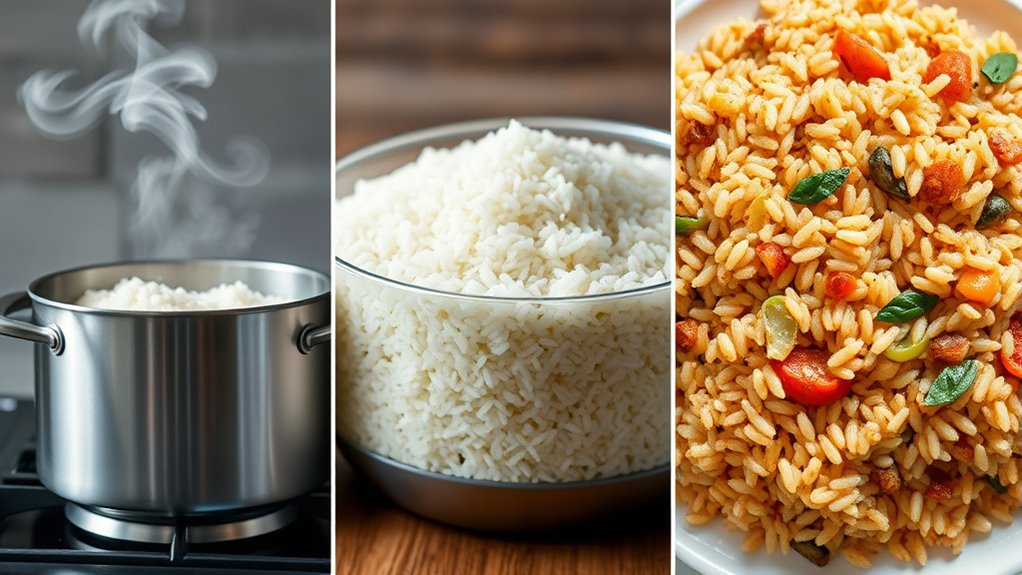
Cooking perfect rice might seem tricky, but with a few simple steps, you can consistently achieve fluffy, tender grains every time. Mastering the right cooking techniques is key, whether you’re using a stovetop, rice cooker, or making a flavorful pilaf. Each method offers unique advantages, but the goal remains the same: well-cooked rice that’s neither sticky nor dry.
With simple steps and techniques, you can master perfect, fluffy rice every time.
When cooking on the stovetop, start by rinsing your rice thoroughly to remove excess surface starch. This helps prevent clumping and results in a lighter texture. Use a reliable ratio of water to rice—usually about 2 cups of water for 1 cup of rice—and bring it to a boil. Once boiling, reduce the heat to low, cover the pot, and let it simmer gently. Avoid lifting the lid during cooking, as this can disrupt the process. After about 15-20 minutes, turn off the heat and let the rice sit, covered, for a few minutes to steam. Fluff it with a fork to separate grains.
A rice cooker simplifies this process further. Once you’ve rinsed the rice, add it to the cooker with the appropriate amount of water or broth for added flavor. The machine handles the cooking time automatically, ensuring consistent results. For flavor variations, consider adding spices, herbs, or even coconut milk before cooking. This way, you infuse your rice with subtle or bold flavors, transforming a simple side dish into a main feature. You can also experiment with different types of rice—such as jasmine, basmati, or brown rice—to bring diverse textures and flavors to your meals.
Making a pilaf is another excellent way to add flavor and complexity. Start by sautéing aromatic ingredients like onions, garlic, or spices in oil or butter. Stir in the rice and cook until lightly toasted, which enhances its nutty flavor. Then, add broth or seasoned water, cover, and simmer until the rice absorbs the liquid and becomes tender. The sautéing step introduces a rich depth of flavor, making pilaf a more savory and satisfying dish. You can incorporate vegetables, nuts, dried fruits, or proteins to create a complete, flavorful meal.
In the end, mastering these cooking techniques and experimenting with flavor variations allows you to make perfect rice every time. Whether you prefer the simplicity of a rice cooker or the control of stovetop cooking, the key is to pay attention to timing, liquid ratios, and added ingredients. With a little practice, you’ll find yourself effortlessly creating fluffy, flavorful rice suited to any dish or occasion.
Frequently Asked Questions
Can I Cook Different Rice Varieties Using the Same Method?
Yes, you can cook different grain types using the same method, but adjustments are often needed. For example, rice, quinoa, and barley all require different cooking times and water ratios. You should consider their unique textures and cooking techniques, like soaking or simmering, to get the best results. Always check package instructions and tweak water amounts or cooking time for each grain to guarantee perfectly cooked, fluffy results every time.
How Do I Store Leftover Cooked Rice Safely?
Sure, because leaving leftover rice out all night is just what you want. To store it safely, cool it quickly and transfer it to an airtight container. Use storage tips like refrigerating within two hours and consuming within 4-6 days. When reheating, make certain it’s steaming hot all the way through. Proper storage tips and reheating methods keep your rice safe and delicious, avoiding any unwanted health surprises.
What Adjustments Are Needed for High-Altitude Cooking?
When cooking at high altitude, you should make altitude adjustments by increasing cooking time or adjusting water ratios, as water boils at lower temperatures. If you’re using a pressure cooker, you might need to increase the cooking pressure or time to guarantee the rice cooks thoroughly. Always monitor your rice, and consider adding a little extra liquid to compensate for faster evaporation caused by lower air pressure.
Is It Necessary to Rinse Rice Every Time?
No, you don’t always need to rinse rice. But if you want rinsing benefits like removing excess starch and dirt, it helps water absorption and prevents sticky, clumpy rice. Skipping rinsing might save time, but it could also turn your rice into a gluey mess. So, consider your texture preference—rinsing is a simple step that can make a big difference in your perfect rice.
How Can I Prevent Rice From Sticking or Burning?
To prevent rice from sticking or burning, use the right rice-to-water ratio, and keep the heat low once it starts simmering. Stir gently at the beginning to improve rice texture and evenly distribute heat. Cover the pot tightly to trap steam, which helps with seasoning enhancement and prevents burning. Also, let the rice rest off heat for a few minutes before fluffing to achieve perfect, non-sticky results.
Conclusion
No matter your preferred method, mastering perfect rice is within your reach. With a little patience and attention, you’ll find each batch becomes a comforting staple, elevating every meal. Think of it as a gentle dance—once you get the rhythm, it all comes together effortlessly. So, enjoy the process and trust your instincts. Before you know it, perfect rice will become your secret ingredient for delicious, satisfying dishes every time.