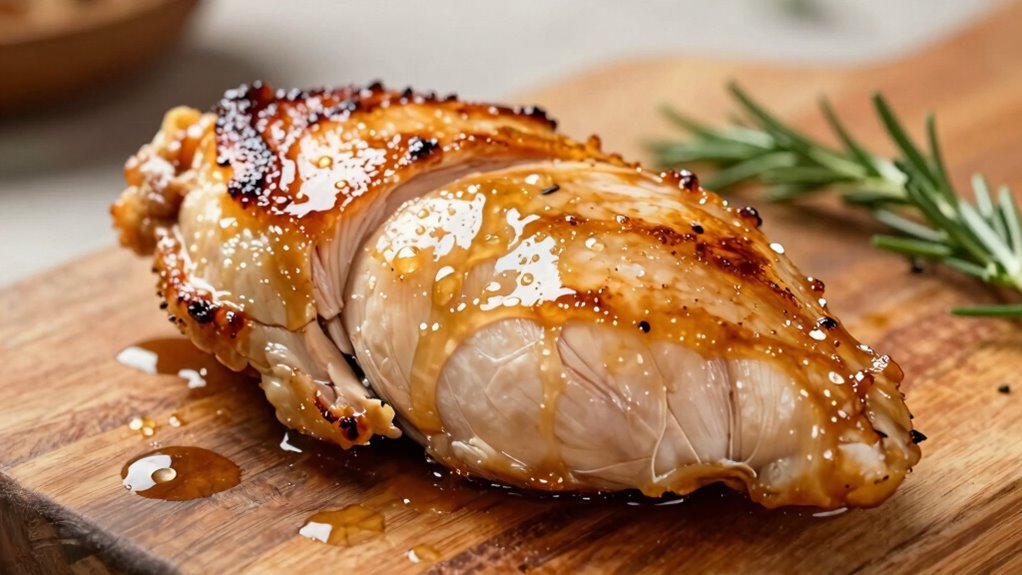

To keep chicken moist without guessing, marinate it for at least 30 minutes with a mix of acid, oil, and seasonings to tenderize and add flavor. Use a thermometer to monitor the internal temperature, aiming for 165°F, and remove the chicken immediately once reached. Let it rest for 5-10 minutes before slicing to allow juices to redistribute. Mastering these precise techniques guarantees your chicken stays tender and juicy every time—learn more to perfect your results.

Get everyday essentials delivered free with Prime
- Fast, free delivery on millions of items
- Prime Video, Amazon Music and more included
- Member-only deals all year
Key Takeaways
- Use a marinade with acid, oil, and seasonings to tenderize and lock in moisture before cooking.
- Cook chicken to the correct internal temperature (165°F) and remove promptly to prevent drying out.
- Rest the chicken for 5-10 minutes post-cooking to allow juices to redistribute evenly.
- Monitor cooking closely with a meat thermometer to avoid overcooking and dryness.
- Employ controlled heat techniques, starting with high heat for searing then lowering to finish gently.
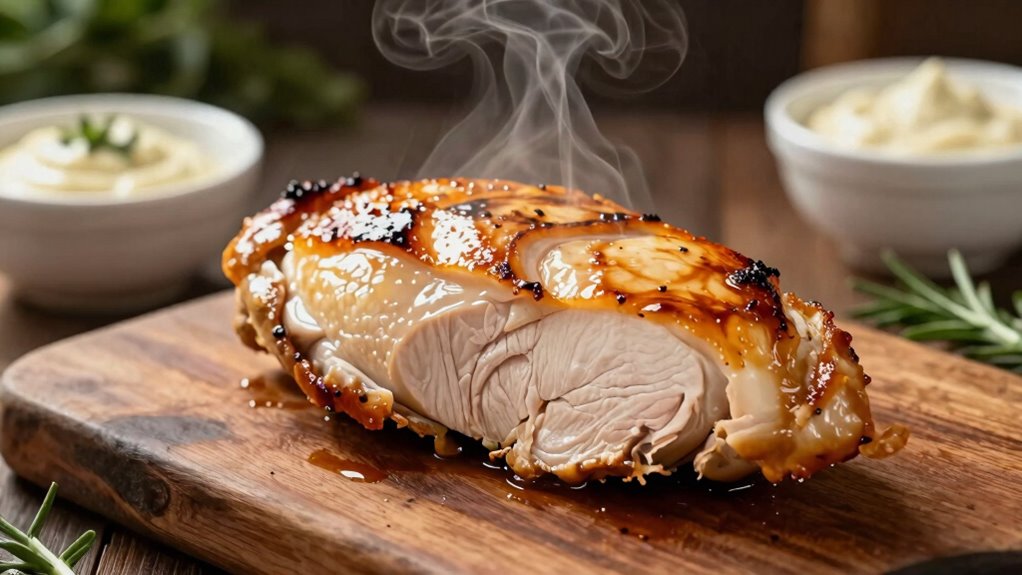
Cooking chicken can be tricky because it easily becomes dry if not prepared carefully. To keep it moist and flavorful, you need to pay close attention to how you handle it from start to finish. One of the most effective ways to do this is by using proper marinating techniques. Marinating chicken not only adds flavor but also helps lock in moisture. Choose a marinade that contains some acid, like lemon juice or vinegar, combined with oil and seasonings. The acid tenderizes the meat, making it less likely to dry out during cooking, while the oil keeps the surface moist. Marinate the chicken for at least 30 minutes, but ideally a few hours, to let the flavors penetrate and the meat absorb moisture. Avoid over-marinating, as too much acid can actually start to break down the proteins excessively and make the texture mushy.
In addition to marinating, paying attention to cooking temperature adjustments is crucial. Overcooking is the main reason chicken becomes dry, so you need to be precise with your heat. Use a meat thermometer to monitor the internal temperature rather than relying solely on time. For most cuts, aim for an internal temperature of 165°F (74°C). When cooking, start with a higher heat to sear the outside and lock in juices, then lower the temperature to finish cooking gently. If you’re roasting or baking, consider lowering the oven temperature slightly and cooking for a longer period. This gentle approach allows the chicken to cook evenly without losing too much moisture. When grilling or pan-frying, keep a close eye on the process, flipping only once or twice, and remove the chicken from heat as soon as it hits the target temperature. Paying attention to cooking temperature adjustments is essential for tender, moist chicken. Additionally, understanding how heat transfer affects cooking can further improve your results by ensuring even cooking.
Resting the chicken after cooking is another step that prevents dryness. Allow it to rest for 5-10 minutes before slicing. Resting helps the juices redistribute throughout the meat, ensuring each bite remains moist. If you’re unsure about the doneness, cut into the thickest part to check for clear juices and no pinkness. Remember, the key is to avoid overcooking, so adjusting your cooking temperature and timing accordingly is essential. Being aware of cooking techniques can help you develop a more intuitive sense of when your chicken is perfectly cooked. Incorporating proper temperature control can significantly impact the final moistness and tenderness. Combining these techniques—marinating properly, adjusting cooking temperatures, and resting—gives you a foolproof way to keep chicken moist without guessing. When you pay attention to these details, you’ll end up with tender, juicy chicken every time.
Frequently Asked Questions
Can Marinating Chicken Prevent It From Drying Out?
Yes, marinating chicken can prevent it from drying out. Marinating allows for flavor infusion, making each bite tastier, while also helping preserve the chicken’s texture. By soaking the chicken in an acidic or oil-based marinade, you keep it moist and tender during cooking. Just be sure not to over-marinate, as too much acid can break down the meat’s structure and affect the texture negatively.
What Is the Best Internal Temperature to Keep Chicken Moist?
The best internal temperature for moist, flavorful chicken is 165°F. Cooking to this temperature guarantees safety and preserves juiciness. Use a meat thermometer to check, preventing overcooking. For flavor enhancement, consider techniques like brining or marinating before cooking, which help retain moisture. Proper resting after cooking allows juices to redistribute, keeping your chicken tender and moist. This combination of accurate temperature and effective techniques assures delicious, juicy results every time.
Does Resting Chicken After Cooking Help Retain Moisture?
Coincidentally, resting chicken after cooking does help retain moisture. When you let it rest, the juices redistribute, promoting better flavor infusion and preserving the tender texture you desire. This pause prevents the juices from escaping when you cut in, ensuring each bite stays moist. By resting your chicken, you enhance both its flavor and texture, making every piece more delicious and satisfying.
Are There Specific Cooking Methods That Naturally Keep Chicken Moist?
Yes, certain cooking techniques naturally keep chicken moist by promoting flavor infusion and gentle heat. Poaching and sous-vide cooking are excellent because they cook chicken evenly and retain juices. Baking at a lower temperature with a marinade or covering the chicken helps trap moisture. Using these methods, you guarantee your chicken stays tender and flavorful without guessing, making your meals consistently juicy and delicious.
How Does the Type of Chicken Cut Affect Moisture Retention?
Ever wondered why some chicken cuts stay juicy while others dry out? The type of chicken cut greatly impacts moisture retention because different cuts have varying levels of fat and connective tissue. Thicker cuts like breasts need gentle cooking techniques to maintain tenderness, while thighs and drumsticks, with more fat, naturally stay moist longer. Picking the right cut and applying appropriate cooking methods guarantees meat tenderness and keeps your chicken juicy.
Conclusion
So, next time you cook chicken, remember: it’s not rocket science, just a little patience and some tricks up your sleeve. Don’t be that person who turns a juicy masterpiece into leather—unless you’re auditioning for a role in “The Leather Next Door.” Keep it moist, keep it tasty, and enjoy each bite like it’s a flavor-packed vacation. After all, chicken’s meant to be enjoyed, not dreaded. Happy cooking, and may your chicken stay forever juicy!
Fall Picks
fall essentials
As an affiliate, we earn on qualifying purchases.