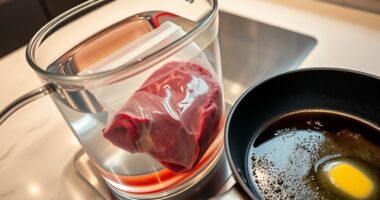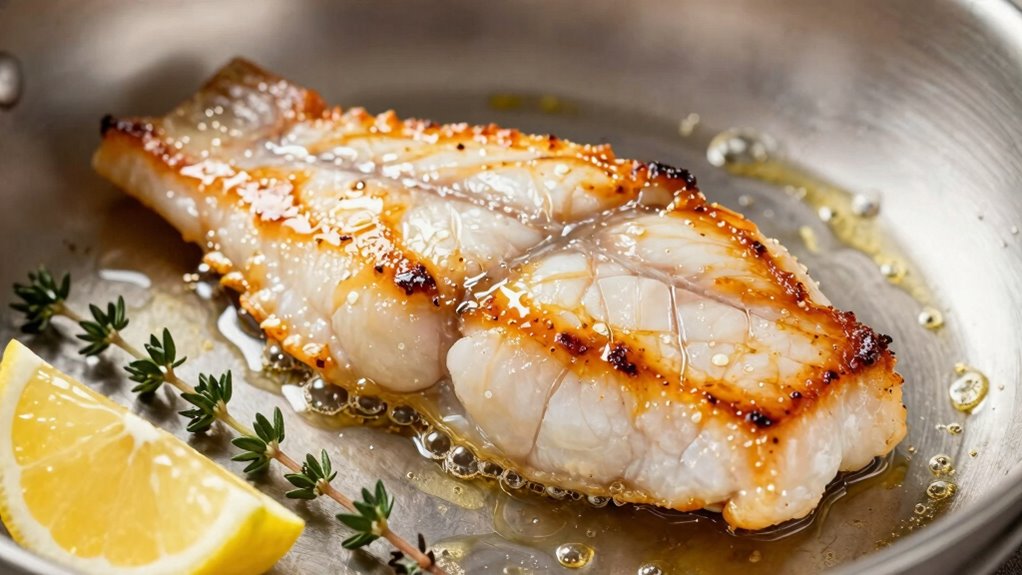
To prevent fish from falling apart, start with proper marinating using an acid like lemon juice for 15-30 minutes to tenderize without softening too much. Preheat your pan properly to guarantee even heat and form a crust. Use a wide spatula to gently flip, avoiding too much pressure, and let the fish release naturally before turning. Using a non-stick pan and cooking in batches can also help. For more tips, keep exploring how to master this technique.

Get everyday essentials delivered free with Prime
- Fast, free delivery on millions of items
- Prime Video, Amazon Music and more included
- Member-only deals all year
Key Takeaways
- Use a non-stick pan and properly preheat it to ensure even cooking and reduce sticking.
- Let the fish develop a crust before flipping to prevent sticking and breaking.
- Flip fish gently with a wide spatula and minimal pressure to maintain its structure.
- Avoid moving the fish too early; wait until it naturally releases from the pan.
- Marinate briefly with acidity to tenderize without softening the flesh too much.

Cooking fish can be tricky because it tends to fall apart if not handled properly. But with the right techniques, you can keep your fish intact and achieve a perfect, flaky finish. One key step is understanding how to use marinating techniques effectively. Marinating can tenderize the fish and add flavor, but it also helps in creating a slight barrier that prevents sticking and breaking apart. Use a marinade with a bit of acidity, like lemon juice or vinegar, and let the fish sit for about 15-30 minutes. This short marination softens the surface just enough to enhance flavor without compromising the fish’s structure. Be careful not to over-marinate, especially with acidic ingredients, as it can make the flesh too soft and more prone to falling apart during cooking.
Another crucial aspect is pan temperature control. The right heat setting makes all the difference. Before adding the fish, ensure your pan is properly heated to medium or medium-high. Too hot, and the fish can burn on the outside before cooking through, causing it to break apart when you try to flip or remove it. Too low, and the fish might stick and tear when you try to turn it. To test the pan’s temperature, sprinkle a few drops of water; if they sizzle and evaporate immediately, your pan is ready. Once the fish hits the pan, avoid moving it too early. Let it cook undisturbed for a couple of minutes until it naturally releases from the pan. This helps form a crust that holds the fish together during flipping. Proper pan temperature is essential for preventing sticking and tearing. Additionally, using a non-stick pan can further reduce the risk of the fish sticking and falling apart.
When it’s time to turn the fish, use a wide spatula and gently slide it underneath. Lift carefully and flip smoothly, applying minimal pressure. If your fish is thick, consider cooking it in a two-step process: start with a sear on high heat, then lower the temperature to finish cooking. This method helps develop a crust while keeping the interior moist and intact. Also, avoid overcrowding the pan, as too many pieces can cause sticking and tearing. Preheating the pan properly can help ensure even cooking and reduce the chances of the fish falling apart. To further prevent sticking, proper pan heating and choosing the right cookware are crucial. Ensuring your pan is correctly heated before adding the fish will help create a barrier that prevents sticking and tearing. Instead, cook in batches if necessary, giving each piece enough space.
As an affiliate, we earn on qualifying purchases.
Frequently Asked Questions
What Types of Fish Are Most Prone to Falling Apart?
You’ll find that delicate fish like cod, halibut, and tilapia are most prone to falling apart during cooking. To prevent this, use gentle cooking techniques like poaching or baking, and guarantee proper fish storage beforehand—keep fish cold and fresh. Handling fish carefully, using a non-stick pan, and avoiding overcooking help maintain its shape. With the right approach, even fragile fish can stay intact and delicious.
How Does the Thickness of Fish Affect Cooking Stability?
Thicker fish pieces offer greater cooking stability, making them easier to handle and less prone to falling apart. Thin fish, on the other hand, require delicate cooking techniques, like gentle flipping and lower heat, to maintain their integrity. To preserve fish texture, focus on even heat distribution, avoid overcrowding the pan, and use appropriate utensils. By doing so, you guarantee your fish stays intact, tender, and flavorful throughout the cooking process.
Can Marinating Help Prevent Fish From Breaking Apart?
Yes, marinating can help prevent fish from breaking apart by aiding in flavor infusion and texture preservation. The marinade adds a protective layer, reducing direct contact with the hot pan, which minimizes sticking and tearing. Opt for a marinade with acidic ingredients like lemon or vinegar, but don’t marinate too long, as it can weaken the fish’s structure. This approach keeps your fish tender and intact during cooking.
Does Temperature Affect Fish’s Tendency to Fall Apart?
Yes, temperature considerably affects fish’s tendency to fall apart. When you cook fish at too high a temperature, the delicate texture can break down, causing it to fall apart easily. Using gentle cooking techniques like poaching or pan-searing over medium heat helps preserve the fish’s firm texture. Monitoring your heat guarantees the fish cooks evenly, maintaining its integrity and preventing it from falling apart during cooking.
Are There Specific Pan Types Better for Delicate Fish?
Your best bet is a non-stick surface or a well-seasoned cast iron pan. Non-stick surfaces are gentle on delicate fish, preventing sticking and tearing. Cast iron, if properly seasoned, offers even heat distribution and can handle high temperatures without damaging the fish. Avoid flimsy pans that wobble or warp, as they increase the risk of the fish falling apart. Choose wisely, and your fish will stay intact like a treasured masterpiece.
Conclusion
Now that you know how to keep your fish intact, you’re all set to impress with perfectly cooked, flaky fillets. Just remember, patience is key—don’t rush it or you might end up with a mess. Treat your fish gently, handle it with care, and you’ll turn out a dish that’s both beautiful and delicious. In the end, practice makes perfect, so keep at it and enjoy the rewards of a well-cooked catch!
Halloween Picks
halloween
As an affiliate, we earn on qualifying purchases.