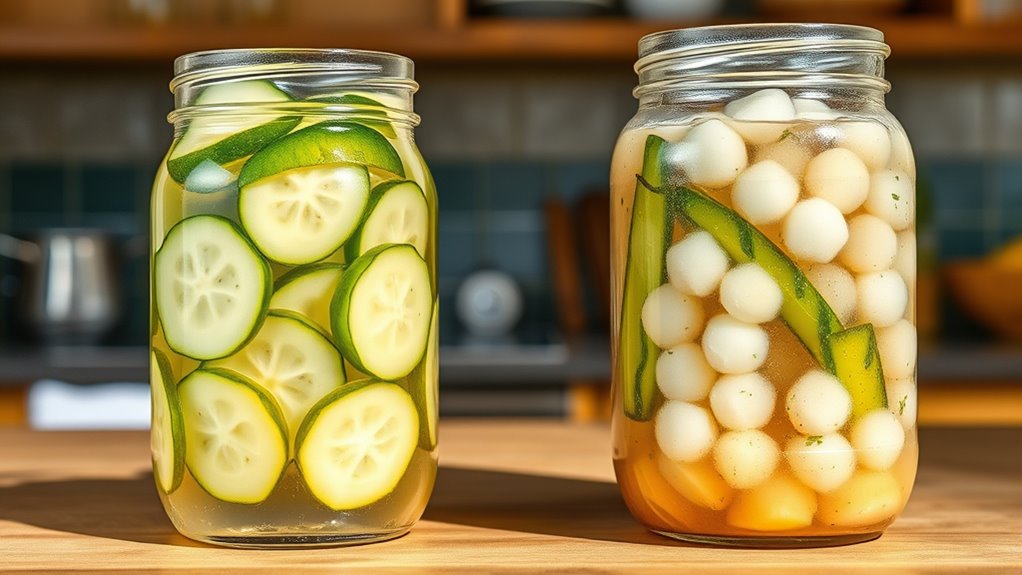

Quick pickling involves soaking vegetables in vinegar, creating a tangy, crunchy snack ready in hours or days. It’s fast, convenient, and ideal for immediate flavor, often done in the refrigerator with simple ingredients. Fermented pickling relies on natural bacteria in a salty brine, taking weeks to develop complex flavors and probiotic benefits. Both methods preserve produce, but each offers unique taste and health perks—exploring further reveals how to master each technique effectively.
Key Takeaways
- Quick pickling uses vinegar for immediate flavor, while fermentation relies on natural bacteria over time.
- Quick pickles develop a tangy taste within hours or days, whereas fermented pickles take weeks to mature.
- Fermentation offers probiotic health benefits and complex flavors, unlike the straightforward taste of quick pickles.
- Quick pickling is faster, easier, and done in the refrigerator, while fermentation requires careful monitoring of salt and hygiene.
- Both methods extend shelf life but differ in flavor profile, health benefits, and preparation time.
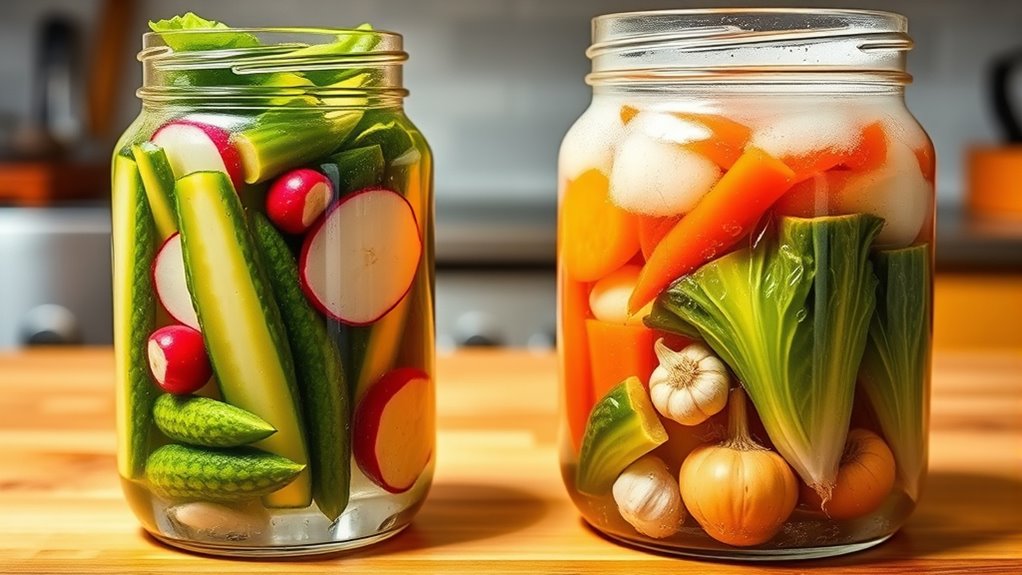
Have you ever wondered how to turn fresh vegetables into tangy, crunchy treats that last for months? Pickling is a fantastic way to preserve seasonal produce, and understanding the different methods can help you decide which is best for your kitchen. When it comes to fermentation benefits, fermented pickles stand out because they use natural bacteria to transform the vegetables over time. This process not only creates complex flavors but also boosts your gut health by introducing probiotics. However, ensuring pickling safety is essential. Proper technique and sanitation are fundamental to prevent harmful bacteria from taking hold. That said, fermentation is generally safe if you follow trusted recipes and maintain good hygiene.
Quick pickling, often called refrigerator pickling, involves soaking vegetables in vinegar, salt, and spices for a short period—sometimes just hours or days. This method is fast, convenient, and produces a sharp, tangy flavor almost immediately. Because you’re using vinegar, quick pickles are more predictable regarding safety; vinegar’s acidity creates an environment hostile to bacteria that cause spoilage and foodborne illnesses. Still, it’s important to use the right vinegar and maintain cleanliness to keep your pickles safe. Quick pickling is ideal when you want a crunchy, flavorful snack without waiting weeks or months. Plus, since it’s done in the fridge, you don’t need to worry much about sterilizing jars or managing fermentation’s natural bacteria.
On the other hand, fermented pickling involves submerging vegetables in a salty brine and letting natural fermentation take its course over days or weeks. During this process, beneficial bacteria convert sugars into lactic acid, creating the characteristic tang and preserving the vegetables. The fermentation benefits include improved digestion, enhanced nutrient availability, and a richer flavor profile. Yet, because fermentation relies on natural bacteria, pickling safety depends heavily on proper salt concentrations, clean equipment, and correct timing. If not done carefully, there’s a small risk of growth of unwanted bacteria or mold. That’s why it’s essential to follow established recipes and monitor your ferment closely. When done right, fermented pickles are a delicious, healthful addition to your meals, providing flavors and benefits that quick pickles can’t match.

SAJKUERO 32 oz Pickling Jars with Airtight Lids,4 Pack Airtight Glass Pickle Jars Wide Mouth,Air Tight Glass Storage Containers for Canning,Pickling,Fermenting
Generous Capacity:With 32 – oz capacity per jar, there's ample room for canning, pickling large batches of veggies…
As an affiliate, we earn on qualifying purchases.
As an affiliate, we earn on qualifying purchases.
Frequently Asked Questions
Can I Use Tap Water for Pickling?
You can use tap water for pickling, but it’s important to ensure water quality and mineral content. If your tap water has high chlorine or chloramine levels, it can affect the fermentation process or spoil your pickles. Let the water sit out for 24 hours to allow chlorine to dissipate, or use filtered or distilled water for best results. This guarantees your pickles ferment properly and stay fresh longer.
How Long Do Fermented Pickles Last?
Fermented pickles typically last up to a year when stored properly in a cool, dark place, confirming the importance of good pickling techniques and storage duration. Many believe they last indefinitely, but over time, flavor and texture diminish. To guarantee safety and quality, check for off smells or mold before consuming. Proper fermentation and storage are key to enjoying your pickles for as long as possible.
Are There Health Risks With Improper Pickling?
Improper pickling can pose health risks, so you need to prioritize pickling safety. If you don’t follow proper procedures, fermentation dangers like botulism or spoilage could occur, especially with low-acid foods. Always make certain your jars are sterilized, use the correct salt and vinegar concentrations, and store pickles properly. Being cautious with pickling safety helps prevent foodborne illnesses and guarantees your homemade pickles stay delicious and safe to enjoy.
What Are Common Mistakes to Avoid in Pickling?
Think of pickling safety like building a sturdy bridge—every step matters. You should avoid common mistakes like using non-sterile jars, skipping proper fermentation techniques, or adding too much salt. These errors can lead to spoilage or unsafe products. Always follow tested recipes, maintain proper hygiene, and monitor pH levels. Staying vigilant helps guarantee your pickles are delicious and safe, just like a well-constructed bridge withstands storms.
Can I Reuse Pickling Brine?
Yes, you can reuse pickling brine, but with caution. Reusing brine for flavor enhancement works best if it’s been boiled to kill bacteria and used within a few cycles. Keep in mind, each reuse may reduce its preserving power, so monitor the brine’s acidity and flavor. Properly reused brine can add depth to your pickles, but always prioritize safety to avoid spoilage.
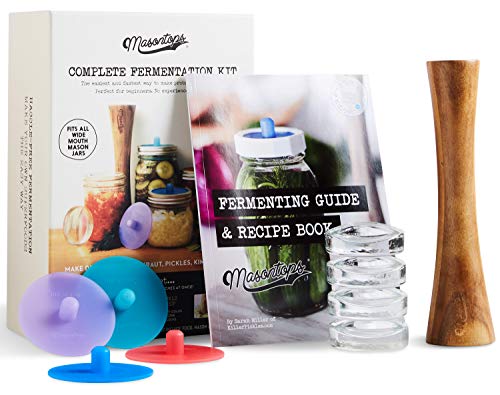
Masontops Complete Mason Jar Fermentation Kit – Pickle Kit, Sauerkraut Making Kit Kimchi Container – Fermentation Airlock Lids Wide Mouth Mason Jars
MASONTOPS COMPLETE MASON JAR FERMENTATION KIT: Includes all the tools needed to turn your ordinary wide mouth mason…
As an affiliate, we earn on qualifying purchases.
As an affiliate, we earn on qualifying purchases.
Conclusion
Now that you know the difference between quick and fermented pickling, you can choose the method that suits your taste and time. Quick pickling offers instant gratification, while fermented pickling rewards patience with richer flavors. Remember, “Good things come to those who wait,” so don’t rush the process if you want deep, complex flavors. Whichever method you choose, enjoy the journey and the delicious results you create!

The Gourmet Pickle Kit -Must Bee Company– DIY Pickling Set with Reusable Glass Jars, Spices & Step-by-Step Guide – Fermentation Kit for Homemade Dill Pickles
All-in-One Kit: Our pickle kit includes all the essentials: jars, spices, labels, and step-by-step instructions, making pickling a…
As an affiliate, we earn on qualifying purchases.
As an affiliate, we earn on qualifying purchases.

Wildcrafted Vinegars: Making and Using Unique Acetic Acid Ferments for Quick Pickles, Hot Sauces, Soups, Salad Dressings, Pastes, Mustards, and More
As an affiliate, we earn on qualifying purchases.
As an affiliate, we earn on qualifying purchases.