
To make your outdoor cooking gear last longer, clean everything thoroughly after each use, removing grease, food particles, and dirt, then dry all surfaces completely. Store your tools in dry, sheltered areas away from sunlight and moisture, and use protective coatings on metal parts to prevent rust. Keep sharp tools secured and organize your items for easy access. Monitoring storage conditions, replacing worn parts promptly, and seasonal care will help preserve your gear for years to come—you’ll learn more if you keep going.

Get everyday essentials delivered free with Prime
- Fast, free delivery on millions of items
- Prime Video, Amazon Music and more included
- Member-only deals all year
Key Takeaways
- Clean and dry all equipment thoroughly before storage to prevent rust, mold, and buildup.
- Store gear in a dry, sheltered location away from direct sunlight and extreme temperatures.
- Use protective coatings or covers to shield items from moisture, dust, and corrosion.
- Organize similar items together and store sharp tools securely to prevent damage and accidents.
- Perform regular inspections and maintenance, replacing worn or damaged parts promptly for longevity.
Storing outdoor cooking equipment properly guarantees your gear stays in top condition and is prepared for your next grilling session. When you take the time to organize and protect your tools and appliances, you not only extend their lifespan but also guarantee safety during your outdoor adventures. Start by giving everything a thorough cleaning after each use. Scrub off grease, food particles, and dirt, then dry all surfaces completely. Moisture is a common enemy of outdoor cookware and utensils, leading to rust and corrosion. If you’re storing grills or metal tools, consider applying a light coat of oil to prevent rust from forming.
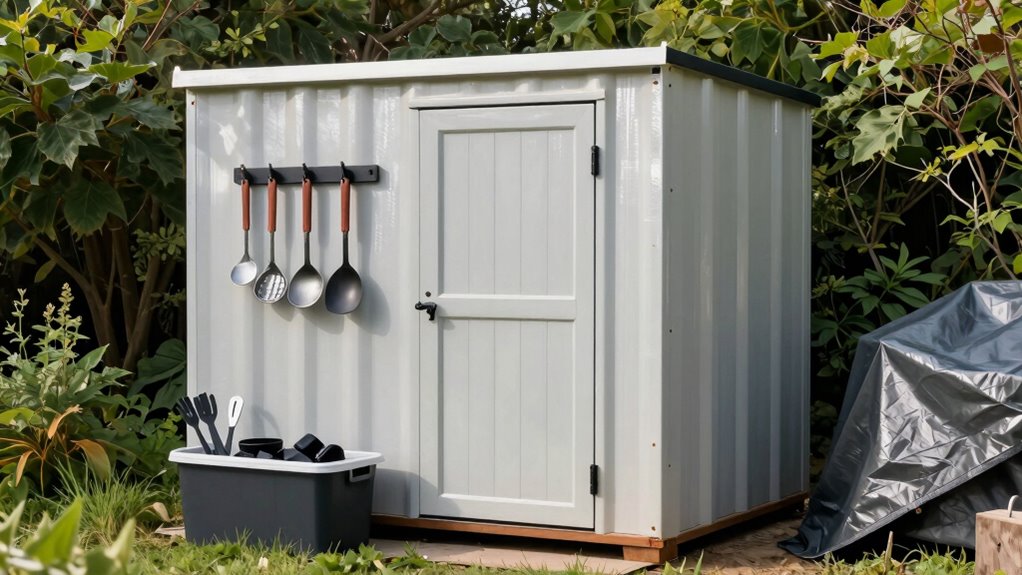
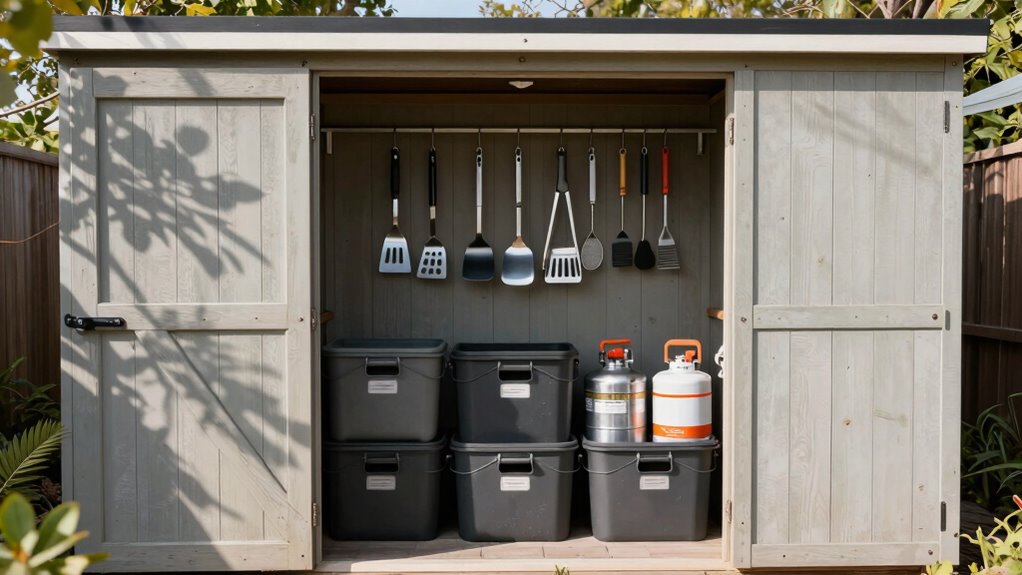
Next, pay attention to storage locations. Choose a dry, sheltered spot away from direct sunlight, which can degrade materials over time. A shed, garage, or outdoor cabinet works well, provided it’s well-ventilated and protected from the elements. Proper storage not only preserves your gear but also keeps it out of reach of pests and curious children. Keep sharp tools, like skewers and knives, in designated containers or sheaths to prevent accidents. Additionally, applying protective coatings to certain equipment can further extend their durability and resistance to the elements.
Organize your gear systematically so you can easily locate what you need. Group similar items together—barbecue tools, fire starters, grilling accessories—so you’re not rummaging around when you’re ready to cook. This organization speeds up setup and cleanup, making outdoor cooking more enjoyable. Also, consider storing fuels, such as propane tanks, in well-ventilated areas away from heat sources, and always follow safety instructions. Remember, campfire safety is just as significant when storing firewood or charcoal, ensuring sparks or embers don’t cause unintended fires. Proper storage practices help maintain the safety and longevity of your outdoor cooking gear. Additionally, understanding the importance of material durability can guide you in selecting the best storage conditions for different types of equipment. Keeping an eye on storage conditions ensures your gear remains in optimal shape over time.
When it comes to grilling recipe tips, having your equipment in good shape makes a difference. Sharp knives and clean grills ensure your food cooks evenly and tastes better. Keep your utensils dry and rust-free, and replace worn-out parts promptly. Before your next cookout, check your gear for wear and tear, replacing anything damaged to avoid accidents or subpar results. Maintaining your gear’s condition also involves inspecting components like seals or gaskets, which can wear out over time and impact performance.
Finally, think about seasonal storage. If you’re done with outdoor cooking for the season, clean everything thoroughly, then store it in airtight containers or covers to keep out dust, dirt, and moisture. Properly stored gear will serve you well year after year, making every outdoor meal safer and more enjoyable. Taking these simple steps guarantees your outdoor cooking gear remains in excellent condition, ready to help you create delicious meals and memorable moments.
As an affiliate, we earn on qualifying purchases.
Frequently Asked Questions
Can I Store Outdoor Cooking Gear in a Shed Year-Round?
Yes, you can store outdoor cooking gear in a shed year-round, but it’s best to think about indoor storage or seasonal rotation. Sheds can protect your gear from harsh weather, but make sure they’re well-ventilated and dry to prevent rust and mold. Regularly clean and inspect your equipment, and rotate seasonal items to avoid long-term exposure to elements. Proper storage helps extend the lifespan of your outdoor cooking gear.
How Often Should I Clean Outdoor Cooking Tools Before Storage?
A stitch in time saves nine, so you should clean your outdoor cooking tools after each use to prevent buildup and rust. Regular cleaning frequency is key for good storage maintenance, especially before long-term storage. Wash tools thoroughly with warm, soapy water, dry them completely, and consider applying a light coat of oil for added protection. This routine guarantees your gear stays in top shape, ready for your next outdoor culinary adventure.
Is It Necessary to Cover Grill Parts Separately?
Yes, it’s a good idea to cover grill parts separately with protective covers. This prevents dirt, moisture, and pests from damaging individual components. Using storage containers for smaller accessories keeps everything organized and safeguarded from the elements. When you cover each part properly, you extend their lifespan and guarantee they stay in good condition for your next outdoor cooking session. Proper coverage is key to long-lasting outdoor cooking gear.
What’s the Best Way to Prevent Rust on Outdoor Cookware?
To prevent rust on outdoor cookware, you should regularly clean, dry, and apply protective coatings like oil or specialized rust inhibitors. Store your cookware in a dry, covered space, and avoid exposing it to moisture or harsh weather. Use rust prevention techniques such as wiping down after use and sealing surfaces with a thin layer of oil. Consistent maintenance and proper storage are key to keeping your outdoor gear rust-free and in great shape.
Can I Store Outdoor Cooking Gear in Plastic Bins?
Yes, you can store outdoor cooking gear in plastic bins, especially weatherproof containers designed for outdoor use. These plastic bins protect your gear from moisture, dirt, and pests, extending its lifespan. Make sure the bins are airtight to prevent rust and corrosion. Label them clearly for easy access, and store them in a cool, dry place to keep your outdoor cooking equipment in top condition year-round.
Conclusion
Think of your outdoor cooking gear as a trusted companion, much like a seasoned sailor safeguarding precious cargo. By storing it properly, you guarantee it’s ready to set sail whenever adventure calls. Keep it dry, clean, and protected, so it endures many seasons of gatherings and great meals. With a little care, your gear will stand the test of time, ready to help you create memories that linger like a favorite story around the campfire.
Halloween Picks
halloween
As an affiliate, we earn on qualifying purchases.