
To use frozen ingredients without sacrificing quality, store them in airtight containers or heavy-duty freezer bags, removing excess air and labeling for freshness. Thaw slowly in the fridge and cook vegetables directly from frozen to preserve texture and nutrients. For meats, sear from frozen to lock in juices. Adjust seasoning after cooking and reheat gently to maintain flavors. Keep these tips in mind to keep your dishes flavorful and fresh—there’s more helpful advice ahead.

Get everyday essentials delivered free with Prime
- Fast, free delivery on millions of items
- Prime Video, Amazon Music and more included
- Member-only deals all year
Key Takeaways
- Thaw ingredients gradually in the refrigerator to maintain moisture and texture.
- Cook vegetables directly from frozen to retain crunch and nutrients.
- Use gentle reheating methods like simmering or short microwave bursts to preserve quality.
- Enhance flavors with fresh herbs, lemon, or high-quality oils after cooking.
- Properly store and label frozen items to prevent freezer burn and preserve freshness.
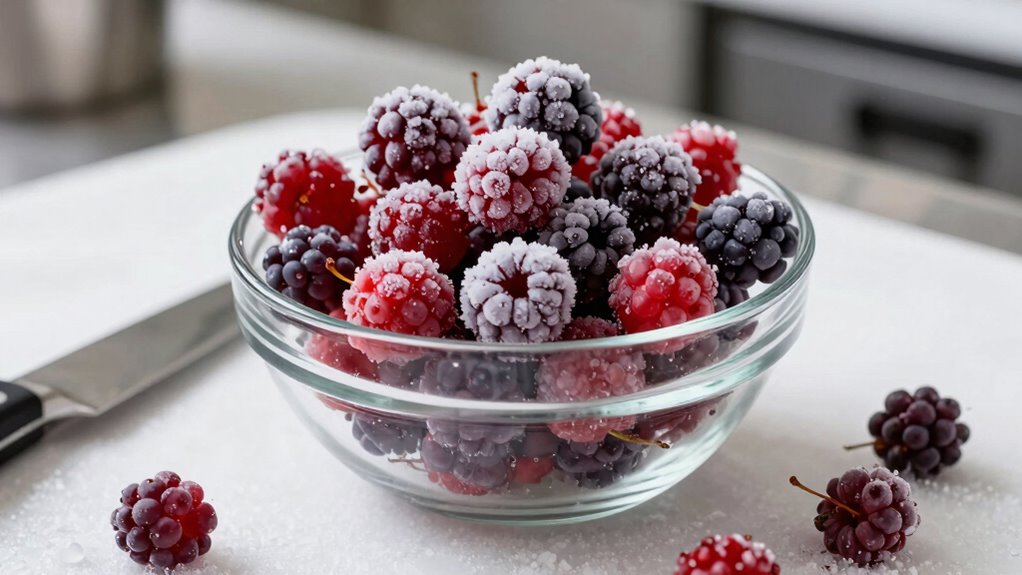
Using frozen ingredients can be a convenient way to stock your kitchen, but many people worry about losing quality in the process. The key concerns often revolve around flavor preservation and texture maintenance. Fortunately, with a few simple tips, you can guarantee your frozen foods taste just as good as fresh ones and maintain their ideal consistency.
First, pay attention to how you store your ingredients. Proper packaging is essential to prevent freezer burn, which can ruin flavor and compromise texture. Use airtight containers or heavy-duty freezer bags, removing as much air as possible before sealing. Label everything clearly with dates so you can use items while they’re at their peak quality. The fresher the ingredients are when frozen, the better the flavor preservation and texture maintenance you’ll achieve.
Store ingredients properly in airtight containers and label with dates for optimal freshness and quality.
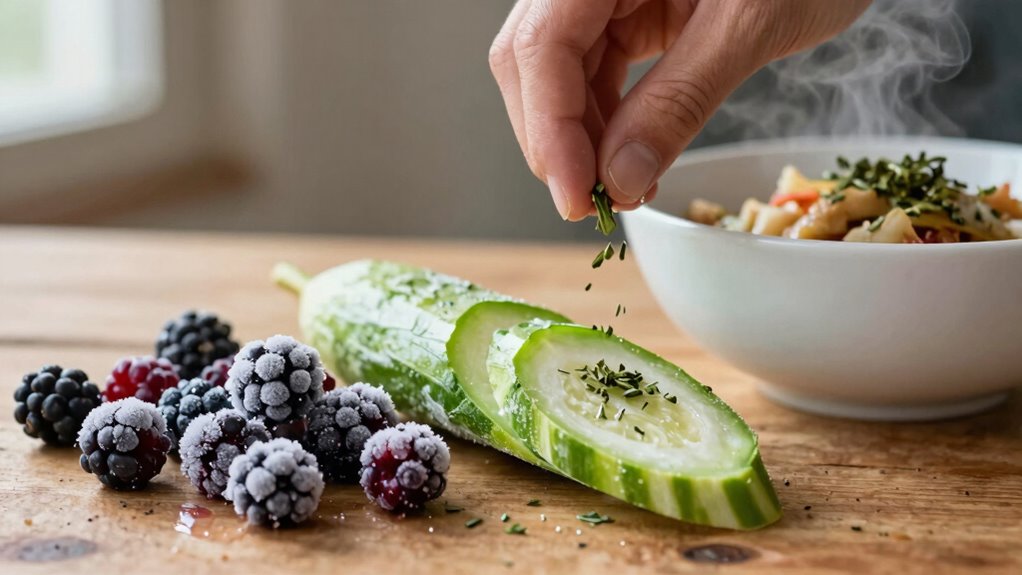
When it’s time to cook, do not rush the thawing process. Slow, gradual thawing in the refrigerator helps retain moisture, which is vital for flavor and texture. Avoid thawing at room temperature, as this can lead to uneven thawing and potential bacterial growth. If you’re in a hurry, some ingredients, like vegetables, can be cooked directly from frozen, which helps lock in their natural flavors and crunch. For meats, quick searing from frozen can help seal in juices, maintaining tenderness.
Cooking techniques also play a significant role in preserving quality. Steaming or sautéing vegetables from frozen preserves flavor and keeps their texture intact better than boiling, which can cause them to become mushy or lose nutrients. When reheating, gentle methods like simmering or using a microwave with short intervals prevent overcooking, ensuring the food remains flavorful and retains its original texture.
Seasoning is another vital aspect. Since freezing can dull some flavors, adjusting seasoning after cooking helps restore taste without overpowering the dish. Fresh herbs, a squeeze of lemon, or a splash of good-quality olive oil can enhance the flavor profile and compensate for any initial loss during freezing.
Popular right now

Dyson Cyclone V10 Origin Cordless Vacuum

Shark AV2501AE AI Robot Vacuum with XL HEPA Self-Empty Base

De'Longhi La Specialista Arte Evo Espresso Machine with Grinder
As an affiliate, we earn on qualifying purchases.
Frequently Asked Questions
Can Frozen Ingredients Replace Fresh in All Recipes?
Frozen ingredients can’t replace fresh in all recipes because they often experience texture changes and may impact flavor preservation. For dishes where texture matters, like salads or delicate garnishes, fresh ingredients are better. However, for cooked dishes like stews, soups, or sauces, frozen ingredients work well and save time. You can maintain quality by properly thawing and using frozen items promptly, ensuring your meals taste great without sacrificing too much.
How Long Can Frozen Ingredients Be Stored Without Quality Loss?
Frozen ingredients can typically be stored for 3 to 12 months without significant quality loss, but this varies by item. Over time, texture changes may occur, making ingredients mushy or grainy, and flavor degradation can dull their taste. To maintain quality, label packages with storage dates, guarantee proper packaging, and use ingredients within recommended time frames. Regularly check frozen items for freezer burn or off odors before use.
Do Frozen Vegetables Retain Their Nutritional Value?
Frozen vegetables generally keep their nutritional value well, like a treasure chest of vitamins and minerals. While some flavor preservation might be lost over time, they still offer a healthy boost. Keep in mind, the texture impact can vary—crispness may soften upon freezing. To maximize benefits, store them properly and use within recommended timeframes. So, frozen veggies remain a nutritious, convenient choice for your meals.
Is It Safe to Refreeze Thawed Ingredients?
Yes, it’s safe to refreeze thawed ingredients if you follow proper storage and thawing safety guidelines. Make sure the food was thawed in the refrigerator, kept at safe temperatures, and hasn’t been left out for more than two hours. Refreeze promptly to prevent bacteria growth. Always check for signs of spoilage before refreezing, and note that repeated freezing may slightly affect texture and flavor.
How Can I Tell if Frozen Ingredients Are Still Good?
Like a detective inspecting clues, you check your frozen ingredients for signs of spoilage. If they smell off, look discolored, or have freezer burn (dry, white patches), it’s time to toss them. Proper thawing methods, like in the fridge instead of room temperature, help preserve quality. If texture feels slimy or ice crystals are excessive, your ingredients might no longer be good, so trust your senses before using them.
Conclusion
By mastering the art of thawing and cooking frozen ingredients, you turn icy treasures into warm, flavorful delights. Think of your kitchen as a stage where frozen ingredients perform a graceful dance from freezer to plate, revealing their true taste and texture. When you handle them with care, you release their full potential, ensuring every dish sings with freshness. Embrace these tips, and watch your culinary creations shine brighter than a winter morning sun.