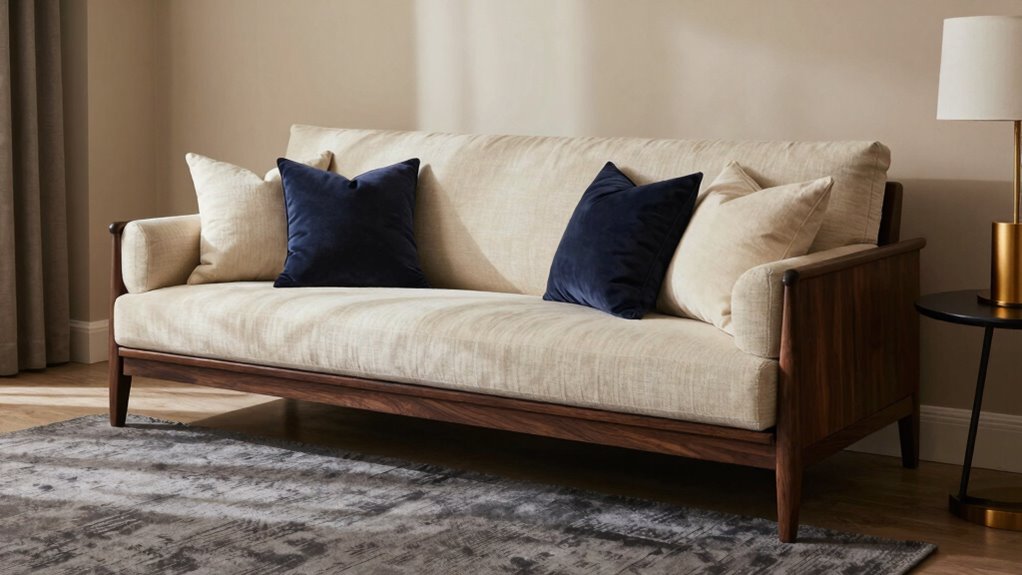

To make neutral rooms feel richer using contrast, focus on pairing softer hues like taupe or beige with darker shades such as charcoal or navy. Use layered textures like plush rugs, silk pillows, and matte furniture to add depth. Incorporate strategic lighting—such as warm lamps and spotlights—to highlight key elements and create shadows. Thoughtful placement and contrast of colors, textures, and light work together to transform a simple space into an inviting, sophisticated environment. Want to discover more ideas?

Get everyday essentials delivered free with Prime
- Fast, free delivery on millions of items
- Prime Video, Amazon Music and more included
- Member-only deals all year
Key Takeaways
- Incorporate darker furniture or decor against light walls to create natural focal points.
- Use layered textures like plush rugs, silk pillows, and matte finishes for visual richness.
- Add accent walls in deep navy or charcoal to enhance room depth and contrast.
- Utilize strategic lighting, such as warm lamps and spotlights, to highlight contrasting elements.
- Balance light and dark shades deliberately to create a layered, sophisticated environment.
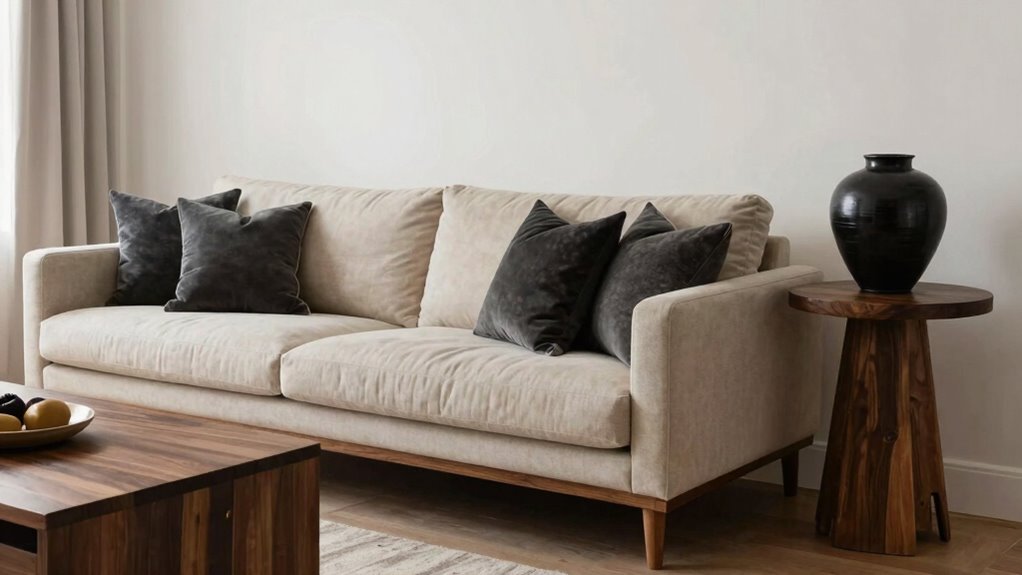
Have you ever wondered how to bring life and depth to a neutral room? The secret lies in mastering contrast. When you build your space around a carefully chosen color palette, you create a foundation that’s both sophisticated and inviting. Instead of sticking to plain beiges, whites, or grays, consider adding darker tones or subtle hints of richer hues to introduce visual interest. For example, pairing a soft taupe wall with charcoal furniture or a deep navy accent wall instantly elevates the room’s appeal. The goal is to balance lighter and darker shades, creating a dynamic environment that feels layered and intentional.
Lighting techniques play a *vital* role in emphasizing this contrast. Natural light can make a neutral room appear flat, so strategic lighting becomes essential. Use a combination of ambient, task, and accent lighting to highlight your contrasting elements. For instance, placing a warm-toned table lamp near a dark accent piece not only draws attention but also adds warmth to the space. Dimmers are a game-changer because they give you control over the mood, allowing you to emphasize or soften contrast as needed. When you install wall sconces or directional spotlights, you can cast shadows that enhance the textures and colors within your room, making the contrast more striking and lively. Additionally, understanding visual contrast helps in creating a balanced and engaging environment. Paying attention to lighting techniques can dramatically transform how contrast is perceived and experienced. Incorporating contrast principles into your design ensures a cohesive and visually captivating space. Recognizing the importance of layering textures and hues can also significantly elevate the overall aesthetic and depth of your room. Moreover, experimenting with lighting placement can further enhance the interplay of light and shadow, adding an extra layer of richness.
In addition to lighting, the way you select your furnishings and accessories can amplify contrast. Think about incorporating textiles with different textures—smooth silk pillows against a rougher linen sofa, or a plush rug beneath sleek, matte furniture. These variations in texture add another layer of contrast, making the room feel richer and more inviting. When choosing your color palette, don’t shy away from mixing hues; instead, aim for a harmonious balance that plays with light and shadow. Darker furniture or decor elements against lighter walls create focal points that guide the eye naturally around the space.
Ultimately, the power of contrast in a neutral room comes down to intentionality. With a well-considered color palette and thoughtful lighting techniques, you can craft a space that feels both calming and vibrant. It’s about highlighting what you love and giving it room to shine through the interplay of light, dark, texture, and color. When done correctly, contrast transforms a simple neutral room into a rich, layered environment that draws you in and keeps your eye engaged at every turn.
neutral room accent wall paint navy
As an affiliate, we earn on qualifying purchases.
As an affiliate, we earn on qualifying purchases.
Frequently Asked Questions
Can Contrast Be Used in Small Neutral Rooms Effectively?
Yes, contrast works well in small neutral rooms if you use it thoughtfully. You can leverage color psychology by adding bold accent pieces or artwork to create visual interest. Proper furniture placement enhances contrast, making the space feel larger and more dynamic. Focus on balancing light and dark elements, and avoid clutter. This approach makes the room feel richer and more engaging without overwhelming the small space.
What Are the Best Contrast Colors for Neutral Spaces?
Think of contrast colors as your secret weapon—bold blues, deep greens, or warm terracotta can transform neutral spaces. According to color theory, pairing these with textured elements like plush cushions or sleek metals enhances depth. You’ll create a layered, sophisticated look that’s lively yet balanced. Use contrasting hues in accessories or artwork to add visual interest and richness, making your space feel more dynamic and inviting without overwhelming.
How Do I Avoid Overwhelming a Neutral Room With Contrast?
To avoid overwhelming a neutral room with contrast, focus on subtle texture variation and thoughtful furniture pairing. Use different textures like plush fabrics, sleek metals, or matte finishes to add depth without overpowering. When selecting contrasting furniture, keep the color palette restrained, and choose pieces that complement each other. This balance creates visual interest while maintaining a calming, cohesive atmosphere, preventing the space from feeling chaotic or cluttered.
Is Contrast Suitable for Minimalist Interior Designs?
Absolutely, contrast is perfect for minimalist interior designs—it’s like the secret ingredient that elevates simplicity. You can use monochrome textures and bold accentuation to add depth without clutter, making your space feel rich and intentional. Contrast highlights key elements and creates visual interest, ensuring your minimalist room isn’t dull but dynamic, all while maintaining that sleek, clean aesthetic you love. It’s a smart way to make your design stand out effortlessly.
How Can Lighting Enhance Contrast in Neutral Rooms?
Lighting enhances contrast in neutral rooms by emphasizing color psychology and natural textures. Use layered lighting—like warm ambient, task, and accent lights—to create depth and highlight features. Warm light enhances cozy, inviting feels, while cooler tones add sophistication. Incorporate natural textures such as wood or linen with targeted lighting to make these materials pop, creating a richer, more dynamic space that feels both balanced and intriguing.
Conclusion
By playing with contrast, you turn a neutral room into a vibrant haven. Think of it as seasoning a dish—just a pinch of salt or a splash of spice elevates the flavor. I once transformed a bland living room by adding bold cushions and dark accents, and it felt like I’d added a secret ingredient. Remember, the right contrast isn’t just visual—it’s the magic that makes your space feel richer and more inviting.
Halloween Picks
halloween
As an affiliate, we earn on qualifying purchases.