
When choosing outdoor furniture, you’ll want to consider materials like teak, aluminum, resin, and untreated wood. Teak has natural oils that resist water and rot, but it needs care. Aluminum is lightweight and won’t rust, making it easy to maintain. Resin is highly weather-resistant and durable. Untreated woods like pine need regular sealing to withstand weather. Understanding these differences helps you pick what’s best for your climate and lifestyle; explore further to make an informed choice.

Get everyday essentials delivered free with Prime
- Fast, free delivery on millions of items
- Prime Video, Amazon Music and more included
- Member-only deals all year
Key Takeaways
- Teak is durable and water-resistant due to natural oils, but needs regular maintenance to stay in good condition.
- Aluminum furniture is lightweight, rust-proof, and requires minimal upkeep, making it ideal for all climates.
- Resin or synthetic wicker resists moisture and sun fading, offering low-maintenance options for outdoor use.
- Untreated wood like pine or cedar is less weather-resistant and needs sealing or treatment for outdoor durability.
- Choosing the right material depends on your climate, maintenance willingness, and desired look for long-lasting outdoor furniture.
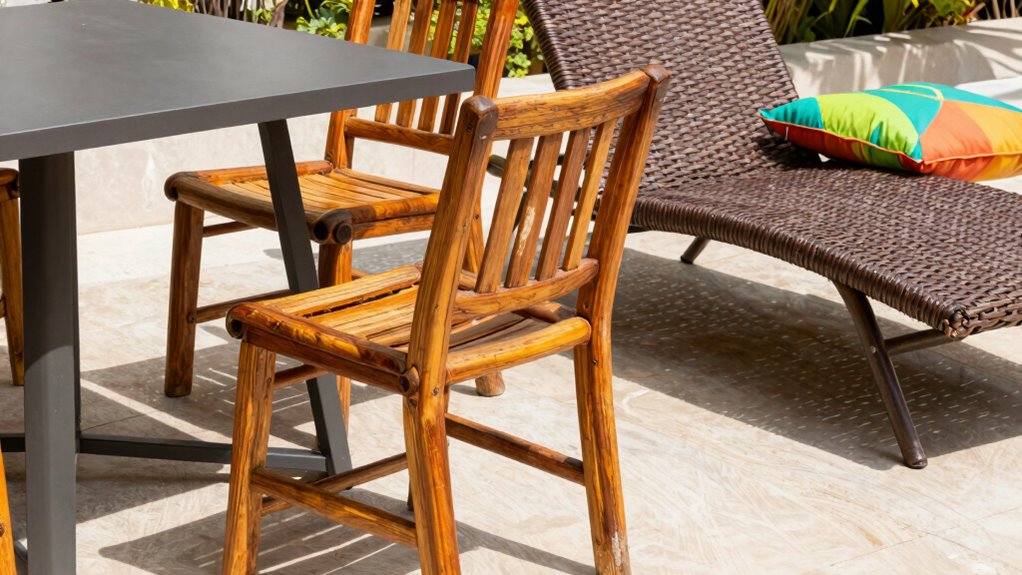
Ever wondered what makes some outdoor furniture stand up to the elements better than others? The key lies in the materials used. Different materials have varying levels of weather resistance and maintenance requirements, which directly impact how long your furniture lasts and how much effort you’ll need to put into caring for it. When selecting outdoor furniture, understanding these factors helps you choose options that suit your climate and lifestyle.
Weather resistance is essential because outdoor furniture faces sun, rain, snow, and humidity. Materials like teak, aluminum, and resin are naturally more resistant to these elements. Teak, for example, contains natural oils that repel water and resist rot, making it a popular choice for durability. Aluminum is lightweight yet sturdy, and it doesn’t rust, which is a significant advantage in damp or coastal areas. Resin or synthetic wicker is also highly weather-resistant; it doesn’t absorb moisture and stands up well to sun exposure without fading quickly. Conversely, wood like untreated pine or cedar can be more vulnerable unless treated or sealed regularly, which brings us to maintenance requirements. Proper weather resistance is crucial for outdoor furniture to withstand changing conditions. Additionally, knowing about material longevity can help you invest in pieces that will last longer with proper care. A good understanding of material properties can further inform your decision, ensuring you select furniture that aligns with your specific environment and needs.
Choosing the right outdoor furniture material involves balancing weather resistance and maintenance. If you want minimal upkeep, resin or aluminum might be your best bet. But if you prefer a natural look and are willing to invest time in care, teak or treated wood can provide both beauty and durability. Ultimately, your local climate and how much effort you’re willing to dedicate to upkeep will guide your choice. By understanding the weather resistance and maintenance requirements of different materials, you can select outdoor furniture that not only looks good but also stands the test of time.
As an affiliate, we earn on qualifying purchases.
Frequently Asked Questions
How Long Does Outdoor Furniture Typically Last?
Outdoor furniture typically lasts between 3 to 10 years, depending on durability factors and material longevity. If you choose high-quality materials like teak, aluminum, or synthetic wicker, your furniture can withstand weather elements longer. Regular maintenance, such as cleaning and covering during harsh weather, also extends lifespan. Cheaper options may wear out faster, so investing in better materials and proper care helps guarantee your outdoor furniture stays functional and attractive longer.
Are Certain Materials More Eco-Friendly Than Others?
You might think eco-friendly means sacrificing style or durability, but many sustainable options are just as resilient. Certain materials like recycled metal, responsibly sourced wood, and synthetic rattan are eco-conscious choices that reduce environmental impact. These options often last longer and require less maintenance, making them smart investments. Choosing eco-friendly outdoor furniture helps protect the planet while ensuring your space stays stylish and durable for years to come.
How Do I Maintain Different Outdoor Furniture Materials?
To maintain your outdoor furniture, you should regularly care for wood by sanding and applying sealant to prevent weather damage. For metal pieces, clean with a damp cloth and mild soap to remove dirt and prevent rust. Cover furniture when not in use, especially during harsh weather, and store cushions indoors. These simple steps keep your outdoor furniture looking great and extend its lifespan.
Can Outdoor Furniture Be Repaired if Damaged?
When your outdoor furniture faces damage, you can often repair it, thanks to various repair options suited to each material’s durability. Picture fixing a cracked wooden chair or patching a torn fabric cushion—restoring its beauty and function. While some materials like metal or resin are more resilient and easier to fix, others might need professional help. Either way, your outdoor space can regain its charm with the right repairs.
Which Materials Are Best for Extreme Weather Conditions?
For extreme weather conditions, you should choose weather-resistant woods like teak or cedar and UV-proof plastics. These materials withstand rain, snow, and intense sun without warping or fading. Weather-resistant woods are naturally durable, while UV-proof plastics resist cracking and discoloration from sun exposure. By selecting these materials, you guarantee your outdoor furniture remains sturdy and attractive, even in harsh weather, reducing maintenance and replacement costs over time.
Conclusion
When choosing outdoor furniture, knowing the materials helps you pick the best for your space. Whether it’s durable aluminum, sturdy teak, or weather-resistant wicker, each has its perks. Did you know that nearly 70% of homeowners say their outdoor furniture lasts longer when made from weather-resistant materials? So, invest wisely, and your outdoor setup will stay stylish and functional for years to come. Ready to select the perfect piece? Your outdoor oasis awaits!
Halloween Picks
halloween
As an affiliate, we earn on qualifying purchases.