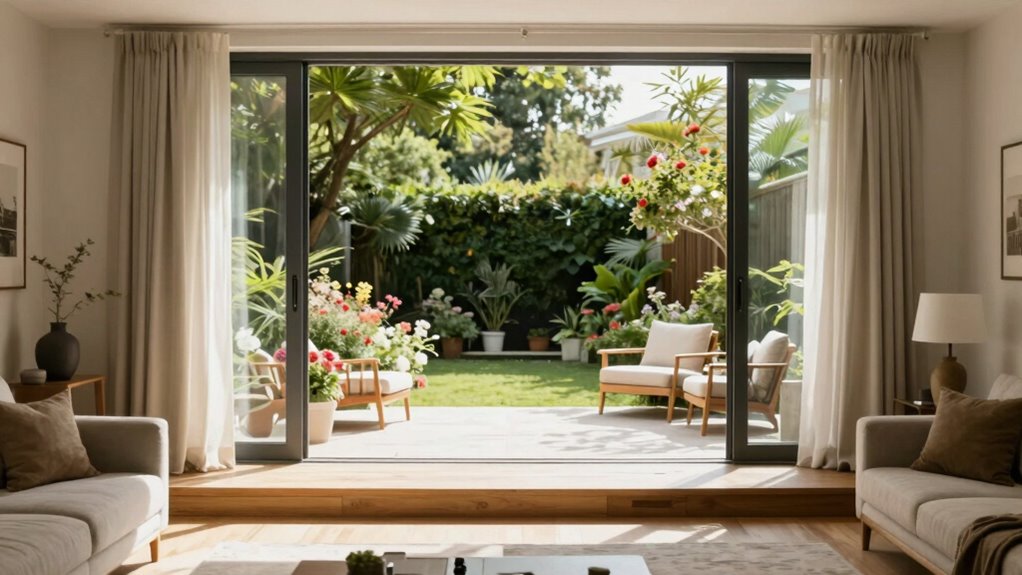

To improve the flow between your indoor and outdoor spaces, use consistent materials like wood or similar textures to create visual cohesion. Incorporate connecting zones such as patios or decks with inviting furniture and lighting that encourage movement. Keep sightlines open with low fencing or open walls, and add greenery like plants and shrubs to soften boundaries. Well-placed lighting highlights these areas and enhances safety at night. To discover more ways to create a harmonious connection, keep exploring these ideas.

Get everyday essentials delivered free with Prime
- Fast, free delivery on millions of items
- Prime Video, Amazon Music and more included
- Member-only deals all year
Key Takeaways
- Use consistent materials, colors, and textures to visually connect indoor and outdoor areas seamlessly.
- Design transitional zones like patios or decks that invite movement and blend both environments.
- Incorporate landscape elements such as plants and lighting to guide and enhance outdoor pathways.
- Maintain open sightlines with low fencing or open walls to preserve visual flow and spaciousness.
- Add lighting features to highlight transition zones and ensure safe, inviting outdoor movement after dark.
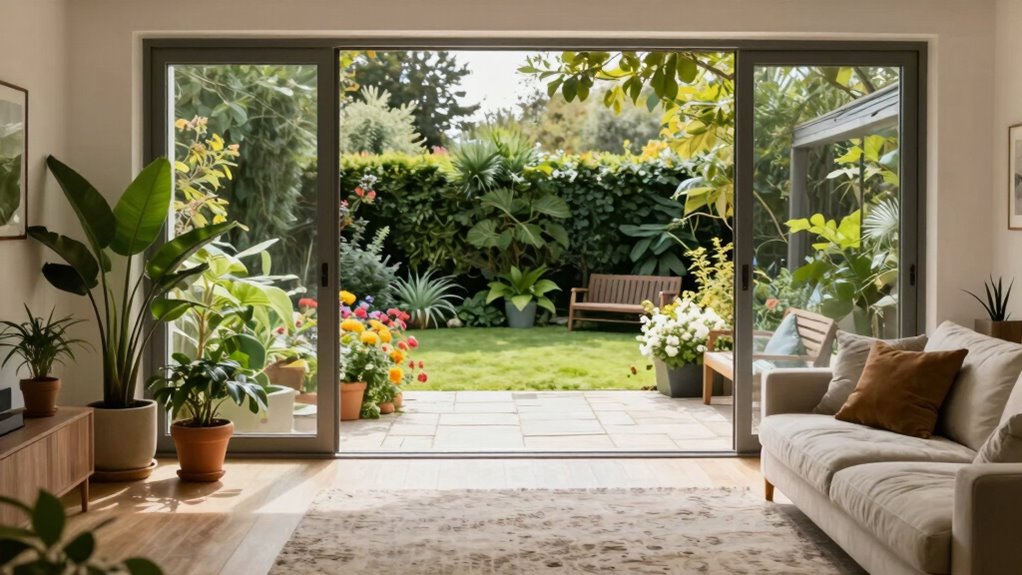
Bridging the gap between your indoor and outdoor spaces can transform your home into a seamless retreat. To achieve this, focus on effective landscape integration, which creates a visual and functional connection between your interior and exterior environments. Think of your outdoor area as an extension of your living space, and plan accordingly. Start by establishing transitional zones—these are the areas that serve as buffers, blending the two spaces smoothly. A well-designed transitional zone might feature a patio, deck, or a garden path that guides your eye and foot traffic naturally from indoors to outdoors. The goal is to make these zones inviting, accessible, and harmonious with both environments.
Creating seamless indoor-outdoor transitions transforms your home into an inviting, harmonious retreat.
When designing transitional zones, consider using similar materials, colors, and textures found inside your home. For example, if your interior boasts warm wooden floors, extending a wooden deck outside can create a cohesive look. Incorporate elements like outdoor rugs, planters, and furniture that echo your indoor décor, reinforcing the visual flow. Landscape integration plays a key role here—by thoughtfully incorporating plants, shrubs, or trees that complement your home’s architecture, you soften the boundary between indoors and out. Use greenery to frame the transition, making it feel natural rather than abrupt. Additionally, understanding the importance of biodiversity in your landscape can help create a more vibrant and resilient outdoor environment that supports local ecosystems. Creating a habitat for local wildlife can make your outdoor space more lively and engaging.
Lighting also enhances the flow, especially during evenings. Install pathway lights or soft landscape lighting to highlight the transition zones, encouraging movement between spaces even after sunset. This not only improves safety but also accentuates the seamless connection you’re aiming for. Additionally, consider the height and scale of outdoor features. Low fencing or open walls preserve sightlines, maintaining the feeling of openness. Avoid heavy visual barriers that may disrupt the flow or make outdoor spaces feel disconnected from the interior.
Incorporate functional elements that serve dual purposes, such as built-in seating with storage or a fire pit that acts as a focal point both inside and outside. These features encourage interaction and make the transition zones more inviting. Think about how you use your space—do you entertain often? Then, make sure your outdoor areas are easy to access and comfortable. If privacy is a concern, integrate screens or tall plants thoughtfully so they don’t interrupt the visual flow, but still provide a sense of enclosure. Paying attention to landscape design principles can help ensure your outdoor area complements your overall home aesthetic and promotes visual harmony.
Ultimately, creating better flow between indoor and outdoor spaces involves deliberate design choices that unify your landscape and architecture. By focusing on landscape integration and establishing transitional zones, you’ll craft an environment where your home feels connected and harmonious—an inviting space that beckons you outside as naturally as you step indoors.
As an affiliate, we earn on qualifying purchases.
Frequently Asked Questions
How Can I Improve Natural Light Transition Between Spaces?
To improve natural light flow, you should optimize window placement by adding larger or strategically positioned windows that face natural light sources. Use open floor plans and unobstructed window views to allow light to flow seamlessly between spaces. Incorporate glass doors, skylights, or light-reflecting surfaces to bounce light throughout your home. These adjustments help create a smoother, more consistent natural light transition between indoor and outdoor areas.
What Materials Work Best for Seamless Flooring?
Sure, choosing the right materials for seamless flooring might seem obvious—just pick something durable, right? But in reality, materials like large-format tiles, polished concrete, or continuous hardwood floors work best. They create a cohesive look, especially when you match interior accents and flooring patterns. These options help blur the indoor-outdoor boundary, making the shift feel natural and uninterrupted. Sometimes, simplicity truly is the key.
How Do I Choose the Right Outdoor Furniture?
You should choose outdoor furniture that complements your indoor style through color coordination, creating a seamless look. Focus on furniture placement to define different zones, like lounging or dining areas, ensuring easy flow. Opt for durable, weather-resistant materials that match your aesthetic. Consider scale and comfort, and select pieces that blend well with your surroundings. This approach enhances the overall harmony between indoor and outdoor spaces, making your outdoor area inviting and functional.
What Lighting Options Enhance Indoor-Outdoor Flow at Night?
At night, smart lighting transforms your outdoor space into an inviting extension of your home. Use dimmable LEDs or string lights to create a warm, cozy ambiance, while strategically placing pathway lights for safety. These options enhance mood and seamlessly connect indoor comfort with outdoor beauty. With smart controls, you can effortlessly adjust lighting to suit your mood, making your indoor-outdoor flow both functional and emotionally inviting.
How Can I Incorporate Plants to Connect Indoor and Outdoor Areas?
You can incorporate plants to connect indoor and outdoor areas by choosing the right plant selection and using container gardening. Opt for plants that thrive in both settings, like ferns, succulents, or herbs, and place them in stylish containers that complement your decor. Arrange these containers near doorways or windows to create a seamless flow, making your space feel more inviting and unified.
Conclusion
By seamlessly blending your indoor and outdoor spaces, you turn your home into a harmonious haven, like a gentle river flowing effortlessly from one bank to the next. Think of it as opening a door to endless possibilities, where nature becomes an extension of your living area. With thoughtful design and thoughtful touches, you can create a smooth progression that invites relaxation and connection, making every moment outside feel just as cozy and inviting as inside.
Halloween Picks
halloween
As an affiliate, we earn on qualifying purchases.