
People often overcomplicate how reverse osmosis works, but it’s actually simple. The process uses a semi-permeable membrane to filter impurities from water by applying high pressure. Water passes through the membrane, leaving contaminants behind, while clean water is collected for use. The key components—pre-filters, a pump, and the membrane—are all you really need for effective purification. To understand the basics clearly, keep exploring how each part works together.

Get everyday essentials delivered free with Prime
- Fast, free delivery on millions of items
- Prime Video, Amazon Music and more included
- Member-only deals all year
Key Takeaways
- Reverse osmosis relies on a simple principle: forcing water through a semi-permeable membrane to remove impurities.
- The system’s effectiveness depends on basic components like pre-filters, a pump, and the membrane, not complex setups.
- Overcomplication often arises from focusing on unnecessary features rather than core filtration principles.
- Proper maintenance is straightforward: replacing filters and ensuring system integrity keeps it functioning efficiently.
- Understanding the basic process demystifies RO and highlights its simplicity for producing clean drinking water.
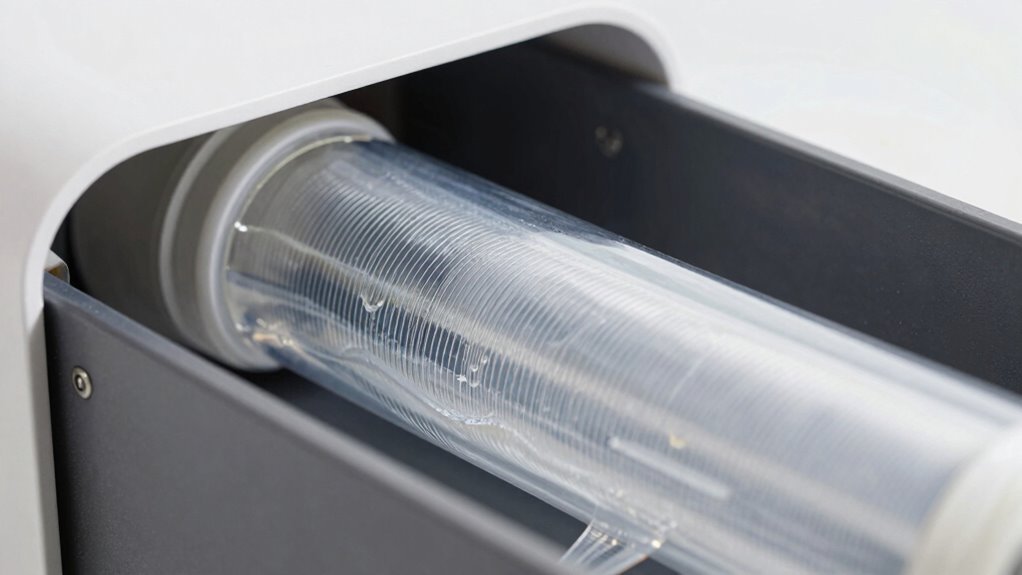
Have you ever wondered how clean, pure drinking water is produced from questionable sources? It’s often a simple process that involves water filtration, but many people believe it’s more complicated than it actually is. At the core of most modern water purification systems is membrane technology, which is the key to removing contaminants efficiently. Reverse osmosis, or RO, is a prime example of this process, and it’s surprisingly straightforward once you understand the basics.
In essence, reverse osmosis uses a semi-permeable membrane to filter out impurities. You might hear people talk about all sorts of fancy equipment or complex steps, but at its heart, it’s just forcing water through a membrane at high pressure. This membrane acts as a barrier, allowing only water molecules to pass while blocking larger particles, bacteria, viruses, and even dissolved salts. It’s a form of water filtration that’s incredibly effective and reliable, yet many overthink it and get caught up in unnecessary details.
Membrane technology is what makes reverse osmosis so powerful. These membranes are designed specifically to reject contaminants, and they do so with remarkable precision. These systems also typically include pre-filtration stages to protect the membrane from clogging, which helps prolong its lifespan and maintain efficiency. The process starts with feed water—potentially contaminated or questionable sources—being pushed under pressure through the membrane. The clean water, called permeate, passes through, while the impurities are flushed away as waste. This simple concept is the reason why RO systems can transform dirty tap water, brackish water, or even seawater into safe, drinkable water. Proper system design ensures that the entire process runs smoothly and efficiently.
People often overcomplicate reverse osmosis by focusing on complicated setups or exaggerated claims about what it can remove. But the truth is, it’s a straightforward application of water filtration principles combined with membrane technology. The system’s effectiveness relies on a few key components: the pre-filters to remove larger particles, the high-pressure pump, the semi-permeable membrane, and a post-filter for taste. Additionally, understanding the role of filtration stages can help users better appreciate the process. Once set up, these systems require minimal maintenance and deliver high-quality water consistently.
Understanding that reverse osmosis is mainly about pushing water through a specialized membrane helps demystify the process. You don’t need to be an engineer or scientist to grasp it. It’s just a matter of applying water filtration with membrane technology and the right technology. By keeping it simple, you realize that reverse osmosis isn’t overhyped or overly complex—it’s a practical, efficient solution for producing pure drinking water from questionable sources.
reverse osmosis water filter system
As an affiliate, we earn on qualifying purchases.
As an affiliate, we earn on qualifying purchases.
Frequently Asked Questions
How Often Should I Replace My Reverse Osmosis Filters?
You should replace your reverse osmosis filters every 6 to 12 months, depending on your water quality and usage. Regular filter maintenance guarantees ideal water pH levels and prevents bacteria buildup. Check your system’s manual for specific recommendations, but don’t wait too long. Regularly replacing filters keeps your system running efficiently and ensures safe, clean water for you and your family.
Can Reverse Osmosis Remove All Contaminants From Water?
You might think reverse osmosis can remove every single contaminant, but it’s not a magic wand. While it’s highly effective at contaminant filtration, some substances like certain pesticides, gases, and dissolved minerals can slip through. The purification process substantially reduces most harmful contaminants, but for complete safety, consider additional treatment methods. Always test your water to ensure it meets your specific health needs, as no system is 100% foolproof.
Is Reverse Osmosis Water Safe to Drink Daily?
Yes, reverse osmosis water is safe to drink daily. It improves water quality by removing many contaminants, ensuring you’re getting clean, safe water. The filtration efficiency of reverse osmosis systems is high, effectively reducing pollutants and impurities. Just make sure your system is well-maintained, and replace filters regularly. This way, you can confidently enjoy safe, great-tasting water every day without overcomplicating the process.
Does Reverse Osmosis Waste a Lot of Water?
Reverse osmosis does waste some water, typically about 3 to 4 gallons for every gallon filtered, which raises concerns about water conservation and environmental impact. However, many systems now include features to reduce waste and improve efficiency. If you’re mindful of water usage, you can minimize waste by using the reject water for other purposes like watering plants. Balancing clean drinking water with water conservation helps you make an informed choice.
How Long Does a Reverse Osmosis System Last?
You’ll be glad to know a reverse osmosis system typically lasts 2 to 3 years with proper system maintenance. Don’t worry about membrane lifespan; regular filter changes and professional checks keep it running smoothly. While some worry about costs, investing in maintenance guarantees your system’s longevity and clean water. Staying on top of these simple tasks makes your reverse osmosis system a reliable, long-lasting part of your home.
Conclusion
You might think reverse osmosis is complicated, but at its core, it’s simply about filtering out impurities with a membrane. Overthinking the process can make it seem intimidating, yet it’s as straightforward as pushing water through a barrier. Sometimes, in overcomplicating things, we forget the beauty in simplicity. Embrace the basics, and you’ll see that clarity often comes when you strip away the unnecessary, revealing the elegant efficiency of something so seemingly complex.
Halloween Picks
halloween
As an affiliate, we earn on qualifying purchases.