
When choosing dehumidifier drain options, opt for a bucket if you don’t mind regular emptying and have small space needs. A hose offers a hassle-free way to drain water continuously outside or into a drain, ideal for constant operation. For maximum convenience, a pump automatically moves water to a higher or distant drain, freeing you from manual tasks. To find out which method suits your space and budget best, explore the options in more detail below.
Key Takeaways
- Buckets are simple, low-cost, but require manual emptying and are best for small or occasional use.
- Hoses enable continuous drainage into a drain or outside, reducing manual handling and supporting longer operation.
- Pumps actively move water through a hose, ideal for high or hard-to-reach drains, offering automated, maintenance-free drainage.
- Proper drainage prevents moisture buildup, mold, and equipment issues, enhancing air quality and energy efficiency.
- Choice depends on space, budget, and need for automation, with pumps providing the most hassle-free, continuous solution.
Dehumidifiers are essential for maintaining a comfortable and healthy indoor environment, but they require a reliable way to dispose of the collected water. How you handle this drainage directly impacts your air quality and energy efficiency. If you don’t address this properly, excess moisture can linger, leading to mold growth and poor air quality. Conversely, an efficient drainage system ensures your dehumidifier operates at its best, saving energy and keeping your space healthier.
One of the simplest options is using a bucket or water collection tray. You’ll need to regularly empty it, which can be inconvenient but doesn’t require any additional setup. This method is ideal for small spaces or occasional use, but it can interrupt continuous operation. If you forget to empty the bucket, moisture can accumulate, degrading air quality and reducing the dehumidifier’s effectiveness. Additionally, the frequent handling of water can be unsanitary and labor-intensive. While this method is low-cost and easy to implement, it’s not the most efficient for maintaining consistent air quality or energy use.
Using a bucket or collection tray is simple but requires frequent emptying and can disrupt continuous operation.
A more practical solution for continuous operation is connecting a garden hose directly to your dehumidifier’s drainage outlet. This method allows the water to flow directly into a drain or outside, eliminating the need for manual emptying. With a hose, you maintain better air quality because your dehumidifier can run uninterrupted, controlling excess moisture more effectively. Plus, it enhances energy efficiency by preventing the unit from cycling off due to a full reservoir. As long as the hose remains properly connected and free of kinks, this setup provides a hassle-free, semi-permanent drainage solution. For most homeowners, this strikes a good balance between convenience and maintaining a healthy indoor environment.
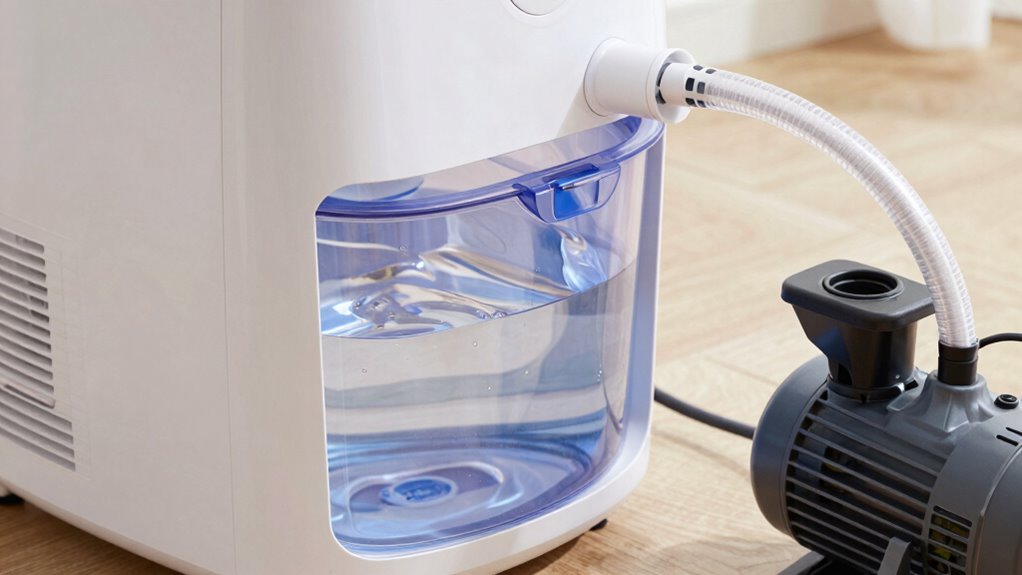
For even greater convenience and automation, some dehumidifiers come with a built-in pump. This feature actively moves water through a hose to a designated drain, even if it’s located above the dehumidifier. Pumps eliminate the need for gravity drainage, making them perfect for basements or areas where the drain is higher than the unit. This setup ensures consistent air quality by continuously removing excess moisture, which also helps maintain energy efficiency because the dehumidifier doesn’t have to work as hard to remove humidity. Pumps can be a bit more expensive initially but are well worth it if you want a set-it-and-forget-it solution that keeps your indoor air fresh and clean without manual intervention. Additionally, understanding proper drainage can help prevent water damage or malfunctions in your dehumidifier over time.
Choosing the right drain option depends on your space, budget, and needs. Whether you opt for a bucket, hose, or pump, each impacts your air quality and energy efficiency differently. Proper drainage keeps your dehumidifier running smoothly, ensuring a healthier, more comfortable indoor environment.
Frequently Asked Questions
Can I Switch Drain Options Without Turning off My Dehumidifier?
You can switch drain options without turning off your dehumidifier, but you should prioritize drain safety. Always unplug the unit before making any changes to avoid electrical hazards. Follow installation tips carefully, ensuring the new drain connection is secure and leak-free. Be gentle when disconnecting or attaching hoses or pumps, and double-check that everything is properly sealed before powering the device back on to prevent water damage.
Which Drain Method Is Best for Energy Efficiency?
Using a continuous drain hose is your best choice for energy savings, as it minimizes power consumption by avoiding the need to frequently empty a bucket. It keeps your dehumidifier running efficiently, reducing the workload on the unit. Avoiding a pump can also save energy, but confirm your setup allows for gravity drainage. Overall, a hose system helps lower power use and keeps your space dry effortlessly.
Are There Maintenance Tips for Each Drain Type?
Imagine the frustration of a leak or clog ruining your day. For each drain type, you should regularly clean the drain to prevent buildup and check for leaks. For buckets, empty them often to avoid overflow. Hose connections need inspection for kinks or blockages. Pumps require testing to guarantee proper operation. Consistent maintenance prevents damage, keeps your dehumidifier running smoothly, and gives you peace of mind.
Will Using a Hose or Pump Affect Dehumidifier Lifespan?
Using a hose or pump generally won’t negatively affect your dehumidifier’s lifespan if you choose durable materials and maintain them properly. Opt for high-quality hoses to guarantee better hose durability and prevent leaks. Regularly inspect and clean the drain system to avoid clogs that can strain the unit. Proper maintenance helps preserve drain longevity, ensuring your dehumidifier functions efficiently without unnecessary wear or damage over time.
How Do I Troubleshoot Drainage Issues With Each Method?
To troubleshoot drainage issues, first check for a drain blockage in the hose or pump. Clear any debris or kinks that could restrict flow. Make certain the hose is properly connected and positioned to prevent leaks. Regularly inspect for leaks around the drain connection to avoid water damage. Proper maintenance and leak prevention help keep your dehumidifier running efficiently, extending its lifespan regardless of your drainage method.
Conclusion
Choosing the right drain option is like finding the key to a dry, worry-free home. A bucket is your trusted but temporary guardian, while a hose offers a steady flow of relief. The pump, however, is your reliable helper, always ready to carry away excess moisture effortlessly. By selecting the right method, you’re revealing the door to a space where humidity no longer rules—turning your dehumidifier into a silent, steadfast guardian of comfort.