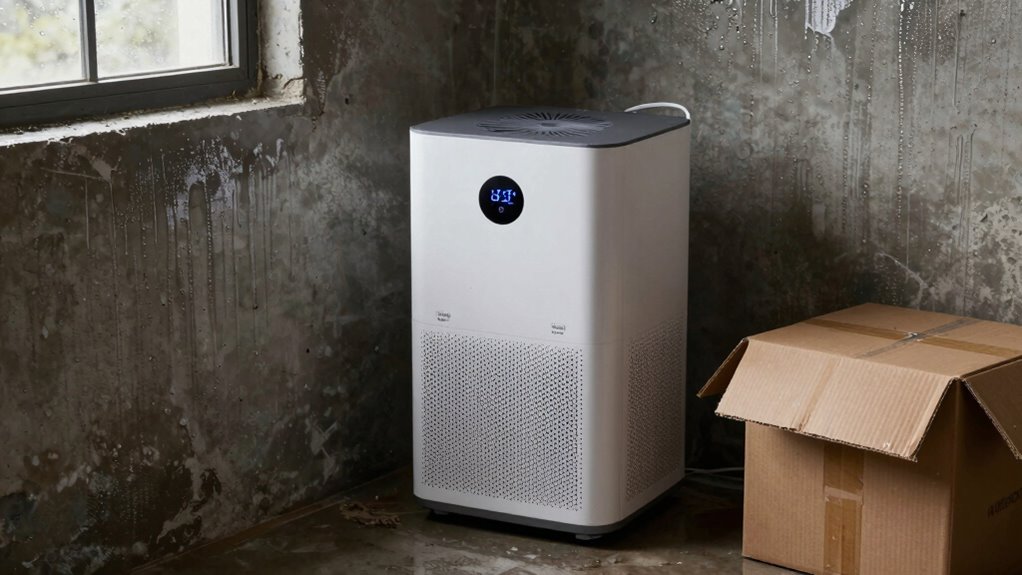

Choosing a dehumidifier with too low a pint rating means it can’t tackle the moisture in your basement, so it stays damp and uncomfortable. Many people assume a higher pint rating is always better, but that’s not true; it depends on your space and humidity levels. Selecting the wrong size can waste energy and leave you with a wet basement. Keep in mind, proper sizing makes all the difference—learn more to get it right.
Key Takeaways
- Higher pint ratings don’t guarantee better basement moisture control; proper sizing based on room conditions is essential.
- Overestimating capacity can lead to unnecessary energy use and inefficient dehumidification.
- Underestimating pint needs causes inadequate humidity reduction, leaving basements damp.
- Lab-rated pint figures may not reflect real-world basement humidity fluctuations.
- Matching dehumidifier capacity to the specific moisture load ensures effective and efficient moisture management.
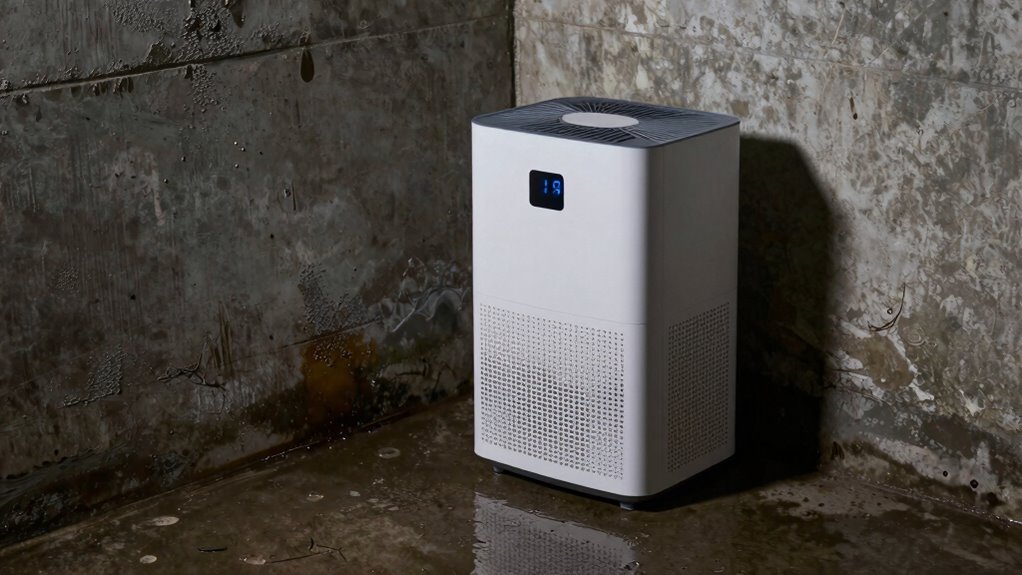
Have you ever purchased a dehumidifier only to find it doesn’t perform as expected? It’s frustrating, especially when you’re counting on it to keep your basement dry. One common mistake homeowners make is misunderstanding the pint rating of a dehumidifier, which directly impacts its ability to provide effective humidity control. Many assume that a higher pint rating automatically means better performance, but that’s not always true. If you buy a unit with an insufficient pint capacity for your space, it simply won’t remove enough moisture, leaving your basement damp and prone to mold. Conversely, overestimating your needs leads to unnecessary expense and energy consumption, reducing the appliance’s efficiency.
Understanding how the pint rating relates to your space is essential. The pint rating indicates how much moisture the dehumidifier can extract from the air in 24 hours. However, this figure is based on ideal conditions and a specific room size. If your basement is larger or has higher humidity levels, a dehumidifier with a low pint rating won’t be sufficient, no matter how efficient the appliance claims to be. When you choose a dehumidifier with an appropriate pint capacity, you improve humidity control and guarantee the unit operates at peak efficiency. A unit that matches your space’s moisture load will run more effectively, using energy only as needed, rather than working overtime or cycling on and off excessively. Proper sizing is crucial for effective moisture management.
Another issue with pint ratings is that they can be misleading if you don’t consider the real-world conditions. Many dehumidifiers are rated under controlled lab settings, but humidity levels in your basement may fluctuate or be higher than assumed. This mismatch can cause the appliance to struggle, resulting in poor humidity control and increased energy use. To avoid this, always assess your space’s actual size and moisture levels before selecting a unit. Look for models with a higher-than-necessary pint rating if your basement tends to be very damp, or opt for a slightly lower capacity if the area is smaller or less humid. This way, you maximize appliance efficiency and maintain a comfortable, mold-free environment.
In the end, the pint rating mistake comes down to not matching the dehumidifier’s capacity to your specific needs. By understanding this, you guarantee your investment delivers the humidity control you require without wasting energy or money. A well-chosen dehumidifier not only keeps your basement dry but also operates efficiently, saving you from unnecessary costs and headaches. Remember, it’s about choosing the right size, not just the highest pint number, to get the best balance of performance and efficiency for your space.
Frequently Asked Questions
How Do I Calculate the Right Dehumidifier Size for My Basement?
To calculate the right dehumidifier size for your basement, measure the space’s square footage and determine the humidity level. For example, a humid area needs a larger unit for effective humidity control. Use this info to choose an appliance with adequate capacity, ensuring better efficiency. Don’t forget, a properly sized dehumidifier improves appliance efficiency and keeps your basement dry, preventing mold and moisture issues.
Can a Dehumidifier’s Pint Rating Change Over Time?
Yes, a dehumidifier’s pint rating can change over time, especially as its lifespan progresses. Seasonal humidity fluctuations can also impact its performance, making it seem less effective even if it’s still functioning. As your dehumidifier ages, dust buildup or worn components may reduce its capacity to remove moisture. Regular maintenance and understanding seasonal humidity changes help you get the most out of your dehumidifier and maintain its efficiency.
Are Higher Pint Ratings Always Better for Basements?
Higher pint ratings aren’t always better for basements because of Pint rating misconceptions. A larger capacity dehumidifier can handle more moisture, but if your basement’s size and humidity levels are small, it might cycle on and off frequently, wasting energy. Focus on effective basement moisture management by choosing a dehumidifier with the right pint rating for your space. Proper sizing guarantees efficient operation and keeps your basement dry without unnecessary energy use.
How Does Room Humidity Affect Dehumidifier Performance?
Ever wonder why your dehumidifier seems to ignore your humidity control efforts? Higher room humidity makes it work harder, forcing it to battle excess moisture levels. When humidity rises, your device’s performance drops, leaving you with dampness instead of dry comfort. To keep your basement dry, don’t just rely on size—monitor humidity levels and adjust your dehumidifier accordingly. Otherwise, you’re just fighting a losing battle against moisture.
What Maintenance Is Required to Keep a Dehumidifier Effective?
To keep your dehumidifier effective, regularly clean the filter to prevent dust buildup that hampers airflow. You should also drain the water tank or clean the drain hose periodically to avoid mold and bacteria growth. Check for any debris or clogs in the drain system and ensure the unit is placed in a well-ventilated area. Proper maintenance maintains your dehumidifier running efficiently and extends its lifespan.
Conclusion
Don’t let the pint rating be the blindfold that keeps your basement damp. By understanding how to choose the right dehumidifier, you’re not just buying a machine — you’re investing in peace of mind. Remember, a higher pint rating isn’t always better; it’s about matching capacity to your space. So, don’t fall for the mistake of underestimating your needs — because, in the battle against moisture, knowledge truly is your greatest weapon.