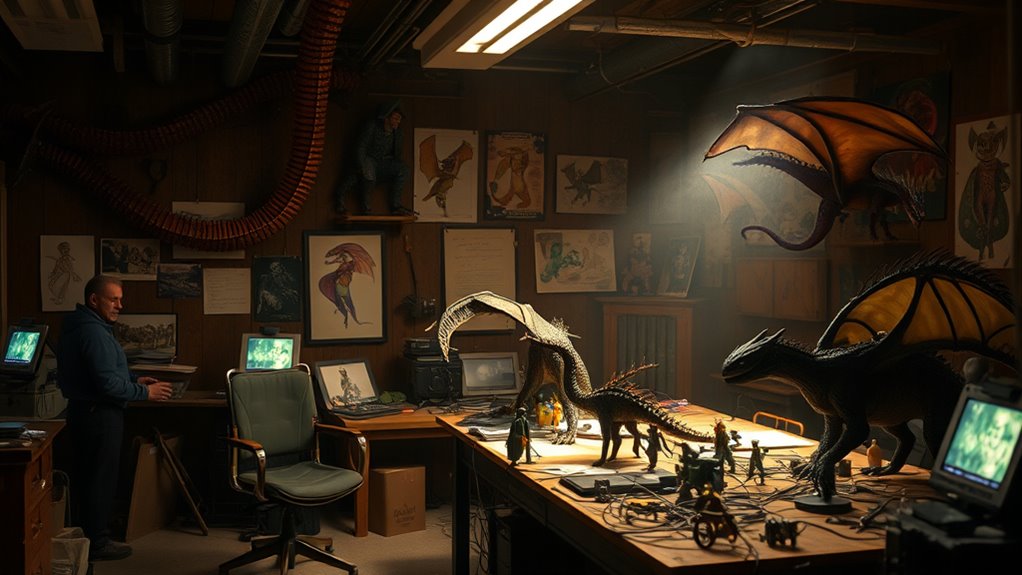

On the set of “How to Train Your Dragon,” expert craftsmanship brought the world to life through practical set construction and detailed puppetry. You’ll discover that real stone elements and custom-built dragon puppets helped actors interact naturally with the dragons. Advanced rigs simulated flight, blending physical effects with CGI for realism. If you keep exploring, you’ll uncover how these techniques combined to create the immersive, magical experience fans cherish today.
Key Takeaways
- Practical set pieces, like hollow rocks and stone steps, created immersive, tactile environments for authentic performances.
- Puppeteers manipulated dragon puppets on set, enabling actors to interact naturally with the creatures.
- Advanced motion rigs and physical textures blended seamlessly with CGI for realistic dragon movements.
- Casting involved extensive auditions to find actors who could convey genuine emotion and chemistry.
- Filming combined IMAX, green screen, and real-time puppet references to achieve high visual fidelity.
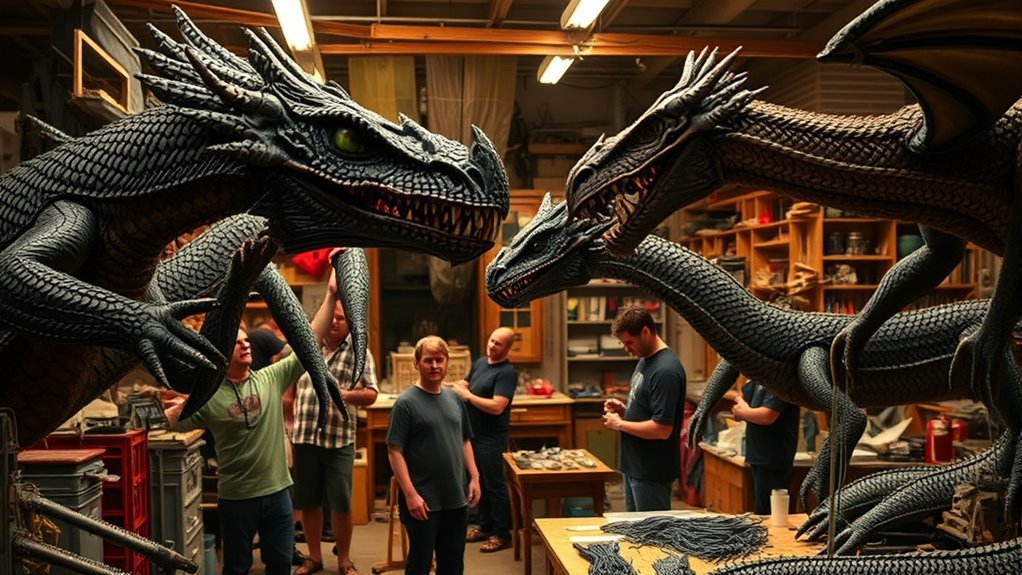
Have you ever wondered what goes into creating a believable Viking world on screen? It all starts with practical set design and construction. Instead of relying solely on digital backgrounds, the filmmakers built real sets stone by stone to craft an authentic environment. You can imagine walking into a scene and feeling the rough textures of hollow rocks and sturdy stone steps beneath your feet, thanks to meticulously constructed physical elements. These tangible surroundings aren’t just for show—they give actors a real environment to inhabit, which makes their performances more naturalistic. When actors step into these sets, they don’t just imagine the world; they live within it, enhancing the film’s immersive quality. The design team behind these sets included skilled professionals like Dominic Watkins, whose craftsmanship ensured every detail contributed to the Viking atmosphere, and Bill Pope, the director of photography, who captured these textures on camera to heighten realism.
Practical set design creates authentic Viking worlds, immersing actors and audiences in textured, tangible environments.
A *pivotal* aspect of making the dragons believable involved puppetry and on-set interaction. Instead of only relying on CGI, puppet versions of dragons were used during filming. These puppets allowed actors to interact with tangible creatures, making their performances more convincing. A team of puppeteers skillfully manipulated these dragon puppets, giving actors a physical reference point for their reactions and movements. To simulate flight, advanced motion rig gimbals were employed, which actors could ride to mimic the dynamic flight of dragons. Each rig was carefully customized, reflecting the unique flying style of each dragon, allowing actors to perform with a sense of realism that seamlessly blended with CGI enhancements. On-set puppetry also helped directors capture more natural performances from the cast, as they could see and react to the dragons as if they were real. Additionally, the use of physical models increased the tactile interaction, further enhancing the authenticity of the scenes.
The visual effects team played an *indispensable* role in refining the dragons’ appearance without losing their core personalities. For Toothless, subtle physical textures were added to maintain his familiar look while making him fit better within a live-action setting. Animators studied real animals like dogs, cats, and horses to craft expressive, natural movements for the dragons, ensuring they felt alive and believable. The goal was to balance cartoon-like expressiveness with realistic behavior, so the audience remains immersed. This careful interplay between practical puppetry and CGI helped produce dragons that felt both magical and authentic.
The casting process also contributed to bringing this world to life. Mason Thames was chosen to play Hiccup after extensive auditions, including chemistry reads in London. His performance was carefully directed to capture the character’s essence, even as he navigated the nerves of stepping into a beloved role. Returning cast members like Gerard Butler added continuity, while newcomers such as Nico Parker and Julian Dennison brought fresh energy. The filmmakers paid close attention to performance, ensuring each character retained its core traits in the transition from animation to live action.
Finally, the filming techniques centered on high visual fidelity, shot in IMAX format for maximum impact on large screens. Practical effects, combined with green screen work, allowed the team to recreate scenes faithfully from the original animated film. Real-time reference of dragon positioning through puppetry helped camera crews capture precise shots, making the blend of physical and digital elements seamless. All these efforts, from set building to special effects, come together to create the astonishing world of “How to Train Your Dragon,” making it feel real enough to step into.

DWTS Coffee Bar Accessories,Coffee Station Organizer with Multi-Functional,CoffeeBar Decor for Accessories,2 Tier Wooden Shelf Gold Metal Station Organizer for Countertop,Syrup
Stylish Design Kitchen Countertop Organizer:Coffee organizer station is made of high-quality painted solid paulownia wood with white storage...
As an affiliate, we earn on qualifying purchases.
Frequently Asked Questions
What Inspired the Unique Dragon Designs in the Film?
You’re curious about what inspired the unique dragon designs. The creators combined real animals like panthers, bats, and snakes to craft believable, hybrid creatures with distinct personalities. They drew from natural objects and environments, ensuring each dragon fits seamlessly into its world. By blending animal behaviors, textures, and colors, they made each dragon feel both fantastical and relatable, enhancing the story’s charm and immersion.
How Were the Voice Actors Chosen for Their Roles?
You might be surprised to learn that casting for ‘How to Train Your Dragon’ involved more than just matching voices. Coincidentally, actors were chosen based on their ability to embody each character’s essence, with their personal traits and cultural backgrounds adding depth. The process emphasized chemistry, versatility, and emotional authenticity, ensuring each voice fit naturally. Auditions and studio recordings helped fine-tune choices, making sure the characters felt genuine and relatable.
What Challenges Did the Animators Face With Flight Sequences?
You face several challenges with flight sequences. You need to study real flight mechanics to make movements believable, paying attention to wing poses and turbulence effects. Managing complex wing rigs and ensuring proper physics-based effects demand careful constraint control and iterative adjustments. Balancing artistic expression with technical accuracy is tough, especially during emotional scenes, where you must convey character mood through flight dynamics while maintaining consistent, realistic motion throughout the trilogy.
Were Any Real-World Myths Incorporated Into the Story?
You might think the story’s mythological elements are purely fictional, but it actually draws from real Norse myths. For example, the dragons’ elemental powers mirror the mythic sea-serpent Jörmungandr or the thunderous strength of Thor. This connection deepens the narrative, blending Viking legends with fantasy. By incorporating these myths, the story gains cultural richness, making Hiccup’s journey resonate with timeless themes of heroism, power, and balance.
How Did the Filmmakers Create Realistic Dragon Movements?
You see, to make realistic dragon movements, the filmmakers collaborated with biologists and studied real animals like bats, birds, and eagles. They designed intricate rigs with hundreds of controls to animate wings and bodies smoothly. They based wing shapes on airfoil principles and considered weight and aerodynamics, adding turbulence effects. Each dragon’s movement reflected its personality, blending biomechanics with character, creating believable, dynamic flight scenes that captivate viewers.

LEMIKKLE Coffee Station Organizer,Compatible with Nespresso Classic Pods 24pcs, Coffee Bar Accessories and Cup Storage Organizer, Wood Counter Shelves for Kitchen, Office, Countertop
JUST RIGHT COFFEE STATION ORGANIZER: The simple design provide a multifunctional coffee station organizer perfect for creating a...
As an affiliate, we earn on qualifying purchases.
Conclusion
As you imagine the magic behind the scenes, remember that over 30,000 LEGO bricks were used to build Hiccup’s world. That’s enough to stretch over 10 miles if laid end to end! This incredible detail shows just how much passion and effort went into bringing “How to Train Your Dragon” to life. So next time you watch the film, picture those tiny bricks working together to create a breathtaking universe you love.

Acshio Coffee Station Organizer, Wood Countertop Coffee Bar Supplies Caddy with 6 Compartments, Condiment Service Organizer Tea Holder for Coffee Cups, Syrup, Stirrers
Ample Storage Space: Our coffee station organizer measuring 12.6''L x 7''W x 9''H, designed with 6 compartments and...
As an affiliate, we earn on qualifying purchases.

IKAPE ABS Espresso Knock Box, 7 in 1 Coffee Organizer Box Fit for Storage 51, 54, 58MM Espresso Tamper, Distributor, Portafilter & Puck Screen Accessories(Black)
7-in-1 Multifunctional Design - IKAPE ABS espresso knock box, it is not only compact, but also has 7-in-1...
As an affiliate, we earn on qualifying purchases.