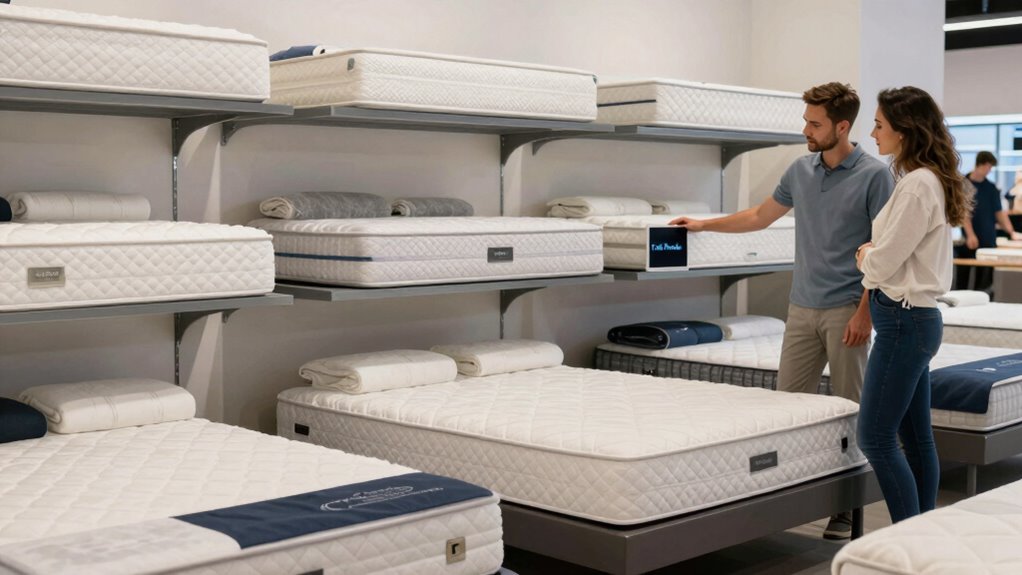

Mattress trial periods can be misleading because they often come with strict conditions, hidden fees, or limited timeframes that make it hard to truly evaluate comfort. Your sleep habits and environment influence how you perceive the mattress, which may not reflect long-term satisfaction. Initial discomfort doesn’t always mean the mattress is wrong, but many people overlook these factors due to marketing claims. Keep going to discover how to navigate these traps and make smarter choices.
Key Takeaways
- Trial periods often have restrictions or fine print that limit true evaluation of comfort over time.
- Initial discomfort may result from sleep habits or environment, not mattress quality.
- Material quality and type influence durability and comfort, affecting trial outcomes.
- Marketing claims about long trial periods can be misleading and mask hidden conditions.
- Proper sleep hygiene and understanding mattress features are essential for accurate assessment beyond trial periods.
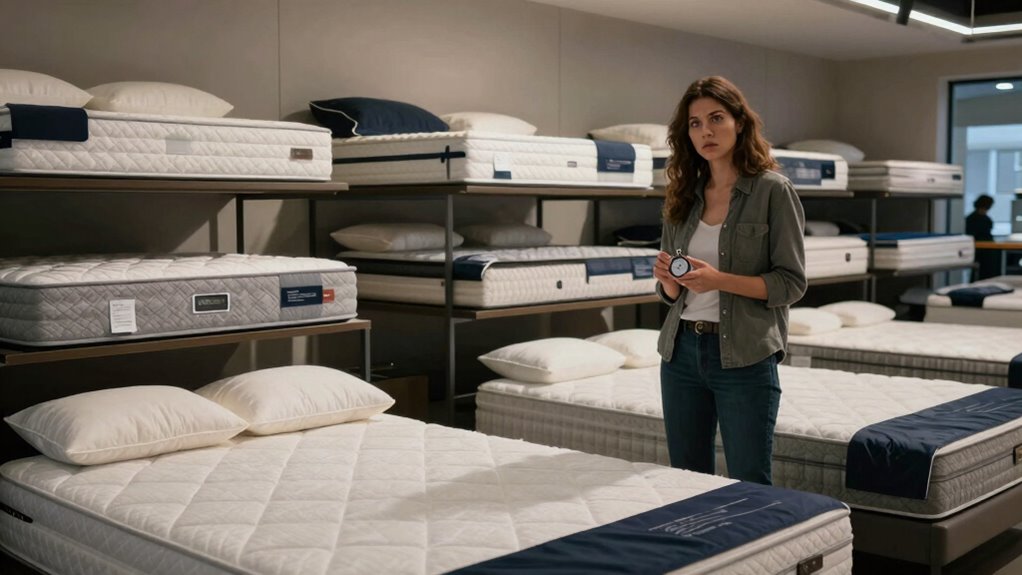
Shopping for a new mattress can quickly become overwhelming, especially when deceptive marketing tactics and persuasive sales pitches are involved. You might see claims about free trial periods, promising that you can test the mattress for weeks or even months before making a commitment. But these trial periods don’t always guarantee you’ll find the perfect fit. Many factors influence whether a trial will truly help you determine if a mattress is right for you, and one overlooked aspect is how your sleep hygiene and mattress materials interact.
Sleep hygiene refers to your habits and environment that affect your sleep quality. If you’re used to sleeping on a certain type of mattress, switching to one with different materials—say, memory foam versus innerspring—can disrupt your sleep and make it hard to judge whether the new mattress is better or worse. Mattress materials play a big role here. Some materials, like latex or high-density foam, offer support and durability, while others, like cheap polyester blends, tend to break down faster or cause discomfort. During a trial period, you might think you’re adjusting, but subtle differences in materials could cause discomfort or poor sleep quality, which doesn’t necessarily mean the mattress itself is bad. Instead, it could be a mismatch with your sleep hygiene or personal preferences.
Many mattress companies advertise their trial periods as the ultimate solution, but they often have fine print. You might be required to keep the mattress for a certain number of days before you can return it, or you might face restocking fees. In some cases, the trial period winds down before you’ve had enough time to really settle into the mattress or adapt your sleep habits. If you’re used to sleeping on a firm mattress, switching to a plush model might feel uncomfortable initially, but that doesn’t mean it’s not suitable. Conversely, if you’re not mindful of your sleep hygiene—like inconsistent sleep schedules or poor environmental conditions—your experience during the trial can be skewed. You may blame the mattress when the real issue is your sleep environment or habits. Additionally, understanding the impact of sleep hygiene on mattress comfort can help you make a more informed decision.
Ultimately, trial periods can be useful, but they’re no guarantee. The key is understanding how your sleep hygiene, mattress materials, and personal comfort levels work together. Relying solely on a trial period without considering these factors can lead you to make a poor choice, thinking the mattress isn’t right when it’s actually your habits or the materials that aren’t compatible. Before jumping into a trial, do your research on different mattress materials and evaluate your sleep habits. That way, you’re more likely to choose a mattress that truly supports your sleep needs, rather than just relying on a limited testing window.
Frequently Asked Questions
How Can I Tell if a Mattress Is Right for Me Before Buying?
To tell if a mattress is right for you, consider your sleep position and firmness preference. If you sleep on your side, look for a softer mattress that cushions your shoulders and hips. For back or stomach sleepers, a firmer mattress provides better support. Test different firmness levels in stores, and if possible, spend time lying on the mattress in your usual sleep position. This helps guarantee comfort and proper support.
Do Online Mattress Reviews Reliably Reflect Product Quality?
Online mattress reviews are like weather forecasts—helpful but not always accurate. They can reflect product authenticity, but review bias often skews perceptions. You might see glowing praises or harsh criticisms that don’t match your experience. To get a clearer picture, cross-check multiple sources, look for detailed feedback, and consider reputable review sites. Trust your judgment, and don’t rely solely on reviews—they’re a helpful guide, not gospel.
What Hidden Costs Should I Watch for During Mattress Purchase?
When buying a mattress, watch out for hidden fees like extra delivery charges or setup fees that can surprise you at checkout. Some retailers charge for delivery, especially if you’re in a remote area, and others may add fees for removing your old mattress. Always read the fine print to avoid these costs, and ask if delivery or removal services come with additional charges before you commit.
How Long Should I Realistically Expect a Mattress to Last?
You might be surprised, but your mattress’s lifespan hinges on durability expectations and several lifespan factors. Generally, expect it to last around 7-10 years, but this varies with quality, usage, and care. If you notice sagging or discomfort sooner, it’s time to replace it. Don’t ignore signs of wear—knowing what influences longevity helps you avoid premature replacement and protect your investment.
Are There Better Alternatives to Trial Periods for Testing Mattresses?
If you want better ways to test mattresses, consider sleep trials that provide longer durations or in-home mattress testing. These options let you truly evaluate comfort and support over time, unlike short-term in-store testing. Look for brands offering generous sleep trial periods, so you can sleep on the mattress and see if it suits your needs. This approach helps you make a more informed decision beyond basic trial periods.
Conclusion
So, next time you step into a mattress store, don’t be fooled into thinking a trial period is your golden ticket. It’s like buying a spaceship based on a test drive—it sounds great, but reality might hit hard once you’re actually sleeping on it. Remember, no trial can truly prepare you for the mattress’s sneaky flaws lurking beneath the surface. Stay smart, ask questions, and don’t let a slick trial period turn your sleep into a nightmare!