
Many business owners overlook how depreciation spreads out the cost of assets over time, helping reduce taxable income each year. Instead of deducting the full expense upfront, depreciation allows you to claim smaller deductions annually based on the asset’s useful life, following IRS rules. Choosing the right method and classifying assets correctly can maximize your savings. To fully understand how depreciation can benefit your business, keep exploring its principles and strategies.
Key Takeaways
- Depreciation allows businesses to deduct the cost of assets over their useful life, not just at purchase.
- Many mistake depreciation as a cash expense, but it’s a non-cash accounting allocation.
- Choosing the correct depreciation method (e.g., straight-line or accelerated) affects deduction timing and amount.
- Proper depreciation reduces taxable income but requires accurate record-keeping and compliance.
- Misunderstanding depreciation can lead to missed deductions or IRS penalties.
Understanding Depreciation: Why It’s Critical for Your Business Finances
Understanding depreciation is essential because it directly impacts your business’s financial health. When you track depreciation, you recognize how assets lose value over time. This process involves depreciation schedules, which determine how much expense to record each year, aligning with the asset’s useful life. Be aware that asset impairment can occur if an asset’s market value drops considerably below its book value, requiring adjustments to your depreciation calculations. Properly managing depreciation ensures you don’t overstate or understate your profits, maintaining accurate financial statements. It also helps you plan for asset replacements and understand your business’s true worth. By paying attention to depreciation schedules and potential impairments, you maintain a clear view of your assets’ value and avoid costly mistakes. Vetted
How Depreciation Differs From Other Business Deductions

Depreciation differs from other business deductions because it spreads the cost of an asset over its useful life rather than deducting the entire expense in the purchase year. This approach affects your tax implications by providing smaller deductions each year, which can help manage your taxable income more evenly. Unlike immediate expense deductions, depreciation also influences asset valuation on your balance sheet, reflecting a more accurate picture of your business’s worth over time. It encourages long-term planning because you recognize the asset’s value decline gradually. This method prevents overstating expenses in a single year, ensuring compliance with tax rules. Additionally, understanding the role of depreciation in asset valuation is crucial for accurate financial reporting and tax planning. Recognizing how sustainable and secure cloud solutions impact asset management can further optimize your depreciation strategies. Overall, depreciation offers a strategic way to handle large assets financially, balancing tax benefits with accurate asset valuation.
Classifying Assets and Determining Their Useful Life
When classifying assets, consider their purpose and expected use to choose the right category. Estimating their useful life helps determine how long they will contribute to your business. Selecting the appropriate depreciation method depends on these classifications and life estimates, ensuring accurate expense allocation. Additionally, understanding the safety considerations involved in handling different asset types can help prevent potential issues during depreciation, especially when dealing with specialized equipment like vacuums that may require specific maintenance procedures. For example, knowing how to properly support a Breakfast service setup can be crucial for avoiding damage and ensuring longevity, particularly when integrating Free Floating elements into your outdoor spaces. Proper classification and lifecycle planning can also influence tax deductions, making it essential for effective financial management.
Asset Classification Criteria
Classifying assets correctly is essential for determining their depreciation and useful life accurately. Your goal is to categorize each asset based on specific criteria to ascertain proper depreciation schedules. To do this, consider these factors:
- Asset types: Different assets, like vehicles, machinery, or office equipment, have unique depreciation rules.
- Cost basis: The purchase price and additional costs influence how you classify an asset.
- Intended use: Whether the asset is for long-term or short-term use impacts its classification and depreciation method.
Useful Life Estimation
Have you ever wondered how to determine the appropriate lifespan of an asset? It’s all about estimating its useful life, which guides your depreciation schedule. First, consider the asset’s expected period of economic usefulness, based on industry standards and your experience. You should also estimate its salvage value—the amount you expect to recover at the end of its useful life. A higher salvage value shortens the depreciable period, while a lower one extends it. Factors like wear and tear, technological obsolescence, and maintenance influence your estimate. Properly classifying assets and accurately estimating their useful life ensures your depreciation calculations are realistic. This helps you maximize deductions without overstating the asset’s value, keeping your financial statements compliant and transparent. Additionally, understanding water-related assets can be crucial for businesses involved in aquatic activities or pool management.
Depreciation Methods Selection
Choosing the right depreciation method depends on how you classify your assets and assess their useful life. Your asset lifecycle influences whether you select accelerated or straight-line methods, impacting your tax planning. Consider these key points:
- Asset Type: Determine if the asset is long-term or short-term, which guides your depreciation approach. Proper classification can also affect eligibility for certain tax incentives such as depreciation schedules.
- Useful Life: Accurate estimation affects whether you use methods like MACRS or straight-line, aligning with your financial strategy.
- Tax Goals: Your objectives may favor accelerated methods for immediate deductions or straight-line for consistent expenses.
- Depreciation Schedule: Understanding the depreciation methods available helps optimize your tax benefits and cash flow. Recognizing how different methods align with your business goals can lead to more effective tax planning.
How the IRS Allows You to Spread Out Asset Costs

The IRS allows you to spread out the cost of your assets over several years through a process called depreciation. This method aligns the expense with the asset’s lifespan, which helps you manage your taxable income effectively. Instead of deducting the entire purchase price in one year, depreciation spreads the deduction over multiple years, reflecting the asset’s gradual use. This approach benefits your tax planning by smoothing out deductions and avoiding sudden income reduction. Knowing how the IRS permits this spread-out expense enables you to better forecast your tax liabilities. It also ensures compliance with tax laws while maximizing your deductions. Properly applying depreciation allows you to optimize your business expenses within the constraints of the asset’s useful life, helping you plan for future expenses. Additionally, understanding asset management strategies can help you maintain accurate records, which is crucial when managing assets and deductions securely. Being aware of financial planning principles can further enhance your ability to utilize depreciation effectively for your business and financial stability.
Depreciation Methods: Straight-Line vs. Accelerated

When it comes to depreciation methods, understanding the difference between straight-line and accelerated approaches is essential for effective tax planning. Straight-line depreciation spreads the asset’s cost evenly over its asset lifespan, subtracting the salvage value at the end. Accelerated methods, like double declining balance, front-load deductions, allowing you to recover more of the asset’s cost early on. Here’s what you should know:
- Straight-line provides consistent annual deductions based on asset lifespan.
- Accelerated methods offer larger deductions upfront, reducing taxable income sooner.
- Salvage value is subtracted from the initial cost to determine depreciation basis, affecting both methods.
- Proper piercing care and hygiene during asset use can help maintain the integrity of the equipment, similar to the importance of proper aftercare for piercings to prevent issues.
Choosing the right approach depends on your business’s cash flow and tax strategy.
Why Business Owners Often Misunderstand Depreciation’s Impact

Many business owners underestimate how depreciation affects their financial statements and tax liabilities because they often focus solely on the initial asset cost. They might see the purchase price and overlook how depreciation spreads costs over time, impacting taxable income. This misunderstanding can lead to mismanagement of assets and unexpected tax implications at year-end. Proper depreciation tracking reveals the true value of your assets and ensures accurate financial reporting. Without understanding depreciation’s role, you risk overestimating profits or missing valuable deductions. Recognizing how depreciation influences your tax obligations helps you manage your assets more effectively and plan for future investments. Additionally, accurate depreciation schedules provide clarity on asset lifespan and replacement timing, which are essential for strategic planning. As technology advances, AI-driven depreciation analysis can further enhance asset management and financial decision-making. Ultimately, grasping depreciation’s impact is essential for sound asset management and optimizing your business’s financial health, especially when you incorporate depreciation methods into your accounting practices.
Tracking and Recording Depreciation Correctly
Accurate tracking and recording of depreciation guarantee your financial statements reflect the true value of your assets over time. To do this effectively, focus on these key steps:
- Keep detailed records of asset purchase dates, costs, and depreciation schedules to ensure proper asset valuation.
- Use consistent methods, such as straight-line or declining balance, to record depreciation annually, aligning with tax regulations.
- Regularly review and adjust your depreciation entries to account for asset disposals or improvements, minimizing errors and guaranteeing correct tax implications.
Common Mistakes When Claiming Depreciation on Your Taxes
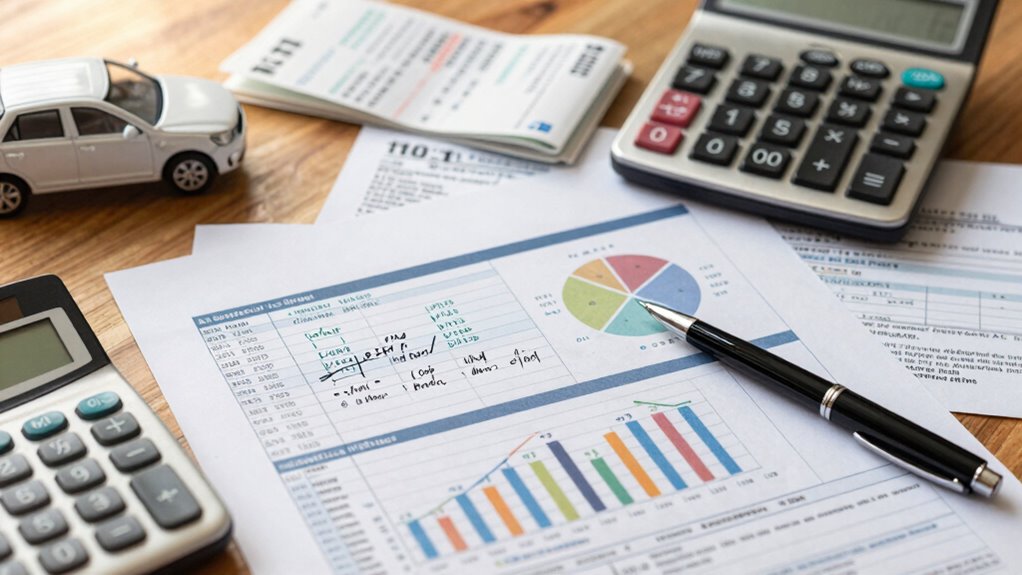
Claiming depreciation on your taxes can be straightforward, but it’s easy to make mistakes that could lead to penalties or missed deductions. One common error is misunderstanding recent tax reform changes, which can alter depreciation rules and limits. Another mistake is incorrectly handling asset disposal; if you don’t properly account for the sale or disposal of assets, you might overstate or understate your deductions. Failing to update your depreciation schedule after asset disposal can cause audit flags. Additionally, some taxpayers forget to apply the correct depreciation method or neglect to claim all eligible assets. Staying current with tax reform updates and carefully tracking asset disposal events can help you avoid these pitfalls, ensuring you maximize your deductions without risking penalties. For example, understanding depreciation methods and their proper application can remind you to stay informed about changes in regulations and guidelines that might affect your deductions. Regularly reviewing your asset management practices can also prevent common errors and keep your depreciation claims accurate. Moreover, utilizing tracking tools can streamline your record-keeping process and reduce mistakes.
Real-World Examples: How Depreciation Can Save You Money

Have you ever wondered how depreciation can considerably cut your tax bill? It’s a powerful tool that can save you money, especially with equipment leasing. Here’s how:
- You can set up a depreciation schedule for your leased equipment, spreading out the deduction over several years.
- By doing so, you reduce your taxable income each year, lowering your overall tax liability.
- Properly tracking depreciation ensures you maximize deductions without risking audits or penalties.
- Understanding the depreciation process helps you make informed decisions about your business assets and tax planning.
- As the growth of AI-driven platforms continues to expand, understanding depreciation can help businesses manage expenses related to new technology investments.
For example, if you lease costly machinery, depreciation allows you to write off a portion of its value annually. This approach keeps more cash in your pocket and aligns your expenses with the equipment’s useful life.
Maximize Your Business Deductions With Proper Depreciation

Properly managing depreciation can substantially boost your business deductions each year. Effective tax planning involves understanding how to classify and depreciate assets correctly, ensuring you don’t miss out on valuable deductions. By carefully tracking your assets and choosing the right depreciation methods, you optimize your asset management strategy, reducing taxable income and increasing cash flow. Utilizing tools like Section 179 or bonus depreciation can accelerate deductions, giving you immediate tax benefits. Regularly reviewing your depreciation schedule helps ensure compliance and maximizes deductions over time. Staying informed about depreciation rules allows you to make smarter decisions about acquiring and disposing of assets. Overall, strategic depreciation management aligns with your broader tax planning goals, helping you keep more money in your business while adhering to IRS regulations.
Frequently Asked Questions
Can Depreciation Be Applied to Intangible Assets Like Trademarks?
Yes, you can apply depreciation to intangible assets like trademarks through trademark amortization. Although you can’t use traditional depreciation methods, intangible asset depreciation involves amortizing the trademark’s cost over its useful life. This process helps you recover the asset’s value gradually and reduces taxable income. Keep in mind, proper documentation and adherence to IRS guidelines are essential for claiming these deductions correctly.
How Does Depreciation Affect Your Business’s Cash Flow?
Depreciation can substantially impact your cash flow, especially when it affects lease agreements and asset valuations. As you deduct depreciation expenses, it reduces your taxable income, freeing up cash. This process doesn’t involve actual cash outlay, but it influences your financial statements and valuation. Over time, depreciation can lead to lower tax bills, improving your business’s liquidity and enabling reinvestment in growth opportunities.
Are There Specific Industries With Unique Depreciation Rules?
Yes, certain industries have unique depreciation rules due to industry variations and specific asset classifications. For example, agriculture and construction industries often use different schedules for assets like machinery or vehicles. Additionally, software and patents in tech sectors may qualify for special depreciation methods. You should check industry-specific guidelines to maximize your deductions and guarantee compliance, as these rules can considerably impact your depreciation strategies and tax benefits.
How Do Changes in Tax Laws Impact Depreciation Strategies?
When tax law changes hit, you might think depreciation planning becomes a hassle, but in reality, it’s an opportunity in disguise. These updates can alter deduction schedules and asset classifications, making it crucial to stay informed. By adapting your depreciation strategies, you can maximize deductions and reduce taxable income. Don’t ignore tax law changes—they’re your chance to fine-tune your depreciation approach and keep your business financially healthy.
What Are the Best Practices for Documenting Depreciation Claims?
You should prioritize recordkeeping essentials by maintaining detailed records of asset purchase dates, costs, and descriptions. Use documentation best practices like keeping invoices, receipts, and depreciation schedules organized and secure. Regularly update your records to reflect any asset improvements or disposals. This diligent documentation guarantees you can substantiate depreciation claims during audits, minimizes errors, and helps maximize your deductible amounts while staying compliant with tax regulations.
Conclusion
Understanding depreciation is like having a secret weapon in your business arsenal. When you grasp how it spreads out asset costs and saves you money, you’re empowered to make smarter financial decisions. By avoiding common mistakes and choosing the right method, you can turn depreciation into a powerful tool rather than a confusing maze. Keep learning and stay diligent—your business’s financial health will thank you as much as a well-tuned engine.