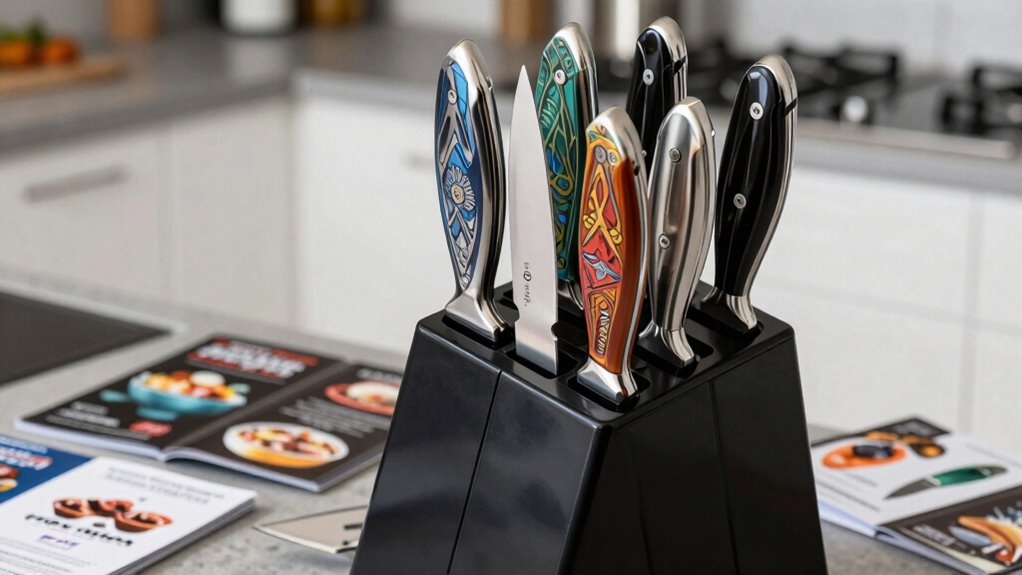
Many knife sets are designed to seem more valuable by including unnecessary pieces that you’ll likely never use. They often use bright packaging, fancy names, and highlight “professional quality” to attract buyers. Sets focus on quantity rather than usefulness, adding specialty knives or utensils that don’t serve everyday needs. Recognizing these marketing tricks helps you avoid overspending. If you want to cut through the clutter and pick knives that fit your real kitchen needs, keep going.
Key Takeaways
- Many sets include unnecessary specialty knives to inflate perceived value, but most home cooks rarely use them.
- Packaging often emphasizes quantity and fancy branding over the quality and utility of core knives.
- Larger sets can be misleading, as many pieces are inferior, redundant, or seldom used in everyday cooking.
- Marketing claims of “professional” or “premium” quality can distract from the actual usefulness of included tools.
- Focusing on a few high-quality, essential knives offers better performance and value than bulky, gimmick-filled sets.
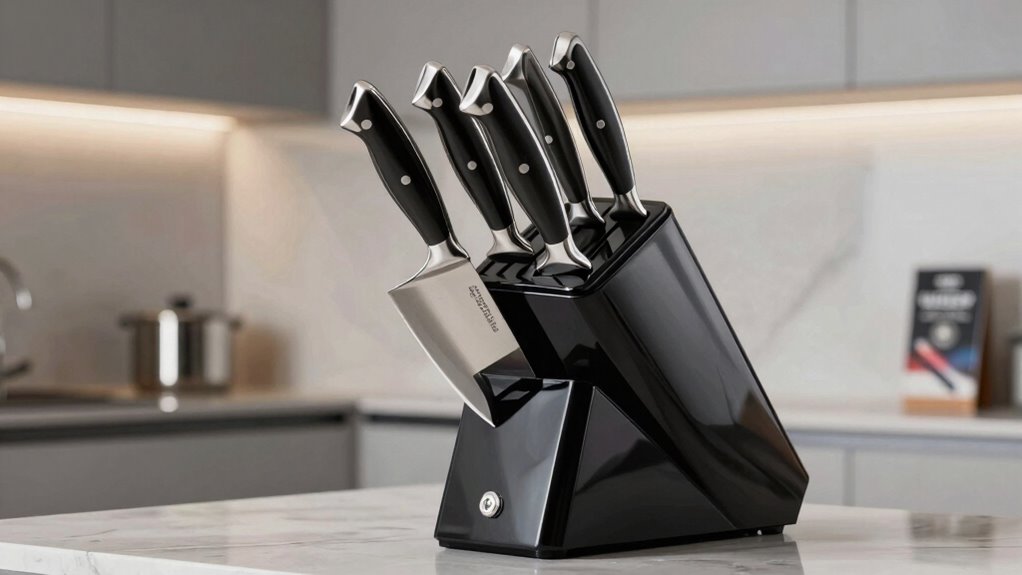
When shopping for a knife set, it’s important to recognize the marketing tricks that brands use to attract your attention. One of the most common strategies involves eye-catching knife set packaging. Bright colors, sleek designs, and boxes that highlight “professional quality” or “chef’s choice” are meant to lure you in, but they don’t always reflect the actual quality of the knives inside. Sometimes, the packaging emphasizes the number of knives included or the fancy name of the set, making it seem like you’re getting a thorough collection, even if many of those pieces are unnecessary for everyday use. You might find sets with dozens of knives, but many are specialty tools you’ll rarely need. The packaging can be deliberately misleading, giving the impression that more knives equate to better value, when in reality, quality matters far more than quantity.
Brand reputation also plays a big role in how knives are marketed. Reputable brands often leverage their name to justify higher prices and create a sense of trust. They might showcase endorsements from professional chefs or feature awards on the packaging to suggest superiority. However, just because a brand has a good reputation doesn’t mean every knife they produce is essential for your kitchen. Sometimes, brands include unnecessary pieces to boost perceived value or to appeal to consumers who want a “complete” set. It’s essential to look beyond the brand name and examine what’s actually included. Many brands will hype a “six-piece set” that contains only a few core knives and a bunch of lesser-used utensils. These extras may be made of inferior materials or be unnecessary for most home cooks.
Additionally, understanding product quality and how it relates to performance can help you avoid falling for marketing gimmicks. You need to be cautious about the hype surrounding brand reputation. While buying from a trusted manufacturer can often mean better durability and performance, it doesn’t guarantee you need every knife they offer. The marketing often emphasizes the brand’s prestige rather than the specific utility of each piece. Don’t be swayed by claims that a certain brand’s knives will turn you into a professional chef. Instead, focus on what you actually need for your cooking style. Avoid falling for sets that include a multitude of knives you’ll never use, just because they’re labeled as “professional” or “premium.” A smaller, high-quality set tailored to your needs will serve you better and save you money in the long run. Ultimately, understanding the game behind knife set packaging and brand reputation helps you make smarter, more informed choices.
Frequently Asked Questions
How Do I Choose the Right Knife Set for My Needs?
To choose the right knife set, consider your cooking habits and knife storage options. Opt for a set with essential knives like a chef’s, paring, and bread knife, avoiding unnecessary pieces. Check the knife materials—stainless steel offers durability, while high-carbon steel stays sharp longer. Guarantee the storage method keeps your knives safe and accessible. This way, you get a practical, high-quality set tailored to your needs without clutter.
Are Expensive Knife Sets Always Better Than Budget Options?
Expensive knife sets aren’t always better, even with luxury branding and retail strategies that emphasize quality. You might find budget options that suit your needs just as well if you focus on the core features you need. Brands often use marketing tricks to justify higher prices, but a well-chosen, affordable set can perform just as effectively, saving you money without sacrificing quality.
What Features Should I Look for in a Quality Knife Set?
You probably think a fancy knife set guarantees the best quality, but look beyond the hype. Focus on blade material—stainless steel or high-carbon steel guarantees durability and sharpness—and handle ergonomics, so your grip feels comfortable and secure. A quality set balances these features without unnecessary extras. Remember, a well-made knife should feel natural in your hand and stay sharp through countless cuts, making your kitchen tasks easier and safer.
How Long Do Knife Blades Typically Last With Proper Care?
With proper blade maintenance, your knife blades can last for many years, often 10-15 or more. Regular sharpening, about every 6-12 months depending on use, keeps blades in top shape. If you notice dullness or difficulty cutting, sharpen sooner. Proper storage, hand washing, and avoiding cutting on hard surfaces also extend blade life. Consistent sharpening frequency and careful maintenance are key to maximizing your knives’ longevity.
Are There Safety Concerns With Low-Cost or Promotional Knife Sets?
Yes, low-cost or promotional knife sets can pose safety concerns, especially regarding child safety. These sets often feature blades that may not stay sharp, increasing the risk of slips and cuts. Plus, cheaper materials might lack proper safety features like secure handles or blade guards. Always keep knives out of children’s reach and choose sets with high-quality blades and safety features to minimize accidents and guarantee safe use.
Conclusion
Now that you’re aware of the marketing tricks, you can shop smarter, choose only what you need, and avoid unnecessary clutter. Recognize the hype, understand the true value, and focus on quality over quantity. Don’t get swept up in flashy promises or bundled deals. Instead, select knives that serve your actual cooking style, fit your space, and match your skill level. By staying informed, you stay empowered—making better choices, saving money, and enhancing your kitchen experience.