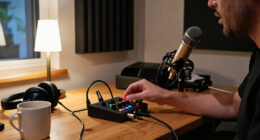
Among these portable podcast recorders, my best overall pick is the Zoom PodTrak P4next, which is designed around podcast workflows and supports recording with multiple microphones. The Zoom PodTrak P4 is a strong alternative for in-person and remote interviews, while the compact Zoom H1essential suits creators who need a simple handheld recorder. The main tradeoff is between podcast-specific controls and a lighter, more general-purpose recorder; mic count, monitoring, and setup complexity also matter. Bundles can add useful accessories, but they do not change the recorder’s underlying capabilities. Read on for the full breakdown and help matching a recorder to your recording setup.

Get everyday essentials delivered free with Prime
- Fast, free delivery on millions of items
- Prime Video, Amazon Music and more included
- Member-only deals all year
Key Takeaways
- The PodTrak P4next is the roundup’s best overall pick because its podcast-centered design is a closer match for hosted shows than the handheld H-series recorders.
- The PodTrak P4 focuses on interview logistics, pairing four mic inputs and headphone outputs with phone and USB connectivity; solo creators may not need that many connections.
- The H1essential and H1 XLR favor portability over a full podcast console, making them better fits for lightweight recording than multi-person sessions.
- The H6 Essential and LiveTrak L6max suit more elaborate setups, but added tracks and mixing flexibility bring more workflow complexity than a basic interview needs.
- Bundles change readiness, not recorder capability: cards, microphones, batteries, and accessories can save setup effort, but buyers should compare the core device first.
| Zoom PodTrak P4next Podcast Recorder Bundle with 64GB microSDXC Card and SD Adapter |  | Best for Multi-Host Podcasts | Microphone inputs: 4 XLR | Headphone outputs: 4 x 3.5 mm, with individual volume controls | Maximum gain: Up to +70 dB | VIEW LATEST PRICE | See Our Full Breakdown |
| Zoom H1essential Recorder Bundle with Case, Windscreens & Tripod |  | Best Starter Kit for Field Interviews | Microphone type: Built-in X/Y stereo microphones | Recording: 32-bit float | Maximum sound pressure level: Up to 120 dB SPL | VIEW LATEST PRICE | See Our Full Breakdown |
| Zoom H1 XLR 2-Channel Portable Recorder |  | Best Compact Recorder for XLR Mics | Channels: 2 | Inputs: 2 locking XLR/TRS combo inputs and 3.5 mm stereo input | Recording resolution: 32-bit float / 96 kHz | VIEW LATEST PRICE | See Our Full Breakdown |
| Zoom H2 Essential Handheld Recorder for Musicians, Podcasters & Filmmakers |  | Best for Flexible Built-In Mic Capture | Built-in microphones: 3 microphones with 9 selectable patterns | Recording resolution: 32-bit float / 96 kHz | Recording format: WAV | VIEW LATEST PRICE | See Our Full Breakdown |
| Zoom PodTrak P2 Podcast Recorder with 2 USB Mic Inputs & AI Noise Reduction |  | Best for Two-Person USB-Mic Shows | Microphone inputs: 2 USB microphone inputs | Headphone outputs: 2 x 3.5 mm | Recording format: WAV | VIEW LATEST PRICE | See Our Full Breakdown |
| Zoom PodTrak P4 Podcast Recorder |  | Best for Multi-Guest Podcasts | Mic inputs: 4 XLR | Headphone outputs: 4, with individual volume controls | USB interface: 2-in/2-out | VIEW LATEST PRICE | See Our Full Breakdown |
| Zoom LiveTrak L6max Mixer/Recorder |  | Best for Complex Multitrack Setups | Channels: 12 | Simultaneous tracks: Up to 14 | Combo inputs with Hi-Z: 4 | VIEW LATEST PRICE | See Our Full Breakdown |
| Zoom H6 Essential 6-Track Portable Recorder |  | Best for Flexible Field Interviews | Recording: 6-track, 32-bit float | Inputs: 4 XLR/TRS combo inputs | Built-in microphones: Stereo X/Y, up to 135 dB SPL | VIEW LATEST PRICE | See Our Full Breakdown |
| Zoom H5 4-Track Handheld Recorder |  | Best for Capsule-Based Flexibility | Tracks: Four simultaneous | Mic/line inputs: 2 XLR/TRS combo, with phantom power and -20 dB pad | Input capsules: Interchangeable; includes X/Y capsule | VIEW LATEST PRICE | See Our Full Breakdown |
| Zoom H1 Essential Recorder |  | Best Compact Starter Recorder | Microphone configuration: Built-in X/Y stereo | Recording: 32-bit float | USB connection: USB Type-C | VIEW LATEST PRICE | See Our Full Breakdown |
| Zoom H4essential Handheld Recorder |  | Best for Flexible Solo-to-Interview Recording | Recording tracks: 4 | Recording format: WAV | Bit depth technology: 32-bit float | VIEW LATEST PRICE | See Our Full Breakdown |
| Zoom PodTrak P4 Portable Multitrack Podcast Recorder Bundle |  | Best Complete Four-Person Podcast Kit | Microphone inputs: 4 XLR | Recording format: WAV, 16-bit/44.1kHz | Headphone outputs: 4 with individual volume control | VIEW LATEST PRICE | See Our Full Breakdown |
| Zoom F2 Lavalier Recorder with 32-Bit Float Recording |  | Best Wearable Recorder for On-Location Interviews | Recording format and resolution: WAV, 32-bit float | Sample rates: 44.1 kHz or 48 kHz | Included microphone: LMF-2 omnidirectional lavalier | VIEW LATEST PRICE | See Our Full Breakdown |
| Zoom H5 Handy Recorder for Filmmakers and Musicians |  | Best Premium Handheld for Detailed Field Audio | Built-in microphones: 19.4 mm X/Y stereo capsule | Recording format: WAV, 32-bit float | Tracks: 4 simultaneous; 6 total | VIEW LATEST PRICE | See Our Full Breakdown |
| Zoom PodTrak P4next Podcast Recorder |  | Best for Feature-Rich Portable Group Shows | Microphone inputs: 4 XLR | Maximum gain: +70 dB | Headphone outputs: 4 | VIEW LATEST PRICE | See Our Full Breakdown |
| portable podcast recorder | Weight | Recording format | Storage |
|---|---|---|---|
| Zoom PodTrak P4next Podcast Re | — | WAV | — |
| Zoom H1essential Recorder Bund | — | — | — |
| Zoom H1 XLR 2-Channel Portable | 6.4 ounces | WAV | — |
| Zoom H2 Essential Handheld Rec | 6.72 ounces | WAV | SD card up to 2TB |
| Zoom PodTrak P2 Podcast Record | — | WAV | SD card up to 1TB |
| Zoom PodTrak P4 Podcast Record | 130 g | WAV | — |
| Zoom LiveTrak L6max Mixer/Reco | — | — | — |
| Zoom H6 Essential 6-Track Port | 450 g | — | SD card |
| Zoom H5 4-Track Handheld Recor | 115 g | — | SD/SDHC up to 32 GB |
| Zoom H1 Essential Recorder | 92 g | — | SD card; listed capacity 1 TB |
| Zoom H4essential Handheld Reco | 243 g | WAV | SD card, up to 1 TB |
| Zoom PodTrak P4 Portable Multi | — | WAV, 16-bit/44.1kHz | — |
| Zoom F2 Lavalier Recorder with | 181 g | — | microSD, microSDHC, and microSDXC up to 512 GB |
| Zoom H5 Handy Recorder for Fil | 14.4 ounces | WAV, 32-bit float | Up to 2 TB via external media |
| Zoom PodTrak P4next Podcast Re | 10.56 ounces | WAV | SD card, up to 2 TB |
More Details on Our Top Picks
Zoom PodTrak P4next Podcast Recorder Bundle with 64GB microSDXC Card and SD Adapter
I’d choose the PodTrak P4next when a portable setup needs to record several people around one table. Its four XLR inputs and four separately controlled headphone outputs let guests use microphones and monitor at their own levels, a more podcast-focused arrangement than the two-person PodTrak P2. AI noise reduction, tone, and compression can help tame recordings before editing, while smartphone connectivity adds a route for remote contributions. The included 64GB card means the bundle is ready for local recording, though microphones are not included. Compared with the more compact P2, this is a better fit for a growing panel, but it takes more gear and setup; buyers recording solo or with USB microphones may not need its XLR capacity.
Pros:- Four XLR inputs accommodate a multi-host table.
- Four headphone outputs have individual volume controls.
- AI noise reduction, tone, and compression support simpler recording workflows.
- Includes a 64GB microSDXC card and SD adapter.
Cons:- External microphones are not included.
- More inputs and monitoring controls may be unnecessary for a solo or two-person setup.
Best for: Small podcast teams recording up to four XLR microphones who want individual headphone monitoring and a bundled memory card.
Not ideal for: Solo creators or two-person shows using USB microphones; the extra XLR channels add little value, and microphones must be bought separately.
- Microphone inputs:4 XLR
- Headphone outputs:4 x 3.5 mm, with individual volume controls
- Maximum gain:Up to +70 dB
- Recording format:WAV
- Bundle storage:64GB microSDXC card with SD adapter
- Connectivity:USB audio interface and smartphone connection
- Warranty:1 year manufacturer warranty
Our verdict“Choose the P4next bundle for portable, multi-host recording with XLR microphones; pick the PodTrak P2 for a simpler two-USB-mic setup.”
Zoom H1essential Recorder Bundle with Case, Windscreens & Tripod
This bundle makes the most sense for a creator who wants to record interviews, location sound, or spoken notes without assembling accessories separately. The built-in X/Y stereo microphones keep the setup compact, and 32-bit float recording offers more room to handle changes in volume without setting gain as carefully. The hard case, two windscreens, and flexible tripod make it better equipped for outdoor or on-the-go work than the bare-bones approach of carrying a recorder alone. It is not a substitute for the PodTrak P4next when several guests need XLR microphones and separate headphone feeds. The tradeoff is a small screen and reliance on two AAA batteries and an external SD card, so it suits mobile solo recording better than a full podcast desk.
Pros:- Built-in X/Y microphones support quick stereo recording without extra mics.
- 32-bit float recording reduces the need to set recording gain precisely.
- Bundle includes a hard case, foam and furry windscreens, and a flexible tripod.
- USB-C supports connection to computers and compatible mobile devices.
Cons:- Requires two AAA batteries and has no rechargeable power option.
- Storage depends on an external SD card.
- The 0.96-inch screen may be difficult to read in bright conditions.
Best for: Beginning podcasters and mobile interviewers who want built-in stereo microphones plus basic protection and mounting accessories.
Not ideal for: Podcast teams needing multiple XLR microphones, separate headphone mixes, or long sessions without spare AAA batteries and an SD card.
- Microphone type:Built-in X/Y stereo microphones
- Recording:32-bit float
- Maximum sound pressure level:Up to 120 dB SPL
- Connectivity:USB-C
- Headphone jack:3.5 mm
- Power:2 AAA batteries
- Display:0.96 inches
- Bundle accessories:Hard EVA case, furry and foam windscreens, and octopus tripod
Our verdict“Pick this H1essential bundle for a ready-to-carry solo field-recording kit, not for a multi-microphone podcast studio.”
Zoom H1 XLR 2-Channel Portable Recorder
The H1 XLR is the compact choice for podcasters who already own microphones and need a small recorder with proper locking inputs. Its two XLR/TRS combo inputs accept microphones or other sources, while 32-bit float recording at up to 96 kHz gives more flexibility when voices or instruments change level unexpectedly. That makes it more suited to two-person interviews with external mics than the H1essential bundle, whose built-in X/Y microphones favor quick ambient or solo capture. An OLED waveform display helps with monitoring, and SDXC support up to 1TB leaves room for extended recording. The limits are its two-channel design and AA power: it cannot replace a four-input unit like the PodTrak P4next for a panel, and it requires battery planning for field days.
Pros:- Two locking XLR/TRS combo inputs support microphones and instruments.
- 32-bit float recording at up to 96 kHz offers flexible level handling.
- OLED waveform display helps monitor the recording.
- Supports SDXC cards up to 1TB.
Cons:- Two input channels limit it to smaller recording setups.
- Requires two AA batteries rather than offering a rechargeable power option.
Best for: Mobile interviewers and podcasters with two XLR or TRS microphones who want a compact recorder with clip-resistant capture.
Not ideal for: Four-person panels or creators seeking built-in microphones and a ready-to-record accessory bundle.
- Channels:2
- Inputs:2 locking XLR/TRS combo inputs and 3.5 mm stereo input
- Recording resolution:32-bit float / 96 kHz
- Recording format:WAV
- Storage support:SDXC up to 1TB
- Display:0.96-inch OLED
- Power and battery life:2 AA batteries; up to 10 hours
- Weight:6.4 ounces
Our verdict“Choose the H1 XLR for a compact two-mic external setup; move to the PodTrak P4next if your podcast needs four XLR inputs.”
Zoom H2 Essential Handheld Recorder for Musicians, Podcasters & Filmmakers
I’d shortlist the H2 Essential for creators who need one portable recorder to handle more than a conventional face-to-face interview. Three built-in microphones and nine selectable patterns provide options for mono, stereo, and surround capture, while 32-bit float recording helps manage unpredictable levels without constant gain adjustment. It can also work as a USB microphone and record to an SD card at the same time, giving a computer-based session a local backup. That flexibility sets it apart from the H1 XLR, which is more direct for two external microphones but lacks the H2’s built-in pattern choices. The tradeoff is that this is still a handheld mic-based recorder, not a multi-XLR podcast console like the P4next; it also runs on two AA batteries.
Pros:- Three built-in microphones and nine patterns cover varied recording arrangements.
- 32-bit float recording reduces the need for manual gain adjustments.
- Can function as a USB microphone while recording to an SD card.
- Audible menu navigation is available in seven languages.
Cons:- Requires two AA batteries, so extended field sessions call for spare power.
- Built-in microphones do not provide the separate XLR inputs needed for a multi-host mic setup.
Best for: Solo podcasters, filmmakers, and field producers who want varied built-in mic patterns and a recorder that can double as a USB mic.
Not ideal for: Panel shows built around several external XLR microphones or buyers who want a dedicated podcast mixer with multiple headphone feeds.
- Built-in microphones:3 microphones with 9 selectable patterns
- Recording resolution:32-bit float / 96 kHz
- Recording format:WAV
- Microphone modes:Mono, stereo, and surround
- Storage:SD card up to 2TB
- Connectivity:USB Type-C
- Power and battery life:2 AA batteries; up to 20 hours
- Weight:6.72 ounces
Our verdict“Pick the H2 Essential for flexible handheld and USB-mic recording, but choose the P4next for a table of XLR-equipped podcast guests.”
Zoom PodTrak P2 Podcast Recorder with 2 USB Mic Inputs & AI Noise Reduction
For a two-person show built around USB microphones, the PodTrak P2 keeps the recording chain simpler than the XLR-based PodTrak P4next. It has two USB mic inputs, two headphone outputs, and processing tools including AI noise reduction, tone shaping, and compression, so hosts can record without building a larger mixer setup. Mix-minus is especially useful for remote interviews: it helps prevent the guest’s incoming audio from being sent back to them as echo. The recorder can also stream live while saving to an SD card, making it more podcast-oriented than the handheld H1 XLR. Its main ceiling is clear: no XLR inputs means it is not the choice for conventional studio mics, and roughly four hours on AA batteries makes USB-C power preferable for longer sessions.
Pros:- Two USB microphone inputs simplify a portable two-host setup.
- Two headphone outputs support host monitoring.
- Mix-minus helps prevent echo with remote guests.
- Supports simultaneous live streaming and SD card recording.
Cons:- No XLR inputs for conventional studio microphones.
- AA battery life is about four hours, limiting untethered long sessions.
- Two mic inputs make it unsuitable for larger panels.
Best for: Two-host podcasters using USB microphones who want portable local recording, headphone monitoring, and remote-guest mix-minus.
Not ideal for: Creators with XLR microphones, more than two hosts, or long sessions that must run on AA batteries alone.
- Microphone inputs:2 USB microphone inputs
- Headphone outputs:2 x 3.5 mm
- Recording format:WAV
- Storage:SD card up to 1TB
- Connectivity:USB Type-C
- Power:AA batteries or USB-C power
- Battery life:About 4 hours on AA batteries
- Dimensions and weight:4.57 x 3.23 x 1.69 inches; 7.04 ounces
Our verdict“Choose the P2 for a compact two-person USB-mic podcast, or the P4next if you need XLR microphones and room for more hosts.”
Zoom PodTrak P4 Podcast Recorder
I’d pick the PodTrak P4 when a portable setup needs to handle several in-person voices and remote callers without extra headphone gear. Its four XLR inputs and four separately controlled headphone outputs make it a better fit for a roundtable than the two-input Zoom H5. Automatic mix-minus helps prevent a caller’s voice from echoing back into the call, while programmable sound pads can add cues or recurring effects without a separate device. It also works as a 2-in/2-out USB interface for computer-based recording or streaming. The tradeoff is endurance: about 3.5 hours on two AA batteries is less suited to long sessions than the H5’s stated recording time. I’d choose it for group podcast logistics, not maximum battery life.
Pros:- Four XLR inputs support a multi-microphone podcast without an external mixer
- Four headphone outputs have individual volume controls
- Automatic mix-minus supports cleaner call-in interviews
- Sound pads and USB audio-interface operation add production and streaming flexibility
Cons:- Stated battery life is about 3.5 hours on two AA batteries
- AA power means carrying spares or arranging an external power source for longer sessions
Best for: Podcasters recording up to four XLR-mic guests, each with their own headphone level, plus occasional remote callers
Not ideal for: Solo field recordists or long-session interviewers who value extended battery life over multiple mic and headphone connections
- Mic inputs:4 XLR
- Headphone outputs:4, with individual volume controls
- USB interface:2-in/2-out
- Recording format:WAV
- Power:2 AA batteries
- Battery life:About 3.5 hours
- Dimensions:6.1 x 4.41 x 1.85 in
- Weight:130 g
Our verdict“Choose the PodTrak P4 for portable, multi-person podcast recording with call-in support, but skip it if long battery runtime matters more than guest connections.”
Zoom LiveTrak L6max Mixer/Recorder
The LiveTrak L6max is the pick here for podcasters whose sessions involve more sources, routing, or live sound elements than a compact recorder can comfortably manage. It captures up to 14 tracks at once, far beyond the six-track H6 Essential, and offers 12 channels with four Hi-Z combo inputs and eight line inputs. That headroom can help keep separate microphones and connected sources available for editing rather than forcing a stereo mix too early. Its AI noise reduction and multiple power options also suit varied recording spaces and portable rigs. The compromise is operation: there’s no built-in display, which can make track management less direct than on the H6 Essential. I’d favor it for a planned, source-heavy setup, not quick grab-and-record interviews.
Pros:- Records up to 14 tracks simultaneously for flexible editing
- 12-channel layout accommodates a range of microphones and line sources
- Real-time AI noise reduction targets hum and hiss
- Can run on AA batteries, USB bus power, or a mobile battery pack
Cons:- No built-in display can make navigation and track management less intuitive
- Its mixer-oriented channel count may be unnecessary for simple two-person podcasts
Best for: Experienced podcasters and small production teams recording many microphones, line sources, or live elements to separate tracks
Not ideal for: Beginners who want clear on-device visual navigation or solo interviewers seeking a simple handheld recorder
- Channels:12
- Simultaneous tracks:Up to 14
- Combo inputs with Hi-Z:4
- Line inputs:8
- SD card capacity:Up to 2 TB
- Noise reduction:Real-time AI hum and hiss removal
- Sound pads:MIDI-clock sync capable
- Power options:AA batteries, USB bus power, or mobile battery pack
Our verdict“Choose the LiveTrak L6max when separate tracks and flexible source routing matter more than a simple handheld interface.”
Zoom H6 Essential 6-Track Portable Recorder
I’d recommend the H6 Essential to podcasters who need one recorder for both handheld stereo capture and several external microphones. Its built-in X/Y mics let a solo host capture a conversation or ambient sound, while four XLR/TRS inputs support a more conventional interview setup. Compared with the H5, it offers more external inputs and 32-bit float recording, which gives more latitude when voices or other sources vary unexpectedly in level. It can also record to SD while serving as a USB interface, and spoken menu guidance supports accessible operation. The tradeoffs are its 450 g weight and four-AAA power requirement; the much lighter H1 Essential is easier to carry, but lacks the H6’s input flexibility. Optional capsules are needed to change its microphone configuration.
Pros:- Six-track, 32-bit float recording provides flexibility for changing sound levels
- Combines built-in X/Y microphones with four XLR/TRS inputs
- Can record to SD while operating as a USB audio interface
- Spoken menu guidance supports accessible navigation
Cons:- Requires four AAA batteries rather than an internal rechargeable pack
- At 450 g, it is substantially heavier than the H1 Essential
- Optional capsules are needed to adapt the built-in microphone setup
Best for: Field podcasters who alternate between quick stereo recordings and interviews with multiple external microphones
Not ideal for: Travelers who prioritize the lightest possible recorder or buyers who want a built-in rechargeable battery
- Recording:6-track, 32-bit float
- Inputs:4 XLR/TRS combo inputs
- Built-in microphones:Stereo X/Y, up to 135 dB SPL
- Capsule system:Interchangeable
- Storage:SD card
- USB audio interface:Compatible with PC, Mac, iOS, and Android
- Power and battery life:4 AAA batteries; up to 18 hours
- Weight:450 g
Our verdict“Choose the H6 Essential if your portable podcast work shifts between stereo field capture and multi-mic interviews.”
Zoom H5 4-Track Handheld Recorder
The Zoom H5 suits podcasters who want a handheld recorder that can change roles through its interchangeable capsule system. The included shock-mounted X/Y microphones make it useful for stereo conversations and location sound, while two XLR/TRS combo inputs allow external mics with phantom power. Compared with the H1 Essential, the H5 offers those external inputs and capsule flexibility; compared with the H6 Essential, it is a simpler four-track option with fewer combo inputs. Its USB interface adds computer and iPad use, and the stated runtime of up to 10 hours is more practical for a day of recording than the PodTrak P4’s roughly 3.5 hours. The main limits are two external inputs, a 32 GB SD/SDHC ceiling, and AA power rather than an internal rechargeable battery.
Pros:- Interchangeable capsules let the recorder adapt to different capture needs
- Included shock-mounted X/Y capsule helps reduce handling noise
- Two combo inputs provide phantom power and a -20 dB pad
- USB interface supports multichannel stereo use with computers and iPad
Cons:- Only two XLR/TRS inputs are available for external microphones
- SD/SDHC card support is limited to 32 GB
- Uses two AA batteries rather than an internal rechargeable battery
Best for: Mobile interviewers and creators who want a compact handheld recorder that can take external mics and swap capsules
Not ideal for: Podcast teams needing more than two external microphones or high-capacity card support beyond 32 GB SD/SDHC
- Tracks:Four simultaneous
- Mic/line inputs:2 XLR/TRS combo, with phantom power and -20 dB pad
- Input capsules:Interchangeable; includes X/Y capsule
- Storage:SD/SDHC up to 32 GB
- USB interface:Multichannel stereo with Loop Back
- Power:2 AA batteries
- Recording time:Up to 10 hours
- Weight:115 g
Our verdict“Choose the H5 if capsule flexibility and two external mic inputs fit your mobile interviews better than the H6 Essential’s extra inputs.”
Zoom H1 Essential Recorder
The H1 Essential is the straightforward choice for a solo podcaster who wants a small recorder for spoken notes, interviews, or location audio without carrying a mixer. Its built-in X/Y stereo microphones handle quick recordings, while 32-bit float capture offers latitude when sound levels change suddenly. USB-C lets it act as a microphone for calls and livestreams, giving it a role beyond recording to an SD card. Compared with the H5, it is much lighter and simpler to carry, but it gives up external XLR/TRS inputs and interchangeable capsules. That makes it a poor match for a multi-mic interview, where the PodTrak P4 is better equipped. Two AAA batteries and a 10-hour stated recording time are practical, though less convenient than an internal rechargeable pack.
Pros:- Compact 92 g body is easy to carry for spontaneous recordings
- Built-in X/Y microphones capture stereo audio without extra gear
- 32-bit float recording accommodates sudden changes in sound level
- USB-C supports use as a microphone for livestreams and calls
Cons:- No XLR inputs for connecting professional podcast microphones
- Fewer advanced recording and routing options than the H5 or PodTrak P4
- Requires two AAA batteries rather than an internal rechargeable pack
Best for: Solo podcasters, students, and mobile creators who need a light recorder for stereo speech and occasional USB calls
Not ideal for: Hosts recording several XLR microphones at once or buyers who need advanced input routing and production controls
- Microphone configuration:Built-in X/Y stereo
- Recording:32-bit float
- USB connection:USB Type-C
- Headphone jack:3.5 mm
- Storage:SD card; listed capacity 1 TB
- Power and recording time:2 AAA batteries; up to 10 hours
- Dimensions:5.38 x 2.12 x 1.14 in
- Weight:92 g
Our verdict“Choose the H1 Essential for lightweight solo recording and USB calls, but step up to the H5 or PodTrak P4 for external microphones.”
Zoom H4essential Handheld Recorder
The H4essential is my pick for podcasters who want one portable recorder that can shift from a solo session to a two-mic interview or a stereo field recording. Its two XLR/TRS inputs add external microphones or a mixer, while the built-in stereo mics keep quick location recordings self-contained. 32-bit float recording helps manage unexpected volume changes without demanding constant gain adjustments, and USB-C supports streaming or recording to a device while saving a backup to SD card. Compared with the Zoom PodTrak P4, it is less suited to a seated four-person show: it has fewer mic inputs and no separate headphone outputs for each participant. The tradeoff is a more adaptable handheld format, with spoken menu guidance as a useful accessibility feature. Its 2-inch screen and AA power also keep it from feeling like a full studio console.
Pros:- Two XLR/TRS inputs support external microphones, instruments, or a mixer
- 32-bit float recording helps handle changing speaking levels
- USB-C can connect to a device while audio is backed up to SD card
- Spoken menu guidance supports accessible operation
Cons:- Only two external inputs, fewer than the four-input PodTrak P4
- Uses two AA batteries rather than a built-in rechargeable battery
- A 2-inch screen offers less room for menu navigation and session details
Best for: Solo podcasters and two-person interviewers who need built-in mics, external input options, and portable field recording in one unit
Not ideal for: Four-person roundtable hosts who need a mic input and individually controlled headphone feed for every participant
- Recording tracks:4
- Recording format:WAV
- Bit depth technology:32-bit float
- Maximum sample rate:96 kHz
- Inputs:2 XLR/TRS
- Storage:SD card, up to 1 TB
- Power and stated recording time:2 AA batteries; up to 10 hours
- Weight:243 g
Our verdict“Choose the H4essential if you need a versatile handheld for solo work, two-mic interviews, and field audio rather than a dedicated four-person podcast desk.”
Zoom PodTrak P4 Portable Multitrack Podcast Recorder Bundle
This PodTrak P4 bundle is the most ready-to-record choice here for a group that wants four microphone positions without assembling a separate kit. The recorder provides four XLR inputs with individual gain, mute, and phantom power, plus four separately controlled headphone outputs so guests can monitor at their own levels. Mix-Minus helps keep call-in interviews free of returned audio, while the included mic packs, pop filters, card, and batteries cover much of the setup. Compared with the PodTrak P4next, this bundle’s appeal is its included participant gear; the P4next instead lists AI noise reduction and tone tools. The P4 records 16-bit/44.1kHz WAV, a more limited format than the H4essential’s 32-bit float. Its main practical drawback is power: AA batteries last about three hours, so USB power or spares matter for longer sessions.
Pros:- Four XLR inputs include individual gain, mute, and phantom power
- Four headphone outputs have separate volume controls
- Mix-Minus supports cleaner remote call-in interviews
- Bundle includes four mic packs, pop filters, a 64 GB card, and rechargeable AA batteries
Cons:- AA battery life is limited to about three hours, with USB power as the alternative
- Records 16-bit/44.1kHz WAV rather than 32-bit float
- The 2-inch display can be awkward to navigate in low light
Best for: New or growing podcast teams recording up to four in-room speakers who want microphones, pop filters, storage, and batteries included
Not ideal for: Solo field recordists or hosts prioritizing long battery sessions and higher-resolution, 32-bit-float capture
- Microphone inputs:4 XLR
- Recording format:WAV, 16-bit/44.1kHz
- Headphone outputs:4 with individual volume control
- Remote-call feature:Mix-Minus; TRRS connection
- Recording media:SD cards up to 1 TB; 64 GB card included
- Included microphones:4 DM1-PMP mic packs with pop filters
- Power:4 AA rechargeable batteries included; USB power supported
- Screen size:2 inches
Our verdict“Pick this bundle for a four-person podcast starting from scratch, but choose the H4essential for more flexible handheld recording and 32-bit-float capture.”
Zoom F2 Lavalier Recorder with 32-Bit Float Recording
The F2 takes a different approach from the handheld recorders in this roundup: it clips to a speaker and captures that person through the included lavalier mic. For documentary interviews, walking segments, or video shoots where a recorder cannot stay on a table, its compact body-pack design keeps the mic close to the voice. 32-bit float recording without manual gain adjustment reduces the chance that a sudden change in speaking volume ruins a take. That makes it simpler for a one-person crew than the H4essential, which offers more input flexibility but expects a handheld or fixed setup. The tradeoff is focus: the F2 is a single-person lavalier solution, not a mixer for multiple podcast guests, and its stated sample rates stop at 48 kHz. Two AAA batteries are also required, though the listed runtime reaches 15 hours.
Pros:- 32-bit float capture avoids manual gain-setting demands
- Includes an omnidirectional lavalier microphone with clip and windscreen
- Compact 181 g body-pack design is easy to wear during mobile recording
- Up to 15 hours of battery life and support for microSD cards up to 512 GB
Cons:- Designed around one lavalier microphone rather than a multi-mic podcast setup
- Sample rates are limited to 44.1 or 48 kHz
- Requires two AAA batteries
Best for: Mobile interviewers, documentary podcasters, and video creators who need a discreet recorder attached to one speaker
Not ideal for: Hosts recording multiple microphones at a table or anyone who needs a built-in mixer and group headphone monitoring
- Recording format and resolution:WAV, 32-bit float
- Sample rates:44.1 kHz or 48 kHz
- Included microphone:LMF-2 omnidirectional lavalier
- Storage:microSD, microSDHC, and microSDXC up to 512 GB
- Battery:2 AAA batteries
- Battery life:Up to 15 hours
- Weight:181 g
- USB and headphone connections:USB Type-C; 3.5 mm headphone jack
Our verdict“Choose the F2 when each mobile interview needs a simple, wearable recorder; choose the H4essential or PodTrak P4 for multi-microphone conversations.”
Zoom H5 Handy Recorder for Filmmakers and Musicians
For podcasters who also record ambience, live performances, or location sound, the H5 offers a broader field-recording toolkit than the more podcast-focused PodTrak models. Its 19.4 mm X/Y stereo microphones are built for detailed stereo capture, while dedicated gain knobs make level adjustments more direct than navigating menus. It records up to four tracks simultaneously, with six tracks available overall, and 32-bit float WAV can help protect recordings when source levels vary. Compared with the H4essential, the H5 lists a higher maximum sample rate—192 kHz—and longer stated recording time, but weighs more and needs four AA batteries rather than two. This is a better fit for creators who value hands-on control and richer field capture than a compact, simple podcast interface. Its two-inch screen and battery dependence are less appealing for long studio-style sessions.
Pros:- Large X/Y stereo microphones are suited to detailed location and ambience recording
- 32-bit float WAV supports recordings with changing source levels
- Dedicated gain knobs allow quick physical adjustments
- Records up to four tracks at once and lists up to 15 hours of operation
Cons:- Requires four AA batteries, more than the H4essential or F2
- At 14.4 ounces, it is heavier than the compact F2 body-pack recorder
- The two-inch screen is modest for reviewing settings and session information
Best for: Field podcasters and audio creators who want stereo ambience capture, tactile gain controls, and room to record multiple sources
Not ideal for: Travel-light solo hosts who mainly need a simple USB podcast recorder or want to avoid carrying four AA batteries
- Built-in microphones:19.4 mm X/Y stereo capsule
- Recording format:WAV, 32-bit float
- Tracks:4 simultaneous; 6 total
- Maximum sample rate:192 kHz
- Connectivity:USB 2.0
- Storage:Up to 2 TB via external media
- Power and stated recording time:4 AA batteries; up to 15 hours
- Weight:14.4 ounces
Our verdict“Choose the H5 if field sound and hands-on control matter more than minimal weight or a podcast-first four-person layout.”
Zoom PodTrak P4next Podcast Recorder
The P4next is the group-show pick for podcasters who want built-in processing and simple guest monitoring without carrying a larger mixer. It handles four XLR microphones, offers four headphone outputs with separate volume controls, and supports a call-in guest. AI noise reduction, tone enhancement, and compression give hosts tools to shape voices at the recording stage; the USB interface option also lets it serve a computer-based setup. Compared with the bundled PodTrak P4, the P4next adds listed noise and tone features, while that bundle includes microphones and accessories that this model may require you to source separately. Against the handheld H4essential, it is much better arranged for a panel but less suited to stereo field recording. It runs on two AA batteries, and the SD card is not included, so plan for both power and media.
Pros:- Four XLR inputs and four separately controlled headphone outputs suit group recordings
- AI noise reduction, tone enhancement, and compression provide onboard voice processing
- Supports a call-in guest and phone connectivity
- Can record to SD card or operate as a USB audio interface
Cons:- Requires two AA batteries rather than a built-in rechargeable battery
- SD card and microphones may need to be purchased separately
- Less suited than the H4essential to handheld stereo or general field recording
Best for: Podcast hosts recording up to four XLR-equipped speakers who want onboard voice tools, call-in support, and individual headphone controls
Not ideal for: New creators seeking an all-in-one kit with microphones and storage, or field recordists who need built-in stereo microphones
- Microphone inputs:4 XLR
- Maximum gain:+70 dB
- Headphone outputs:4
- Recording format:WAV
- Storage:SD card, up to 2 TB
- Power:2 AA batteries
- Weight:10.56 ounces
- Warranty:1 year manufacturer warranty
Our verdict“Choose the P4next for a portable, processing-equipped group podcast station, but favor the bundled P4 if included microphones and accessories matter more.”
How We Picked
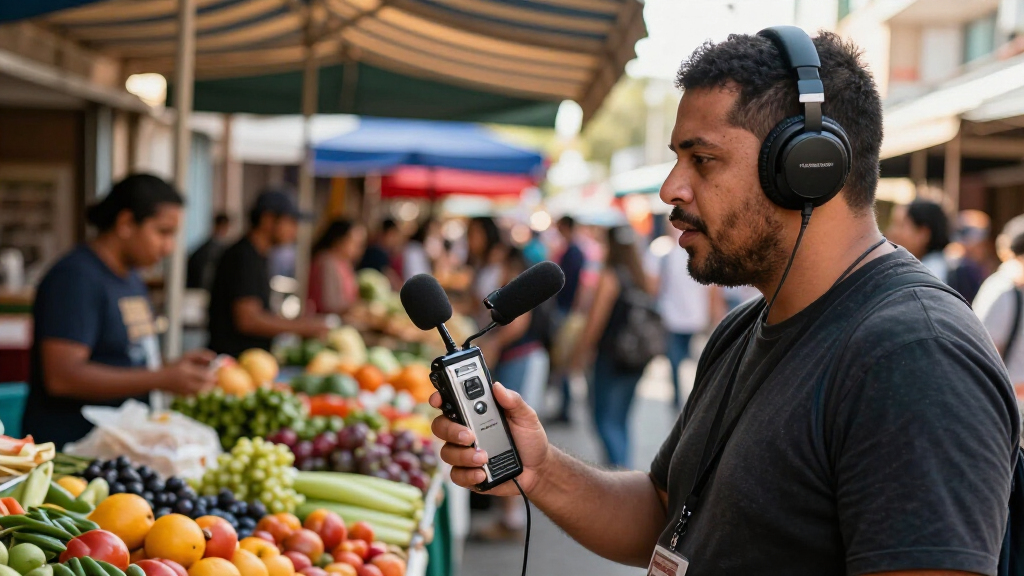
I compared these 15 options by how well their recording format matches real podcast setups: solo speech, two-person conversations, multi-mic studio sessions, and interviews recorded away from a desk. I weighed input and headphone capacity, portability, connection options, recording flexibility, and how much setup a buyer must manage. A recorder with more tracks is not automatically better; those connections matter only when a show uses them.
The ranking favors devices that balance podcast usefulness with manageable operation. That puts the PodTrak P4next first as the clearest general-purpose podcast choice, with the P4 close behind for interview-focused setups. Handheld recorders rank higher for simple, mobile recording, while larger or more adaptable units make sense for buyers with specific expansion needs. I treated bundle accessories as a convenience rather than a performance advantage, and considered each product’s drawbacks alongside its strengths.
Factors to Consider When Choosing Portable Podcast Recorders
Before choosing a recorder, map out how your show is actually captured—not just the number of people who might appear on it. A portable podcast setup has to balance mic connections, monitoring, mobility, and workflow. These broader questions can prevent paying for unused complexity or buying a recorder that cannot support your usual session.
Count microphones and headphones separately
Start with the largest session you record regularly, then count both microphones and people who need to monitor audio. A recorder may accept enough microphones but still leave a guest without a headphone feed, or the other way around. Plan for remote guests separately: phone or computer connectivity can matter more than another physical mic input. Avoid buying for a rare, ambitious setup if most episodes are solo; a compact recorder can be easier to carry and operate. If your show often has several in-person voices, prioritize a device built around that workflow rather than relying on adapters to fill gaps.
Choose a recording style that fits the session
A podcast-focused recorder tends to make common show tasks more direct, while a handheld field recorder may be better suited to capturing ambient sound, narration, or a quick interview. The distinction affects setup time: an all-purpose recorder can offer useful flexibility but may demand more menu work. Think about whether you record each speaker on a separate track, mix as you go, or simply need a dependable stereo file. Separate tracks can make edits and level corrections easier, but they also create more files and post-production work. Choose the workflow you can sustain across ordinary episodes, not just the one with the longest feature list.
Treat portability as a full kit question
“Portable” can mean a small recorder in a pocket or a complete setup carried to a remote location. Include microphones, cables, headphones, power, storage, and any stand or wind protection when judging the load. A recorder that runs on replaceable batteries may be useful away from outlets, while a larger unit with more connections can take more time to pack and deploy. Check whether a bundle contains accessories you will actually use; an included card or microphone can be helpful, but redundant accessories add little. For travel, a simpler rig is often easier to set up consistently than a feature-rich kit assembled from many parts.
Understand what 32-bit float can and cannot fix
Some portable recorders advertise 32-bit float recording, which can provide more flexibility when adjusting recorded levels later. It does not make a poor microphone sound good, remove room echo, or repair clipped sound created elsewhere in the chain. Buyers who record unpredictable speech in changing environments may value extra level flexibility, while a controlled interview benefits just as much from careful mic placement and a quiet room. Do not choose a recorder based on bit depth alone; check its inputs, monitoring, and file workflow as well. A reliable recording routine still matters even when the recorder offers more headroom for level adjustments.
Decide whether you need expansion or a small footprint
Extra tracks and inputs are useful when a show adds hosts, instruments, remote feeds, or separate sources that need individual editing. They can also add controls and setup decisions that slow down a simple recording. A compact two-channel device may be a better everyday companion for solo creators, even if it cannot grow into a larger production rig. Before paying for expansion, list the sources you record now and the likely additions over the next few years. If your needs are uncertain, favor a clear, usable workflow over capacity you may never put to work.
Compare bundles by what is missing from your kit
Bundles can reduce the number of separate purchases, but their value depends on the accessories included and whether they suit your recording space. A memory card or basic windscreen may be immediately useful; a microphone bundle may still need stands, cables, or headphones to become a working multi-person setup. Confirm that included accessories match the recorder and the number of speakers you intend to record. When comparing packages, separate the recorder’s core features from the extras so a long accessory list does not distract from input limits or workflow. If you already own compatible gear, a recorder-only option may be the cleaner fit.
Frequently Asked Questions
Do I need a podcast-specific recorder, or will a handheld recorder work?
A handheld recorder can work well for solo narration, field interviews, and simple stereo capture. A podcast-specific model is usually a better match when you need several mic inputs, multiple headphone connections, or controls centered on hosted conversations. Think about how much of your show involves guests and how often you connect a phone or computer. If you mainly record one voice, a simpler handheld can reduce setup and carrying weight. Choose the format that matches your recurring sessions rather than a hypothetical studio build.
Is the PodTrak P4next a better choice than the PodTrak P4?
Both are podcast-oriented options, so the right choice depends on the functions and connections your workflow needs. The P4 is a clear fit for buyers who want four mic inputs, four headphone outputs, and phone or USB connections for interview use. The P4next is the roundup’s best overall pick, but you should compare the exact feature set and compatibility you need before choosing between them. Do not assume a newer model is automatically the better fit for every setup. If your sessions are straightforward, the model that handles them with less unused capacity may be the more practical choice.
How many mic inputs should I plan for if I sometimes have guests?
Count the microphones needed for the largest session you host often, including a co-host and any regular in-person guests. A remote guest joining by phone or computer may use a different connection, so do not count every speaker as a physical mic input. Also check how many people need headphone monitoring; that limit can shape a session just as much as mic capacity. If guests are occasional and can join remotely, a smaller recorder may cover your usual work. If several people regularly share a room, prioritize enough inputs and monitoring connections without adapters that complicate setup.
Can I record a podcast without a laptop?
Yes, a portable recorder can capture audio directly to removable storage or its supported recording media, depending on the model. That can be useful for interviews on location or when you want to keep a laptop out of the recording space. You will still need a way to review files, transfer them, edit the episode, and make backups. Check the recorder’s recording format, storage support, and power needs before planning a laptop-free session. A standalone recording workflow is portable, but it does not remove the later editing and file-management steps.
Should I buy a bundle with microphones and a memory card?
A bundle makes sense when its included accessories match the number of people you record and the equipment you already own. It can reduce setup friction if you are starting from scratch, but accessories do not add inputs or change the recorder’s recording workflow. Check whether the package includes the items your setup still needs, such as appropriate cables, headphones, or stands. Existing gear may make a recorder-only option less wasteful. Compare the bundle as a complete kit, not by counting accessories alone.
Conclusion
For most podcast hosts, I recommend the Zoom PodTrak P4next as the best overall because it is the roundup’s strongest match for a podcast-centered workflow. The Zoom PodTrak P4 is my best value-style fit for multi-person interviews when its four mic inputs, headphone outputs, and phone or USB connections match the session. Beginners recording a simple show can start with the Zoom H1essential rather than managing a larger multitrack setup. For a more demanding production with room to work across multiple sources, consider the Zoom H6 Essential or LiveTrak L6max as premium-style choices, accepting their added complexity. For compact recording, choose the H1essential or H1 XLR; for lavalier-based capture, look at the Zoom F2. Match the recorder to your regular guest count and editing workflow, then treat bundle extras as a secondary decision.
Fall Picks
fall essentials
As an affiliate, we earn on qualifying purchases.