

You might find it surprising how quickly trust can evaporate in the crypto world. When the LIBRA token, once celebrated by Argentine President Javier Milei, saw its value plummet 85%, it raised eyebrows. The team's decision to offload $87 million from liquidity pools sent shockwaves through the market. This drastic move not only triggered panic selling but also highlighted deeper issues of centralization. What does this mean for the future of LIBRA and its investors?

Get everyday essentials delivered free with Prime
- Fast, free delivery on millions of items
- Prime Video, Amazon Music and more included
- Member-only deals all year
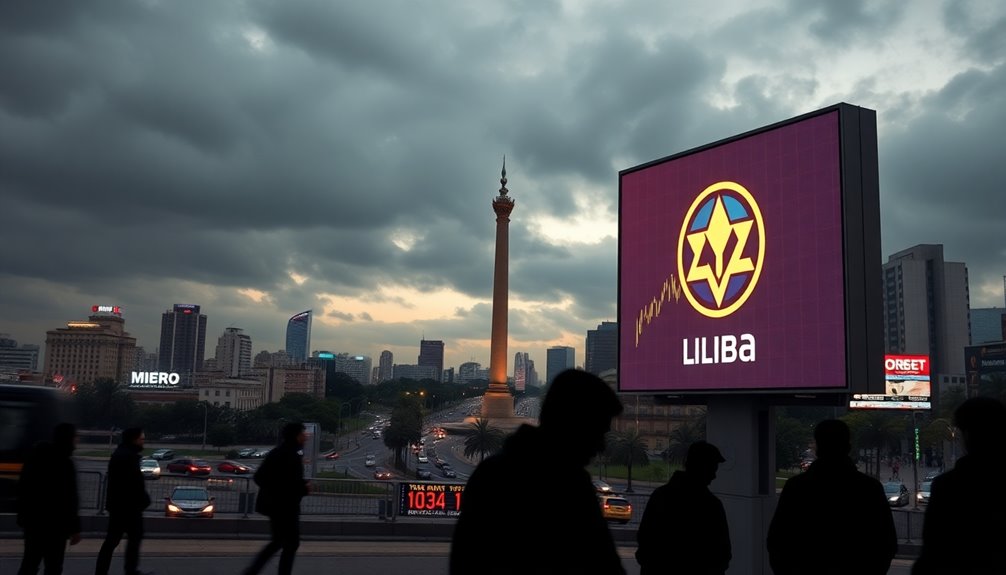
After the LIBRA token's development team pulled $87 million from its liquidity pools, the token nosedived 85%, leaving investors reeling from a staggering $4.5 billion loss in market cap. This shocking event not only devastated those who'd invested in LIBRA but also sent ripples through the broader cryptocurrency market.
With a peak market cap of $4.5 billion, the sudden crash triggered panic selling, causing significant drops in other tokens, particularly memecoins like $DOGE and $SHIB. Technical indicators showed extreme volatility, with the Relative Strength Index (RSI) hitting 95, signaling an overbought condition just before the collapse.
The centralization of LIBRA's token supply raised serious concerns among investors. A staggering 82% of the total supply was concentrated in a small number of addresses, which undermined trust in the token's distribution model. A significant concern is that 82% of LIBRA's supply is concentrated in connected addresses, raising questions about the fairness of the token ecosystem.
Blockchain analytics firms pointed out issues with the initial funding process and how supply was controlled. The use of single private keys for critical addresses instead of a multi-signature setup is a significant red flag that many investors can't overlook. Established token launches typically implement multi-signature wallets and strict Know Your Customer (KYC) measures to minimize risks associated with centralization, making LIBRA's approach particularly troubling.
Adding to the chaos, Argentine President Javier Milei initially endorsed the LIBRA token, only to retract his support after realizing he hadn't conducted proper due diligence. He even deleted tweets promoting the token, a move that raised eyebrows given his previous endorsement of CoinX, which was labeled an alleged Ponzi scheme.
While Milei attempted to push back against critics, the damage was already done, and the controversy surrounding LIBRA only fueled distrust.
The LIBRA token was part of the Viva La Libertad Project, intended to bolster Argentina's economy by funding local businesses. However, its collapse not only impacted investors but also led to a surge in trading volumes for other memecoins and AI-related tokens.
On-chain metrics revealed a rapid increase in transactions paired with a decrease in average transaction size, indicating that panic selling was in full swing.
In light of these events, the volatility and risks associated with investing in memecoins have never been more evident. As an investor, you must exercise caution and conduct thorough research before diving into such unpredictable waters.
The LIBRA debacle serves as a stark reminder of the potential perils lurking in the crypto landscape.
As an affiliate, we earn on qualifying purchases.
Halloween Picks
halloween
As an affiliate, we earn on qualifying purchases.