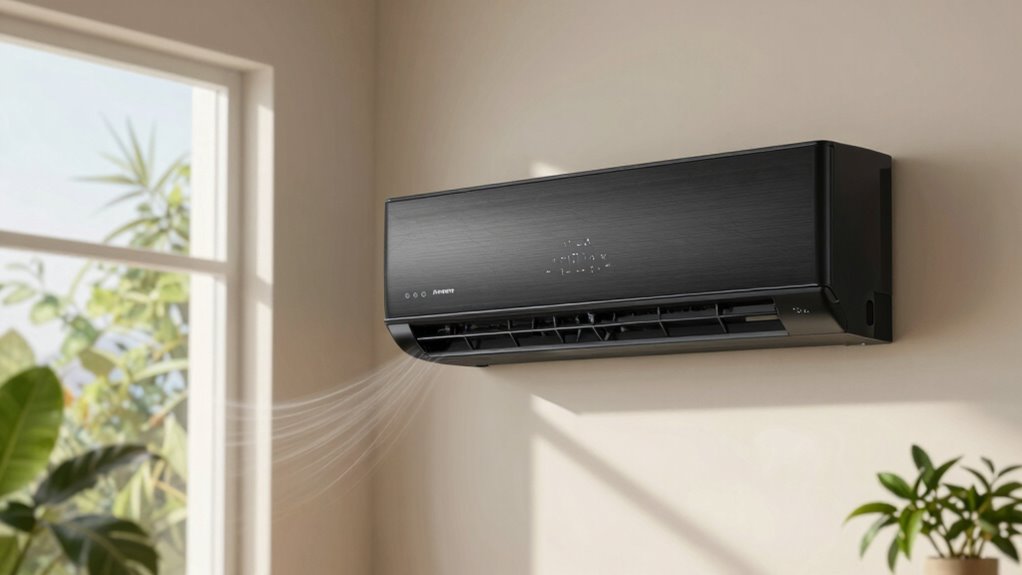

Inverter window ACs feel so different because they use a variable-speed compressor that adjusts cooling output smoothly, rather than turning on and off like traditional units. This results in quieter operation, more consistent temperatures, and better energy efficiency. You’ll notice less noise, fewer temperature swings, and potential savings on electricity bills. If you keep exploring, you’ll discover how this advanced technology truly enhances your cooling experience.
Key Takeaways
- Inverter window ACs adjust compressor speed for consistent cooling, reducing fluctuations and enhancing comfort.
- They operate at variable speeds, maintaining steady temperatures and avoiding energy peaks typical of traditional units.
- Continuous, smooth operation minimizes noise and mechanical wear, making them feel quieter and more reliable.
- Inverter technology improves energy efficiency, leading to faster cooling with lower power consumption.
- The stable operation and reduced cycling create a more comfortable environment and longer-lasting, cost-effective performance.
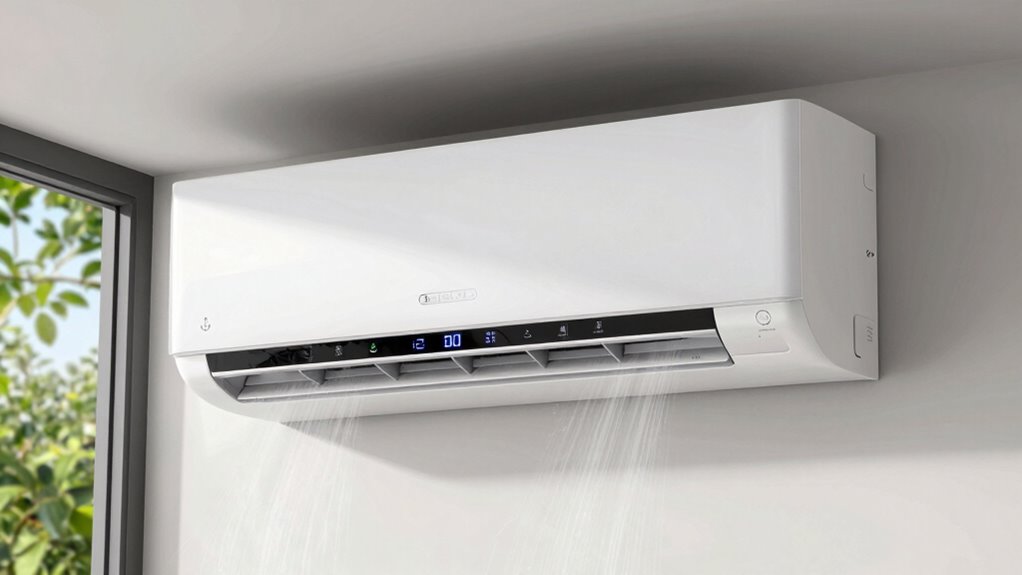
Are you getting the most out of your window AC unit? If not, it might be time to look into how your current model performs and whether an upgrade could make a difference. One of the key factors influencing efficiency is the type of compressor your AC uses. Traditional units often run at full blast until they reach the desired temperature, then shut off completely. This cycle can lead to higher power consumption and less energy savings over time. In contrast, inverter models operate differently, offering a more refined approach to cooling that can considerably improve overall performance.
Upgrade to inverter ACs for smarter, more efficient cooling and lower energy costs.
Inverter window ACs use variable-speed compressors that adjust their power based on the room’s temperature needs. When the room is close to setpoint, the compressor slows down, consuming less energy. If the temperature rises, it speeds up seamlessly. This continuous modulation results in smoother temperature control and a more consistent environment. Because the compressor isn’t constantly turning on and off like traditional units, inverter models tend to use less electricity, translating into noticeable energy savings on your electric bill.
Power consumption is one of the biggest factors to weigh when evaluating AC efficiency. Standard units often have high peak power demands, especially during startup, which strains your electrical system and increases energy costs. Inverter units, however, avoid these peaks by maintaining a steady output. This not only reduces the strain on your electrical system but also means your AC runs more efficiently, wasting less energy. Over time, that difference adds up, especially during hot seasons when your AC is working harder.
Another reason inverter models feel so different is their ability to maintain a stable temperature without overworking the compressor. This stability results in fewer fluctuations, meaning your room stays cooler and more comfortable for longer periods. Plus, since the compressor isn’t constantly cycling on and off, there’s less wear and tear, which can extend the lifespan of your unit. The quieter operation is another bonus—no more loud startup sounds or constant clicking that can disturb your peace.
Ultimately, upgrading to an inverter window AC can be a smart move if you’re looking to maximize energy savings while maintaining consistent comfort. Their efficient use of power consumption not only reduces your environmental footprint but also cuts down on your monthly electricity bills. If you want a cooling solution that feels different—more responsive, more efficient, and gentler on your wallet—an inverter model is worth weighing. It’s a small investment that pays off in the long run through improved efficiency and comfort. Additionally, inverter technology exemplifies how modern appliances can incorporate energy-efficient components to reduce overall environmental impact.

Midea 8,000 BTU U Shaped Smart Inverter Window Air Conditioner – Cools 350 Sq Ft, Ultra Quiet with Open Window Flexibility – Alexa/Google Assistant Compatible – 37% Energy Savings, Remote (Updated)
ULTRA QUIET – The U-shape design of Midea U Smart Inverter air conditioner uses your window to block…
As an affiliate, we earn on qualifying purchases.
As an affiliate, we earn on qualifying purchases.
Frequently Asked Questions
How Do Inverter Window ACS Compare to Central Air Conditioning Systems?
Inverter window ACs typically outperform central ACs in efficiency and noise levels, thanks to smart technology that adjusts cooling power based on your needs. You’ll notice they operate more quietly and respond quickly to temperature changes, giving you better comfort and energy savings. While central systems cool larger spaces uniformly, inverter window units offer a convenient, cost-effective solution for targeted cooling with less noise and smarter operation.
What Maintenance Best Practices Improve Inverter AC Performance?
Imagine your inverter AC as a sleek sports car—keep it running smoothly and it’ll zoom effortlessly. Regular filter maintenance prevents dust and debris from clogging airflow, while refrigerant checks ensure ideal cooling. Skipping these steps is like ignoring oil changes; performance drops, and efficiency tanks. So, clean filters monthly and schedule refrigerant inspections annually to keep your inverter AC feeling as powerful and responsive as day one.
Are Inverter Window ACS More Energy-Efficient in Extreme Weather?
Yes, inverter window ACs are more energy-efficient in extreme weather because they adapt better to temperature changes, ensuring consistent cooling or heating. This climate adaptability results in significant energy savings, especially during heatwaves or cold snaps. By adjusting compressor speed based on demand, these models use less power, maintaining comfort without wasting energy. So, investing in inverter ACs helps you save on energy bills while staying comfortable year-round.
How Does Room Size Affect Inverter AC Efficiency?
Your room size directly impacts inverter AC efficiency. If your space is small, a unit with a lower cooling capacity works well and saves energy. For larger rooms, choose an inverter AC with higher cooling capacity to guarantee effective cooling without overworking the compressor. Proper sizing helps the inverter model operate efficiently, maintaining comfort and reducing energy bills. Always match your room size to the AC’s cooling capacity for ideal performance.
What Are Common Issues That Reduce Inverter AC Lifespan?
You might find your inverter AC struggling like a tired engine if you overlook signs of component failure or refrigerant leakage. These issues act like leaks in a balloon, slowly deflating efficiency and shortening lifespan. Overworking the system, neglecting regular maintenance, or harsh environments can accelerate wear. Keep an eye out for strange noises or reduced cooling, and address problems promptly to ensure your AC keeps running smoothly for years.

Amazon Basics 5000-BTU Window Air Conditioner with Quiet Operation, Up to 150 Sqf, Cool and Fan Functions, Washable Filter, Adjustable Window Kit, Intuitive Mechanical Controls, for Small Room, White
EFFICIENT COOLING: 5000 BTU cooling capacity ideal for rooms up to 150 sq. ft. – perfect for bedrooms,…
As an affiliate, we earn on qualifying purchases.
As an affiliate, we earn on qualifying purchases.
Conclusion
Think of inverter window ACs like a skilled driver smoothly adjusting speed to match the road. Unlike traditional models that slam on and off, inverter units keep the cool flowing steadily, saving energy and money. When I switched to an inverter AC, it felt like upgrading from a bumpy ride to gliding on a smooth highway. With efficiency improvements of up to 30%, you’ll notice cooler comfort that’s both quieter and kinder to your wallet.

Midea Inverter Window Air Conditioner with Heat – Quiet Window AC Unit and Heat Combo with Dehumidifier – Cools up to 550 Sq. Ft. – Energy Star Rated, Smart Control, Remote, 12,000 BTU
Multi-Season Comfort – This Midea 12000 BTU air conditioner is more versatile than standard AC units, offering powerful…
As an affiliate, we earn on qualifying purchases.
As an affiliate, we earn on qualifying purchases.

Midea 8,000 BTU Smart Inverter Window Air Conditioner with APP, Alexa Control, 115V AC Unit Cools up to 350 Sq. Ft, Quiet Operation, Energy Saving, Remote & Easy Installation Kit, White
Powerful Cooling Performance: This 8,000 BTU window air conditioner delivers robust cooling, perfect for beating the summer heat…
As an affiliate, we earn on qualifying purchases.
As an affiliate, we earn on qualifying purchases.