
Water filters work through different methods to improve your water quality. Carbon filters use activated charcoal to trap impurities, enhancing taste and removing odors. Reverse osmosis (RO) systems push water through a membrane, stripping out salts, bacteria, and heavy metals, but may also remove beneficial minerals. Whole-house filters combine methods for complete treatment across your entire home. Understanding these processes helps you choose the best system — keep exploring to learn more about their benefits and differences.
Key Takeaways
- Carbon filters mainly improve taste and odor by trapping chemicals like chlorine, but don’t remove dissolved salts or heavy metals.
- Reverse osmosis (RO) systems use a semi-permeable membrane to remove a wide range of contaminants, including salts, bacteria, and viruses.
- Whole-house filters provide comprehensive water treatment for the entire home, often combining multiple filtration methods for better coverage.
- RO systems may remove beneficial minerals, but often include remineralization stages to restore pH balance and minerals.
- Choosing the right filter depends on specific water quality needs, such as taste improvement, contaminant removal, or whole-house protection.
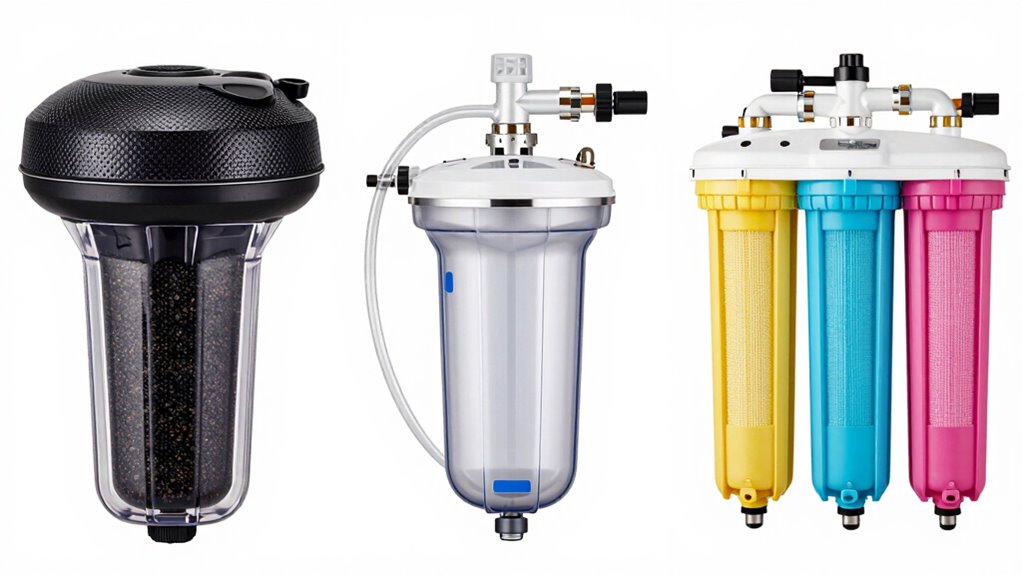
Have you ever wondered how water filters work to keep your drinking water clean and safe? It’s a good question, especially since water quality can vary so much depending on the source. Different filters use different methods to remove contaminants, but understanding how they work can help you make the right choice for your needs. One key aspect is how they affect the pH balance of your water and whether they retain essential minerals. These factors influence not only taste but also your health, so it’s worth understanding the basics.
Carbon filters are among the most common and straightforward options. They use activated carbon to trap impurities through a process called adsorption. This means pollutants stick to the surface of the carbon, removing chemicals like chlorine, volatile organic compounds (VOCs), and bad odors. While they do a great job at improving taste and odor, carbon filters typically don’t alter the pH balance much. They also tend to retain beneficial minerals like calcium and magnesium, which are good for your health. However, they aren’t effective against all contaminants, such as heavy metals or dissolved salts, so they’re best used as a primary stage in a multi-filter system or for general taste improvement.
Reverse osmosis (RO) systems operate differently. They force water through a semi-permeable membrane under pressure, which filters out a wide range of contaminants, including salts, heavy metals, bacteria, and viruses. This process considerably reduces impurities, but it also strips away many minerals that give water its natural taste and pH balance. As a result, RO-filtered water can sometimes taste flat or dull, and it may have a slightly acidic pH. Fortunately, many RO systems include remineralization stages that add back essential minerals, restoring some of the original mineral content and helping to balance the pH. This ensures the water remains safe while maintaining a more natural taste and health profile. Additionally, understanding the filtration process can help you evaluate which system best meets your needs.
Whole-house filters are designed to treat all the water entering your home. They often combine different filtration methods, such as carbon filtration and sometimes even RO or other specialized media, to address a broad spectrum of contaminants. These systems are excellent for maintaining water quality throughout your household, from faucets to appliances. They can also help preserve the natural pH balance and mineral content of your water, especially if they include stages that add beneficial minerals back into the water. Whole-house filters provide convenience and consistency, ensuring every tap delivers clean, safe, and well-balanced water.

1 Micron 2.5" x 10" Whole House CTO Carbon Water Filter Cartridge Replacement for Under Sink Water Filter System, Dupont WFPFC8002, WFPFC9001, FXWTC, SCWH-5, WHEF-WHWC, WHCF-WHWC, AMZN-SCWH-5, 4Pack
❄️【Authoritative Certifications】 – The filter is certified against NSF/ANSI 42 by IAPMO, filtering out 99% Chlorine, odor and…
As an affiliate, we earn on qualifying purchases.
As an affiliate, we earn on qualifying purchases.
Frequently Asked Questions
How Often Should I Replace My Water Filter?
You should replace your water filter according to the recommended filter lifespan, which is typically every 6 to 12 months. Check your filter’s replacement schedule, as it varies based on usage and water quality. If you notice a change in water taste or flow rate, it might be time sooner. Regularly maintaining your filter guarantees peak performance and clean, safe water.
Do Water Filters Remove Beneficial Minerals?
You might think water filters are all about stripping beneficial minerals, but it’s not a one-size-fits-all answer. Some filters, especially reverse osmosis systems, can remove minerals that help maintain pH balance, potentially making water more acidic. While mineral removal can be a concern, many filters are designed to retain essential minerals. Always check your filter’s specs to guarantee it balances purification with preserving the beneficial minerals your water offers.
Are Water Filters Effective Against Viruses?
Water filters can be effective against viruses, especially reverse osmosis (RO) systems and certain multi-stage filters designed for virus removal. Their filtration effectiveness depends on the filter type and pore size; smaller pores trap viruses and bacteria. Keep in mind, not all filters provide virus removal, so check product specifications. If virus prevention is your priority, choose filters specifically rated for virus removal to guarantee safe, clean water.
Can Water Filters Improve Taste and Odor?
Yes, water filters can substantially improve taste and odor. They enhance taste by removing chlorine, sediments, and other impurities that cause a dull or metallic flavor. Odor removal is also effective, especially with activated carbon filters that absorb unpleasant smells like sulfur or mustiness. You’ll notice fresher, cleaner-tasting water, making it more enjoyable to drink and use for cooking. Regular filter changes ensure ongoing taste enhancement and odor elimination.
What Maintenance Is Required for Whole-House Systems?
You need to perform regular maintenance on your whole-house system to guarantee ideal performance. This includes monitoring the system lifespan and replacing filters as recommended by the manufacturer, typically every 6 to 12 months. Additionally, check for any leaks or buildup, and clean the system periodically. Proper maintenance helps extend the system’s life, keeps water quality high, and prevents costly repairs down the line.

iSpring RCC7AK, NSF Certified, 75 GPD, Alkaline 6-Stage Reverse Osmosis System, pH+ Remineralization RO Water Filter System Under Sink, Patented Top-Mounted Faucet Design for Easy Installation
PATENTED DESIGN – The top-mounted fastener allows for easy countertop installation entirely from above, eliminating the hassle of…
As an affiliate, we earn on qualifying purchases.
As an affiliate, we earn on qualifying purchases.
Conclusion
Choosing the right water filter depends on your needs, but did you know that around 85% of Americans are exposed to some level of contaminants in their tap water? Whether you opt for carbon, RO, or whole-house filters, understanding their differences helps you make an informed decision to protect your health. By selecting the right system, you’re taking a vital step toward cleaner, safer water every day.

Express Water 3-Stage Whole House Water Filter System, Reduces Heavy Metals, Scale, Chloramine, Chlorine, PFAs, Lead & Arsenic, Free-standing Stainless Steel Frame & 3 Pressure Gauges
WHOLE HOUSE WATER FILTRATION: Notice the difference immediately with 3-stage water filtration process throughout your home. From every…
As an affiliate, we earn on qualifying purchases.
As an affiliate, we earn on qualifying purchases.
iSpring RCC7AK, NSF Certified, 75 GPD, Alkaline 6-Stage Reverse Osmosis System, pH+ Remineralization RO Water Filter System Under Sink, Patented Top-Mounted Faucet Design for Easy Installation
PATENTED DESIGN – The top-mounted fastener allows for easy countertop installation entirely from above, eliminating the hassle of…
As an affiliate, we earn on qualifying purchases.
As an affiliate, we earn on qualifying purchases.