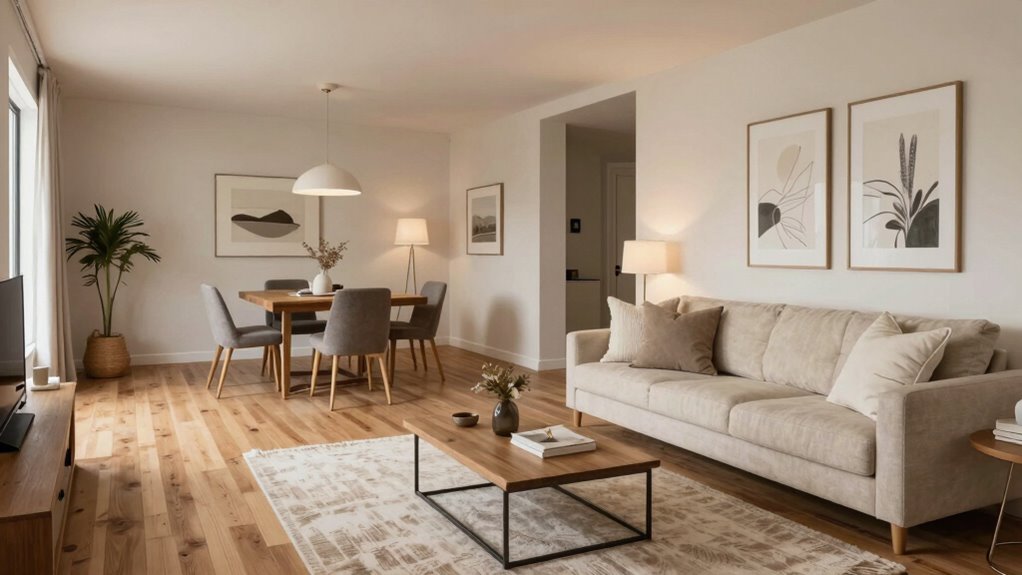

To make your home feel cohesive from room to room, focus on coordinating colors with harmonious shades and subtle undertones. Arrange furniture with similar lines and materials to create a flowing visual journey. Use matching or complementary lighting fixtures for consistency and select decor that repeats textures or patterns throughout. Incorporate unifying accents like warm metallics or neutral tones to tie everything together. If you keep these principles in mind, you’ll create a space that feels effortlessly inviting.
Open a free Amazon Business account
Business pricing, bulk buying and tax-exempt orders.
As an affiliate, we earn on qualifying purchases.
Key Takeaways
- Use a consistent color palette with complementary shades and unifying neutrals throughout all rooms.
- Arrange furniture with similar styles, lines, or materials to create visual flow.
- Match lighting fixtures and hardware in style and finish for cohesive illumination.
- Repeat textures, patterns, or decorative accents across spaces to reinforce themes.
- Maintain a balanced scale and style to ensure smooth transitions between rooms.
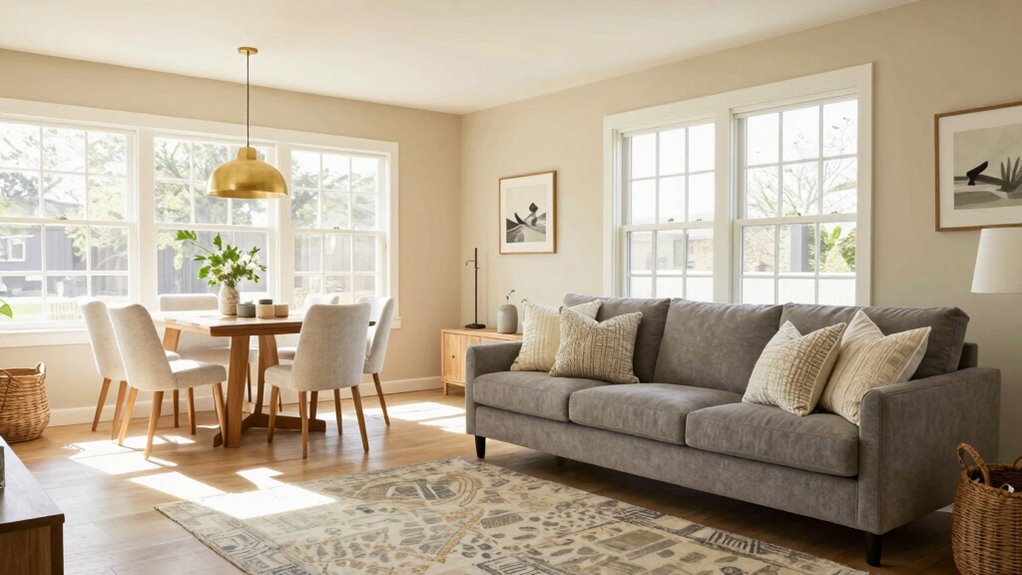
Creating a cohesive home doesn’t happen by chance; it requires intentional choices that tie your space together. One of the most effective ways to achieve this is through thoughtful color coordination. When you select a color palette, think about how each hue will complement the next, creating a seamless visual passage from room to room. Instead of random, contrasting colors, opt for shades that share undertones or are part of the same color family. This doesn’t mean every room should look identical, but that there’s a unifying thread—perhaps soft neutrals, muted blues, or warm earth tones—that runs throughout your home. By doing so, your space feels connected, even if each room has its own personality.
Along with color, furniture flow plays a pivotal role in making your home feel cohesive. When arranging furniture, consider how pieces relate to each other across different rooms. Avoid abrupt shifts in style or size that disrupt the visual journey from one space to the next. Instead, choose furniture with similar lines or materials that create harmony, and place them in a way that encourages an easy progression. For example, if you favor sleek, modern pieces in the living room, carry those design elements into adjacent rooms with complementary furniture. This consistency in style and scale helps your home feel unified, rather than disjointed or chaotic.
Lighting also ties into this concept, as well-chosen fixtures that match in style or finish can reinforce the overall aesthetic. Incorporate similar hardware, lamps, or sconces throughout your home to create visual continuity. When light fixtures coordinate, they act as subtle cues that guide the eye and reinforce the sense of cohesion.
Finally, pay attention to accessories and decor accents. Repeating certain textures, patterns, or decorative objects across rooms helps reinforce your overall design theme. For instance, if your color palette includes warm metallics, use these in picture frames, vases, or hardware throughout your home. Small details like these amplify the feeling of intentional design and make each space feel like part of a larger, thoughtfully curated whole. Additionally, understanding the importance of color coordination can help you make cohesive choices that tie all elements together. When you focus on color coordination, furniture flow, lighting, and accessories, you craft a home that feels effortless, inviting, and truly cohesive from room to room.
cohesive home color palette decor
As an affiliate, we earn on qualifying purchases.
As an affiliate, we earn on qualifying purchases.
Frequently Asked Questions
How Do I Choose a Unifying Color Palette?
To choose a unifying color palette, start with color psychology to pick shades that evoke the mood you want in your home. Select a few core colors and incorporate them across rooms through paint finishes like matte or satin for variety. Use these consistent hues in furniture, decor, and accents to create harmony. This approach guarantees your home feels cohesive while allowing individual rooms to have their unique charm.
What Materials Work Best for Cohesive Decor?
Think of your home as a symphony; the right materials create harmony. Textile textures like linen, wool, and cotton add warmth and variety, while decorative accents in wood, metal, and glass tie rooms together. These materials work best because they complement each other, creating a cohesive look. By mixing these textures and accents thoughtfully, you guarantee each space feels connected yet interesting, much like a well-orchestrated melody.
How Can I Blend Different Interior Styles Seamlessly?
You can blend different interior styles seamlessly by incorporating consistent artistic accents, like artwork or decorative objects, throughout your home. Use lighting strategies to unify spaces—choose similar fixtures or warm, inviting lighting across rooms. Mix textures and colors thoughtfully to create harmony, and guarantee each style complements the others. This approach helps your home feel cohesive, even with diverse design influences, making each space flow effortlessly into the next.
Should Furniture Be Consistent Across Rooms?
Did you know homes with consistent furniture are 45% more visually appealing? You should aim for furniture consistency across rooms, as it promotes decor harmony and creates a seamless flow. While mixing styles is fine, keep key pieces like sofas or tables similar in finish or color. This balance guarantees each space feels connected, making your home inviting and stylish without sacrificing individuality.
How Do I Incorporate Personal Touches Without Clashing?
You can incorporate personal touches without clashing by carefully selecting accessories that reflect your style while maintaining harmony. Focus on art placement that balances colors and themes throughout your home, creating visual continuity. When choosing accessories, pick pieces that complement your existing decor but add unique personality. This way, each room feels personalized yet cohesive, ensuring your home remains unified and inviting without overwhelming or conflicting with other spaces.
Conclusion
By incorporating consistent colors, styles, and decor elements, you can effortlessly create a cohesive home that flows seamlessly from room to room. Don’t worry if your spaces feel different; think of it like a playlist—each room has its unique tune but shares common beats that tie everything together. Imagine a living room with warm neutrals blending into a cozy bedroom with soft accents—your home will feel connected, inviting, and effortlessly stylish.
Back to school Picks
back to school
As an affiliate, we earn on qualifying purchases.