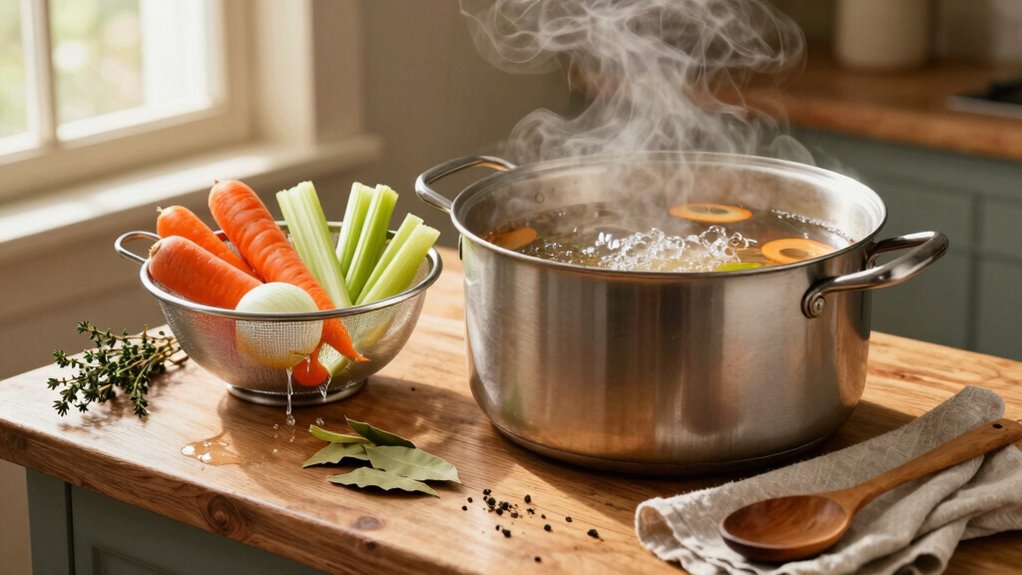

To make homemade stock quickly and worthwhile, start with a high-quality stock cube or concentrated broth, dissolving it in hot water. Enhance the flavor by adding aromatics like garlic, onion, or herbs during heating, and boost umami with soy sauce or Worcestershire. Stir in a bit of butter or olive oil for richness. This shortcut saves time without sacrificing depth, giving you flavorful stock fast—if you keep going, you’ll discover even more tips to perfect your process.

Get everyday essentials delivered free with Prime
- Fast, free delivery on millions of items
- Prime Video, Amazon Music and more included
- Member-only deals all year
Key Takeaways
- Quickly create rich, flavorful stock by dissolving high-quality cubes or concentrates in hot water with aromatics.
- Enhance flavor with umami boosters like soy sauce or Worcestershire for depth without long simmering.
- Incorporate butter or olive oil for richness, boosting flavor complexity efficiently.
- Store in small portions using ice cube trays for quick, convenient use in recipes.
- Use high-quality ingredients and proper storage to maintain freshness and maximize flavor benefits.
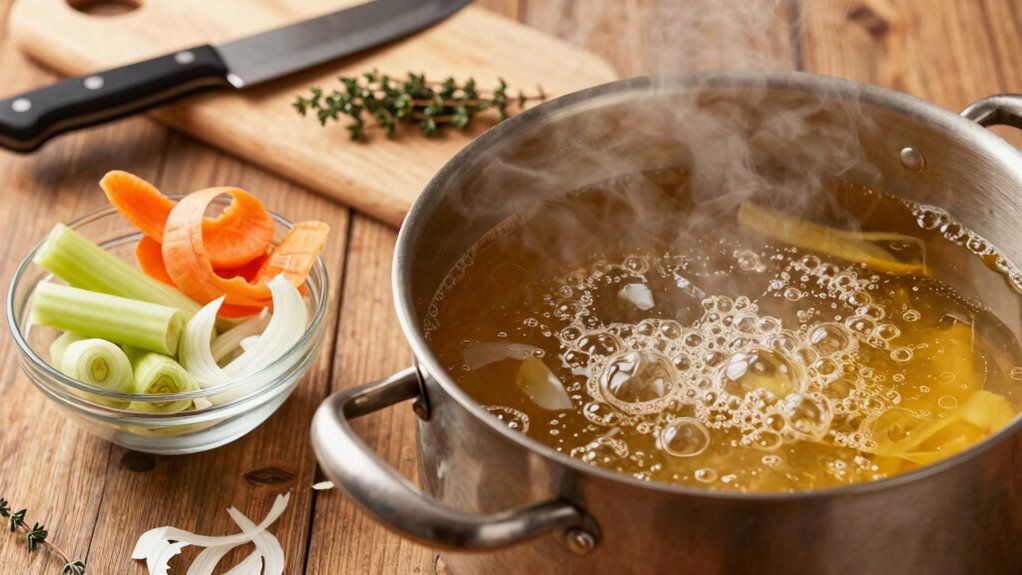
Have you ever wished you could make flavorful homemade stock without spending hours simmering bones and vegetables? If so,, you’re in luck. There’s a simple shortcut that elevates your cooking and saves you time, all while delivering rich, savory flavor. Instead of the traditional long simmer, you can use a quick method that still provides the depth and complexity you crave. This approach is perfect for busy weeknights or when you want to add a homemade touch without the fuss.
The secret lies in using concentrated broth or stock cubes as a base, then enhancing it with fresh ingredients and a few smart techniques. Start by dissolving a high-quality stock cube or a concentrated broth in hot water. This gives you a flavorful foundation without the hours of simmering. To boost flavor enhancement, add aromatics like garlic, onion, or herbs, which you can toss in during the heating process. A splash of soy sauce or a dash of Worcestershire can deepen the umami profile, making your stock more robust. For even more richness, stir in a small amount of butter or olive oil, which adds body and smoothness.
Once your quick stock is ready, it’s vital to think about storage tips so you can use it later without sacrificing flavor. Pour the hot stock into ice cube trays or silicone molds, then freeze until solid. This method allows you to defrost small portions as needed, making it convenient for soups, sauces, and risottos. Label each batch with the date and ingredients to keep track of freshness. If you prefer fresh stock for immediate use, keep it in an airtight container in the refrigerator for up to three days. Reheat gently to preserve its delicate flavors and prevent it from becoming dull. You can also freeze larger portions in freezer-safe containers for up to three months, ensuring you always have a flavorful base on hand. High-quality stock cubes can greatly influence the flavor of your quick stock, so choosing the right product is worth the effort. Utilizing food storage techniques and understanding how to maximize flavor preservation can help you maintain the stock’s freshness and flavor over time. Additionally, selecting proper storage containers will prevent freezer burn and keep your stock tasting fresh longer.
Using concentrated broth and gadget reviews can help you select high-quality stock cubes or broths, ensuring your shortcut results in great flavor. This shortcut not only saves you time but also encourages you to experiment with flavor enhancement. By using concentrated broth and seasonal aromatics, you craft a stock that rivals slow-simmered versions, but with less effort. Proper storage tips ensure your stock stays fresh and ready whenever you need it, making your cooking more efficient and flavorful. So next time you’re short on time but still want the depth that homemade stock offers, remember this quick method. It’s a smart way to enjoy rich, homemade flavor without the long wait.
high quality chicken stock cubes low sodium
As an affiliate, we earn on qualifying purchases.
As an affiliate, we earn on qualifying purchases.
Frequently Asked Questions
Can I Use Leftovers Other Than Bones for Stock?
Yes, you can use leftovers like vegetable scraps, herbs, or even roasted meat trimmings to make stock. Packaging tips include storing these leftovers in airtight containers or freezer bags to keep them fresh. Experiment with flavor variations by adding different herbs, spices, or vegetables. This not only reduces waste but also adds unique depth to your homemade stock, making it more versatile and flavorful for various recipes.
How Long Does Homemade Stock Last in the Fridge?
Homemade stock usually lasts about 3 to 4 days in the fridge if stored properly. To prevent spoilage, you should cool it quickly and keep it in an airtight container. If you want to extend its shelf life, consider freezing it in smaller portions. Always check for any off smells or mold before using, as proper storage duration is key to spoilage prevention and keeping your stock fresh.
Is There a Vegan Alternative to Traditional Stock?
Looking for a vegan alternative to traditional stock? You can easily make plant-based broths using vegetables, herbs, and spices to create rich flavor enhancers. Have you tried simmering mushrooms, seaweed, or nutritional yeast? These ingredients add depth and umami, mimicking the savory qualities of meat-based stocks. This way, you get a flavorful, cruelty-free base for soups and stews without sacrificing taste or texture.
What Kitchen Tools Are Essential for Making Stock?
You’ll need a large stockpot to simmer ingredients and extract flavor enhancement effectively. A fine-mesh strainer helps strain out solids for a clear broth, while a slotted spoon makes ingredient substitution easier. A chef’s knife ensures precise chopping of vegetables and bones, and measuring cups keep your ingredients balanced. These tools streamline the process, making homemade stock more efficient and flavorful, whether you’re using traditional or vegan substitutes.
Can I Freeze Homemade Stock for Later Use?
Absolutely, you can freeze homemade stock for later use. Think of it as hitting two birds with one stone—preserving flavor enhancement and nutritional benefits. Just let it cool, ladle it into airtight containers or ice cube trays, and store in the freezer. This way, you’ll always have a rich, nutritious base ready to boost your dishes, saving time and adding depth to your meals whenever you need it.
Conclusion
So, next time you’re craving a rich, homemade stock, skip the long simmer and grab that trusty slow cooker or pressure cooker instead—it’s a game-changer. Think of it as your culinary time machine, turning humble scraps into liquid gold faster than you can say “Ye Olde Kitchen.” With this shortcut, you’ll be dipping bread and stirring soups in no time—no more waiting for the ghost of grandma’s stock to haunt your kitchen.
Halloween Picks
halloween
As an affiliate, we earn on qualifying purchases.