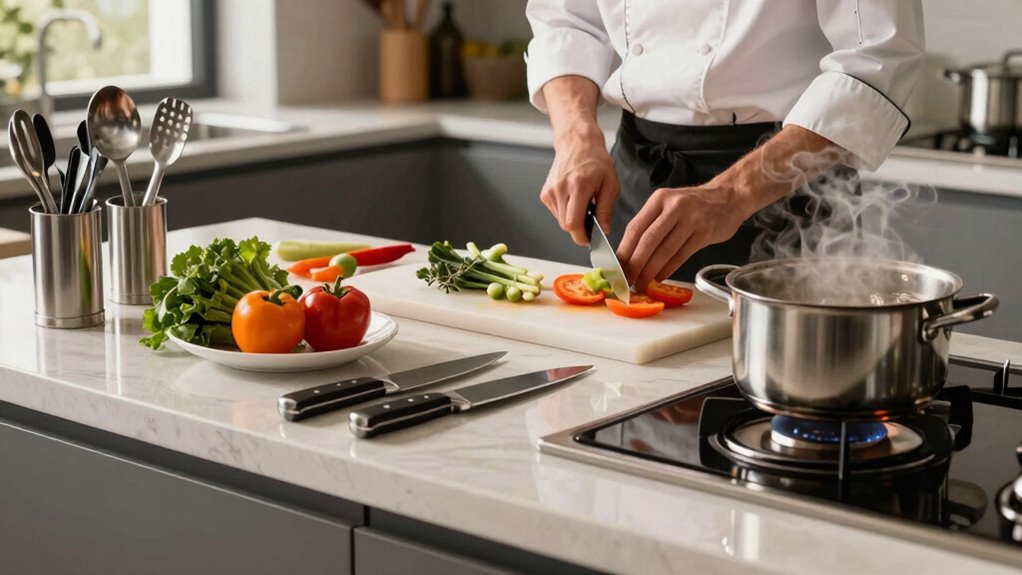
Your kitchen workflow matters just as much as your recipe because it directly impacts your efficiency, safety, and the quality of your cooking. When your space is organized, ingredients are prepped, and tools are within easy reach, you can work smoothly without wasting time or risking accidents. Good workflow creates a calm environment, helps prevent mistakes, and guarantees your focus stays on creating delicious dishes. Keep exploring to discover how optimizing your kitchen space can elevate your cooking experience.

Get everyday essentials delivered free with Prime
- Fast, free delivery on millions of items
- Prime Video, Amazon Music and more included
- Member-only deals all year
Key Takeaways
- An organized workflow minimizes search time for ingredients and utensils, speeding up meal preparation.
- Proper layout and ergonomic tools reduce fatigue, increasing efficiency and safety during cooking.
- Prepping ingredients beforehand ensures smoother cooking processes and fewer mistakes.
- Accessible utensil storage prevents workflow interruptions and enhances task flow.
- A well-structured kitchen creates a calm environment, improving focus and recipe outcomes.
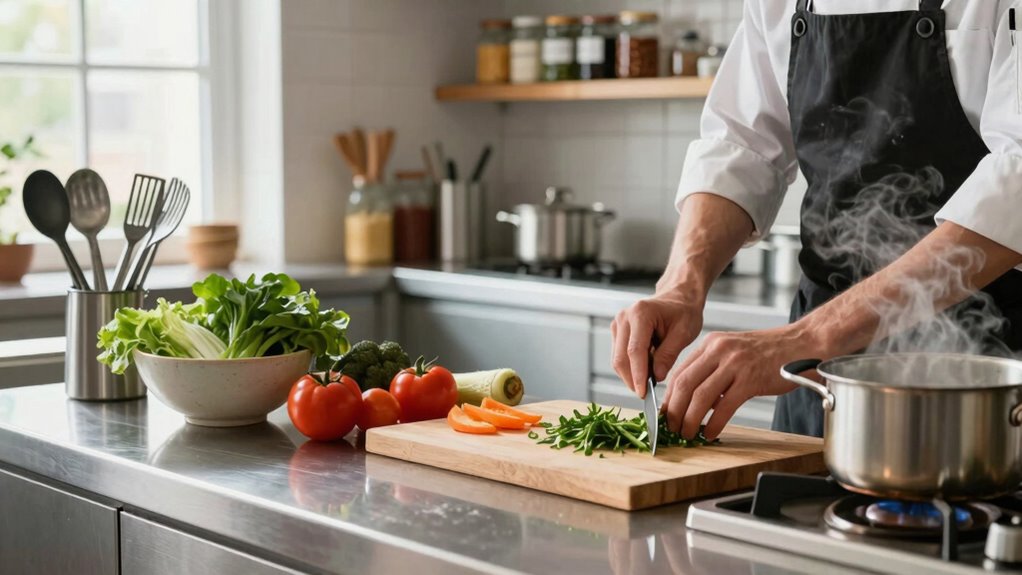
A smooth kitchen workflow is essential for maintaining efficiency and safety in your cooking space. When your workflow is seamless, you spend less time searching for ingredients or utensils, and more time focusing on creating delicious meals. It all begins with how you organize your space, especially during ingredient prep. If you have a designated area for washing, peeling, chopping, and measuring ingredients, you’ll find that your process flows naturally. Keep your ingredients grouped and within arm’s reach, so you’re not constantly moving across the kitchen. This minimizes clutter and prevents accidents caused by rushing or reaching through crowded spaces. Proper ingredient prep not only speeds up cooking but also reduces the chance of mistakes, like over-seasoning or forgetting an ingredient. When you prepare everything before you start cooking, you create a smoother, more controlled environment. Additionally, incorporating ergonomic tools or equipment can further enhance your workflow by reducing fatigue and improving comfort during prep and cooking. Understanding kitchen ergonomics can help you design a more efficient and comfortable workspace, ultimately supporting your workflow. Recognizing the importance of efficient space utilization ensures your kitchen remains functional and organized. Thoughtful kitchen layout is key to ensuring that your workspace encourages a natural flow between tasks. Utensil storage plays an indispensable role in this seamless workflow. If your utensils are scattered or stored in hard-to-reach places, it interrupts your rhythm. Instead, organize your utensils in a way that makes them easy to access. Use drawers, racks, or hooks close to your prep and cooking stations. Keep frequently used tools—like spatulas, knives, or tongs—at your fingertips. This way, you avoid unnecessary stops to rummage through cluttered drawers or cabinets, which can slow you down and increase frustration. When your utensil storage is efficient, you’re able to shift quickly from prep to cooking without breaking your concentration or losing momentum. It also enhances safety; sharp knives and hot tools are readily available but stored securely, reducing the risk of accidents. Incorporating storage solutions that optimize space can also contribute to a more organized and efficient kitchen environment. Combining thoughtful ingredient prep with strategic utensil storage creates a synergistic effect. When everything is organized, your kitchen becomes a place where tasks flow effortlessly. You can focus on the cooking process, adjusting seasonings or plating without interruption. A well-planned workflow also helps you stay calm, even when cooking under time constraints. Instead of frantic rummaging or searching, you move confidently from one step to the next. Ultimately, your kitchen’s efficiency depends on these foundational elements. When you prioritize ingredient prep and utensil storage, you’re investing in a workspace that supports not only your cooking skills but also your safety and peace of mind. This intentional organization guarantees that your recipes turn out better, and your time in the kitchen becomes more enjoyable.
Popular right now

Ninja Foodi Air Fryer 10 Qt DualZone 6-in-1 Black DZ302

Dyson V8 Cordless Vacuum

Breville Bambino Espresso Machine, Brushed Stainless Steel
As an affiliate, we earn on qualifying purchases.
Frequently Asked Questions
How Can I Personalize My Kitchen Workflow for Different Cuisines?
You can personalize your kitchen workflow for different cuisines by exploring customization options like adjustable prep stations or specialized tools. Incorporate cultural adaptations by reorganizing your space to suit specific ingredients and techniques. For example, dedicate a zone for Asian cuisine with woks and rice cookers, and another for Italian with pasta makers. These adjustments streamline your process, making cooking diverse cuisines more efficient and enjoyable.
What Are Common Mistakes in Optimizing Kitchen Layout?
You may be trapping yourself in a maze by overlooking common mistakes in optimizing your kitchen layout. Poor storage solutions clutter your space, slowing you down like traffic jams. Inadequate lighting design leaves shadows over your work, making tasks harder. Avoid these pitfalls by thoughtfully planning storage and lighting, transforming your kitchen into a well-orchestrated symphony where everything flows smoothly, and cooking becomes an effortless dance.
How Does Technology Improve Kitchen Workflow Efficiency?
Technology improves your kitchen workflow efficiency by integrating smart tools and automation benefits. Smart appliances, like programmable ovens and smart refrigerators, streamline prep and cooking processes, saving you time. Automation benefits, such as automated dishwashers and timers, reduce manual effort and prevent mistakes. These innovations help you stay organized, minimize disruptions, and focus on cooking, making your kitchen more functional and enjoyable every day.
Can a Small Kitchen Have an Effective Workflow?
Yes, a small kitchen can have an effective workflow. Focus on smart storage organization to maximize space and keep essentials within easy reach. Good lighting design is vital, so make sure your workspace is well-lit to boost efficiency and safety. Use vertical storage solutions and clear containers to reduce clutter. With thoughtful planning, even a compact kitchen can become a smooth, functional space that supports your cooking routines effortlessly.
How Often Should I Reassess My Kitchen Workflow?
You should reassess your kitchen workflow every few months, especially when kitchen ergonomics or your routines change. Regular tweaks keep your space efficient and safe, preventing clutter and bottlenecks. When you notice slowdowns or discomfort, it’s time to review. Incorporate workflow automation where possible—like reorganizing frequently used tools—and adjust your layout to match your cooking habits, ensuring your kitchen remains a well-oiled machine.
Conclusion
Remember, your kitchen workflow is the backbone of smooth cooking, guiding each step like a well-conducted symphony. When your process flows seamlessly, your recipes turn out better, faster, and with less stress. Think of your kitchen as a dance floor—every movement counts, and harmony leads to a flawless performance. Prioritize organizing and planning, and you’ll find that your culinary creations not only taste better but feel like a graceful ballet rather than a chaotic scramble.